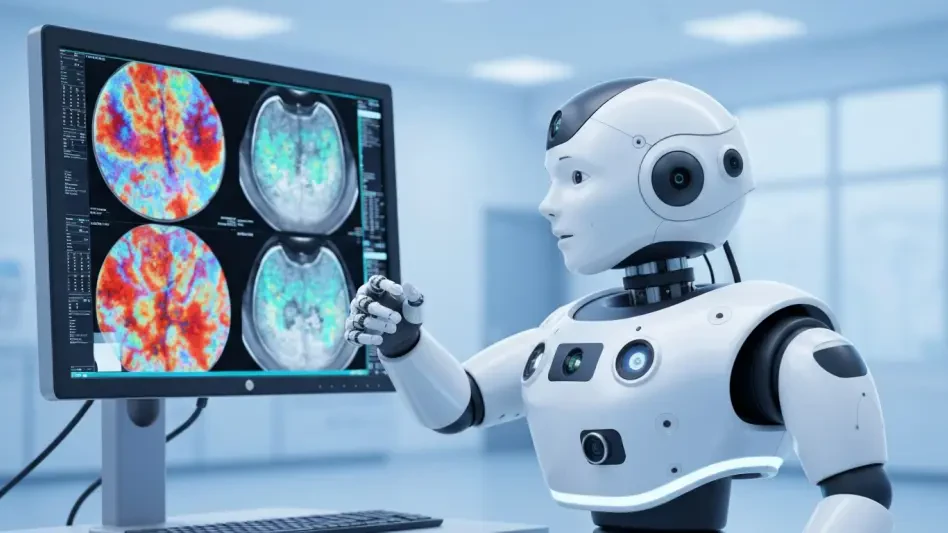

Imagine a world where a single scan can detect life-threatening conditions in mere minutes, with precision that rivals the most experienced radiologists, all while reducing the burden on overworked healthcare professionals. This isn’t a distant dream but a reality unfolding in hospitals today, thanks to the transformative power of artificial intelligence in medical imaging. The integration of AI into diagnostic systems is reshaping healthcare by tackling age-old issues like lengthy scan times and diagnostic errors, offering a glimpse into a future of smarter, faster, and more accessible care.
Unveiling the Power of AI in Diagnostics
At the heart of this revolution lies the ability of AI to process vast amounts of data with remarkable speed and accuracy, a capability that has become indispensable in the realm of medical imaging. This technology leverages sophisticated algorithms to enhance image clarity across modalities like CT, PET, and ultrasound, often cutting down scan durations significantly. Such advancements are not just technical feats; they address real challenges in clinical settings where time can mean the difference between life and death.
Moreover, the collaboration between industry giants like GE HealthCare and NVIDIA, showcased at the Radiological Society of North America Annual Meeting in Chicago this year, underscores the momentum behind these innovations. Their joint efforts are geared toward integrating AI with high-performance computing to streamline workflows and elevate diagnostic precision. This partnership exemplifies how technology can bridge gaps in healthcare delivery, setting a benchmark for others to follow.
Diving into Features and Performance
AI Algorithms: Redefining Precision
One of the standout features of AI-enhanced imaging is the seamless integration of advanced algorithms into diagnostic systems. These algorithms are designed to sift through complex datasets, identifying subtle patterns that might escape human eyes. For instance, systems like Photonova Spectra and SIGNA Sprint with Freelium, powered by cutting-edge tech, deliver sharper images that aid radiologists in making confident diagnoses with minimal manual intervention.
Beyond clarity, the performance metrics of these systems are equally impressive. Reduced scan times translate to higher patient throughput, a critical factor in busy hospital environments. Additionally, the ability to minimize errors through AI assistance is proving invaluable, particularly in high-stakes fields like oncology and cardiology, where precision is paramount.
High-Performance Computing: The Backbone of Innovation
Supporting these algorithms are robust computing platforms that handle the immense data loads generated by modern imaging devices. NVIDIA’s full-stack solutions, for example, provide the computational muscle needed to process images in real time, enabling systems like Vivid Pioneer to offer rapid insights during cardiac assessments. This synergy between hardware and software is what makes AI-driven imaging a game-changer.
In practical terms, high-performance computing ensures that even the most intricate tasks, such as real-time image reconstruction, are executed without delay. The impact is evident in clinical settings where radiologists can access detailed visuals almost instantly, thus speeding up decision-making processes. This level of efficiency also helps in reducing radiologist burnout, a growing concern in the healthcare sector.
Real-World Impact and Emerging Trends
The real-world applications of AI in medical imaging are as diverse as they are impactful, spanning radiology, mammography, and beyond. Solutions like Pristina Recon DL are making waves by improving detection rates in breast cancer screenings, directly contributing to better patient outcomes. These tools not only enhance diagnostic capabilities but also ensure that patients spend less time under scanners, easing their anxiety.
Furthermore, a notable trend emerging from recent industry gatherings is the push toward autonomous workflows, particularly in ultrasound and X-ray imaging. With only about 3% of healthcare data currently actionable due to fragmented systems, there’s a pressing need to harness this untapped potential. AI offers a pathway to integrate and analyze this data, paving the way for intelligent systems that could operate with minimal human oversight in the near future.
However, challenges persist in the form of regulatory hurdles and technical barriers like disparate data formats. Despite these obstacles, ongoing feedback and development efforts within the industry are geared toward overcoming such limitations. The focus remains on creating scalable solutions that can be adopted globally, ensuring that advanced diagnostics aren’t confined to a privileged few.
Reflecting on a Transformative Journey
Looking back, the strides made in AI-enhanced medical imaging stood as a testament to the power of collaboration and innovation. Partnerships like the one between GE HealthCare and NVIDIA had set a strong foundation, delivering tools that redefined diagnostic accuracy and efficiency. The journey revealed both the potential and the hurdles of integrating AI into healthcare, from technical complexities to market adoption challenges.
Moving forward, the next steps involved addressing systemic issues like data fragmentation through standardized protocols and pushing for regulatory frameworks that supported safe AI deployment. Industry leaders needed to prioritize accessible, intelligent systems that could reach underserved regions, ensuring equitable healthcare advancements. The vision of autonomous, robotic imaging devices expanding diagnostic access worldwide remained a compelling goal to pursue in the years ahead.