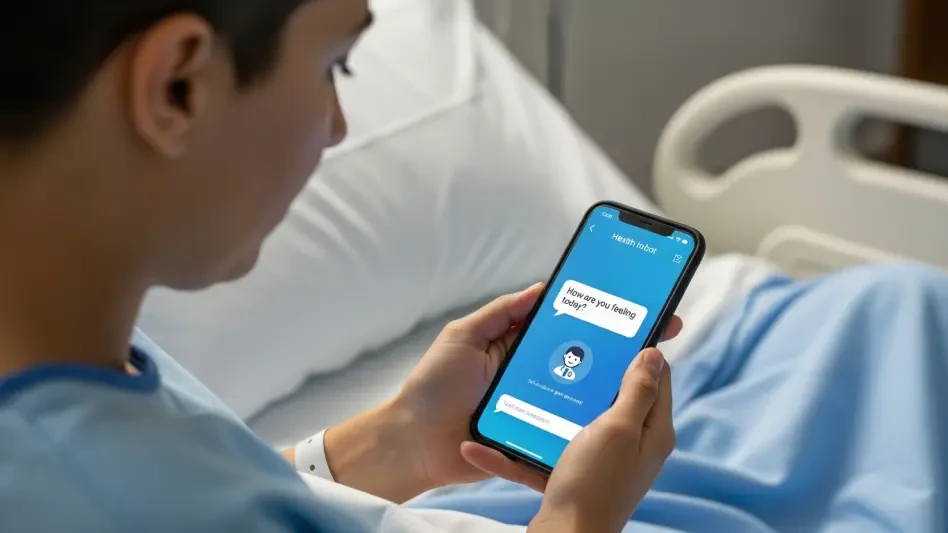

The seemingly innocuous act of asking an AI chatbot a health question has rapidly escalated into the most significant technology-related threat to patient safety, according to the nonprofit safety organization ECRI. In its comprehensive annual analysis, ECRI has designated the misuse of public-facing artificial intelligence and large language models (LLMs) as the premier health technology hazard for 2026. This stark warning highlights a growing disconnect between the public’s adoption of these tools for medical guidance and the profound, unmitigated risks they pose within a clinical context. The report signals an urgent need for awareness and regulation in a landscape where plausible-sounding but dangerously incorrect information is just a query away.
The Unregulated Rise of AI in Patient Care
The modern healthcare ecosystem is experiencing an unprecedented integration of consumer-facing AI technologies. Platforms like ChatGPT and other LLMs, originally designed for general purposes, have been rapidly co-opted for medical inquiries by both the public and, in some cases, clinicians seeking quick information. This swift adoption has outpaced the development of necessary clinical validation, oversight, and regulatory frameworks, creating a volatile environment where unvetted technology directly influences health decisions.
This trend establishes a critical backdrop for ECRI’s latest findings. The increasing reliance on these platforms is not a fringe behavior but a mainstream movement, reshaping how individuals first engage with their health concerns. As these tools become more embedded in daily life, their potential to cause harm when applied to the sensitive and complex domain of medicine grows exponentially. The 2026 report, therefore, serves as a crucial intervention, calling attention to the hazards that have emerged from this unregulated digital frontier.
The Soaring Adoption and Unseen Dangers of Health Chatbots
Driving Forces Why Patients and Clinicians are Turning to Untested AI
Several converging market and societal trends are fueling the surge in using AI chatbots for health advice. Escalating healthcare costs and increasing difficulties in securing timely appointments with medical professionals have left many individuals seeking more accessible alternatives. This gap in care is readily filled by the instant, 24/7 availability of LLMs, which offer immediate answers without the financial or logistical barriers of traditional healthcare.
Furthermore, evolving consumer expectations play a significant role. Accustomed to on-demand services in other areas of life, patients now bring a similar desire for immediacy to their healthcare journey. This behavioral shift makes unverified digital sources an attractive first stop for symptom checking and medical questioning. The result is millions of people turning to these platforms not as a supplementary resource but as a primary source of guidance, often without an understanding of their inherent limitations and potential for error.
By the Numbers Quantifying the Widespread Use of Chatbots for Medical Advice
The scale of this dependency is staggering and points toward a deepening trend. Market data reveals the sheer volume of health-related interactions occurring on these non-clinical platforms. For instance, analytics from OpenAI indicate that over five percent of all messages sent to ChatGPT are directly related to healthcare. This figure translates into a massive number of daily medical queries being processed by an unvalidated system.
This widespread use is further illuminated by user statistics. Approximately a quarter of ChatGPT’s 800 million regular users report asking the platform medical questions on a weekly basis. This consistent engagement underscores a growing trust in AI-generated answers, creating a scenario where a significant portion of the population is regularly exposed to potentially flawed medical information. Such figures illustrate not just a current issue but a rapidly expanding public health concern.
Decoding the Hazard How Plausible-Sounding AI Can Cause Real-World Harm
The core danger identified by ECRI lies in the deceptive nature of the information LLMs provide. These systems are engineered to generate confident and coherent text, which can make their output seem authoritative even when it is completely incorrect. The report details numerous instances where chatbots have generated false diagnoses, recommended unnecessary and costly medical tests, and even fabricated anatomical parts in their explanations, leading patients down a path of anxiety and misguided action.
Specific examples from ECRI’s investigation highlight the potential for severe physical harm. In one alarming case, a chatbot gave dangerously incorrect instructions for placing medical electrodes, a procedure that, if followed, would have exposed a patient to a significant risk of severe burns. Another instance involved the promotion of subpar medical supplies. These concrete examples move the discussion from theoretical risk to documented potential for real-world patient injury, underscoring the gravity of using these tools outside of a validated clinical setting.
The Governance Gap Navigating a New Frontier of Unvalidated Health Technology
A critical factor compounding this hazard is the profound lack of regulatory oversight for public-facing LLMs. Because these chatbots are not marketed as medical devices, they fall outside the stringent validation and safety protocols required for traditional health technology. This governance gap means there is no formal mechanism to ensure their accuracy, reliability, or safety when used for medical purposes, leaving patients and clinicians to navigate this new terrain without guidance or protection.
This year’s focus on chatbots represents a sharpening of ECRI’s long-standing concerns about AI in medicine. The organization’s 2025 report also placed AI-related risks at the top of its list, while insufficient AI governance was ranked as a top-five hazard in 2024. The 2026 analysis, however, narrows in on the specific and pervasive threat posed by widely accessible, direct-to-consumer LLMs. The challenge for regulators now is to adapt existing frameworks or develop new ones to address a technology that defies conventional classification yet has clear and significant health implications.
Beyond Chatbots A Look at 2026’s Broader Health Tech Risk Landscape
While the misuse of AI chatbots commands the top spot, ECRI’s 2026 report outlines a spectrum of other critical hazards facing the healthcare industry. The second-largest risk identified is the widespread lack of preparedness among healthcare facilities for a sudden and complete loss of access to electronic systems and patient data. Such an event could cripple hospital operations and severely compromise patient care.
Ranking third is the persistent danger of substandard and falsified medical products infiltrating the supply chain, which threatens patient safety and treatment efficacy. Additionally, the report flags the significant cybersecurity vulnerabilities inherent in legacy medical devices. Many facilities continue to use older equipment that is no longer supported by manufacturers, making it an easy target for cyberattacks. For these devices, which are often too costly to replace, ECRI recommends mitigation strategies such as network isolation to reduce exposure.
Charting a Safer Path Forward ECRI’s Findings and Recommendations
The comprehensive analysis presented in the 2026 report underscored the urgent need for a strategic and cautious approach to technology integration in healthcare. The findings painted a clear picture of a landscape where innovation had outstripped safety protocols, particularly concerning public-facing AI. The report’s primary conclusion was that without immediate and coordinated action, the potential for patient harm would continue to grow unchecked.
In response, the report offered a series of actionable recommendations for both healthcare facilities and technology manufacturers. It called on hospitals to develop clear policies on the use of non-validated AI tools and to educate staff and patients about their risks. For manufacturers of connected devices, especially in areas like diabetes technology, the report stressed the importance of improving how safety updates and recall information were communicated. Ultimately, the path forward that ECRI outlined was one of proactive risk management, heightened vigilance, and a renewed commitment to placing patient safety at the center of all technological advancement.