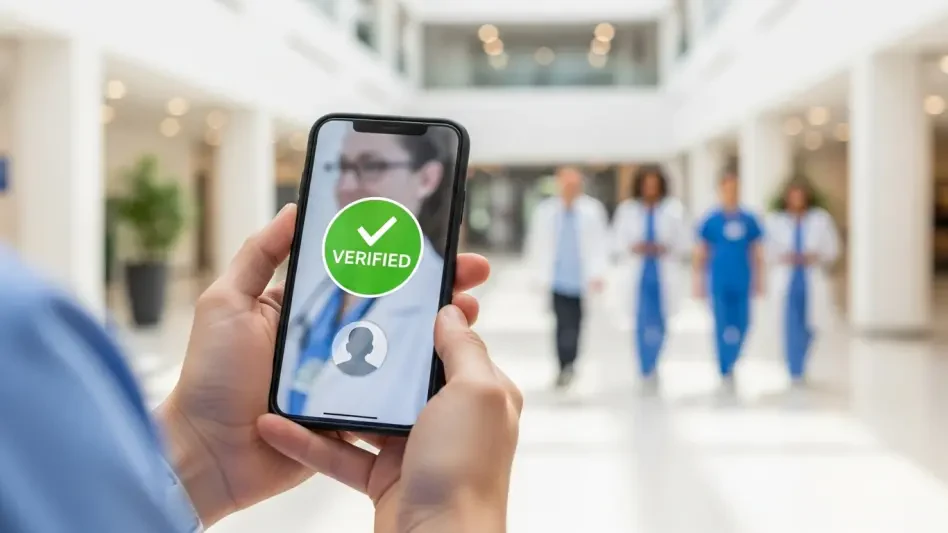

The margin for error in clinical hiring has narrowed to a razor-thin line where a single oversight in a provider’s history can result in catastrophic legal liabilities or the immediate revocation of federal funding. Modern healthcare systems no longer view background screening as a checkbox in the onboarding process; instead, it has become a proactive shield against the systemic risks of a globalized talent pool. As the industry faces a persistent shortage of qualified professionals, the challenge lies in accelerating the time-to-hire without compromising the rigorous standards required to ensure patient safety and maintain institutional integrity.
The Evolution of Specialized Screening in the Modern Healthcare Ecosystem
Administrative formalities have been replaced by a sophisticated integration of risk management and talent acquisition strategy. This shift reflects a deeper understanding that clinical integrity starts long before a practitioner enters the operating room. The complexity of the modern medical environment requires a screening process that moves beyond simple criminal record pulls, focusing instead on a holistic view of the professional’s history and current standing.
Specialized screening now mandates a comprehensive sweep of federal and state databases, including the Office of Inspector General (OIG) and System for Award Management (SAM) exclusions. These mandates are non-negotiable for organizations that rely on Medicare and Medicaid reimbursements. Consequently, the market has pivoted toward high-touch service models where providers act as strategic partners, offering deep expertise in Fair Credit Reporting Act (FCRA) and Equal Employment Opportunity Commission (EEOC) compliance to navigate the legal nuances of medical vetting.
Dynamics Defining the Healthcare Background Screening Market
Emerging Technological Trends and Candidate-Centric Innovations
Technological advancement has transformed the applicant journey into a mobile-first experience, prioritizing speed and accessibility. Platforms like Certn have set a new standard by optimizing onboarding for a workforce that is increasingly transient and digital-native. This evolution is not merely about convenience; it is a strategic response to the talent wars, where a friction-heavy screening process can lead to the loss of top-tier candidates to more agile competitors.
Moreover, the industry is moving away from static, point-in-time checks in favor of continuous monitoring solutions. By implementing real-time alerts for changes in sanctions or criminal records, healthcare organizations can maintain a permanent state of compliance. This transition is supported by augmented screening models that balance AI-driven data collection with human oversight, ensuring that automated speed does not result in high dispute rates or inaccurate flags that could derail a professional’s career.
Market Projections and Performance Indicators for 2026
The demand for international compliance expertise is projected to rise as healthcare networks look toward global recruitment to fill critical staffing gaps. Accuracy benchmarks have reached a point where high-precision models, such as those utilized by ScoutLogic, aim for dispute rates as low as 0.02%. This focus on precision is essential for managing the seasonal surges and emergency staffing requirements that characterize the current medical landscape, allowing facilities to scale their workforce rapidly during public health crises or peak census periods.
Economic indicators suggest that the cost of non-compliance has never been higher, with federal audits becoming more frequent and granular. Automated platforms that offer seamless integration with existing Human Resources Information Systems (HRIS) and Applicant Tracking Systems (ATS) are now a baseline requirement. These integrations reduce manual entry errors and ensure that compliance data is woven directly into the provider’s credentialing file, protecting the organization’s financial health and reputation.
Navigating Structural and Operational Challenges in Medical Vetting
Addressing the global talent shortage requires a delicate balance between strict vetting and the need for operational efficiency. Many organizations suffer from “black box” syndrome, where they have little visibility into the status of a background check or the reasons for a delay. Dedicated account representative models are emerging as the solution to this lack of transparency, providing clinical recruiters with direct access to investigators who understand the urgency of filling a nursing or surgical vacancy.
Furthermore, the friction between automated data retrieval and the necessity for manual verification remains a significant hurdle. While AI can scan millions of records in seconds, it often lacks the context to interpret complex legal dispositions or international data variations. Solving these complexities requires a hybrid approach where technology handles the heavy lifting of data gathering while experienced human investigators verify identity and professional credentials in fragmented regulatory environments.
The Regulatory Framework and Compliance Mandates for 2026
The current regulatory landscape demands a deep dive into healthcare-specific scrutiny, with an emphasis on continuous FACIS (Fraud and Abuse Control Information System) monitoring. This level of oversight ensures that any disciplinary action taken by a state board or federal agency is immediately reported to the employer. Maintaining strict alignment with HIPAA and FCRA standards in a digital-first environment is no longer just a legal obligation but a core component of a facility’s risk mitigation strategy.
International data laws, such as GDPR, have added layers of complexity to the recruitment of foreign-trained medical professionals. Providers like Verifile have become essential for organizations navigating these cross-border requirements, ensuring that data handling practices meet the stringent privacy standards of both the home and host countries. Professional license validation and credentialing have also expanded to include academic verification, ensuring that every member of a surgical or research team possesses the legitimate qualifications they claim.
Future Outlook: Disruptors and New Horizons in Healthcare Staffing
Blockchain technology and decentralized identity frameworks are beginning to show promise as tools for the instantaneous verification of medical certifications. These innovations could eventually allow practitioners to carry a “digital passport” of their credentials, verified once and shared securely with multiple institutions. This would significantly reduce the administrative burden on staffing agencies and hospitals while virtually eliminating the risk of credential fraud in high-risk clinical roles.
As international labor mobility continues to shape the workforce, the concept of “employer branding” has extended into the screening process itself. Transparent, user-friendly portals that keep candidates informed of their status are becoming a competitive advantage. The growth of boutique, investigator-led services reflects a broader desire for quality over quantity, as facilities prioritize the depth of a screening report over the mere speed of its delivery.
Strategic Summary: Aligning Provider Selection with Organizational Goals
The assessment of top performers in the background check sector revealed that the most successful healthcare networks were those that matched their specific infrastructure needs with the right service model. Large-scale systems benefited from the vast resources of enterprise providers, while specialized facilities found greater value in high-touch, partnership-based models. It became clear that “faceless” automation, while efficient for low-level roles, was insufficient for the high-stakes environment of clinical placements.
Strategic investments in screening partnerships focused on long-term compliance rather than short-term cost savings. Organizations prioritized vendors that offered continuous monitoring and deep integration capabilities, recognizing that the cost of a single bad hire far outweighed the premium paid for high-quality vetting. The shift toward specialized, investigator-led services proved that human oversight remains the most effective defense against the complexities of modern regulatory requirements.
The finalized approach to medical staffing emphasized that safe hiring practices are the ultimate foundation of quality patient care. By adopting a more rigorous and transparent vetting process, healthcare administrators successfully reduced their legal exposure and enhanced the safety of their clinical environments. Future considerations will likely involve a heavier reliance on decentralized credentialing and the expansion of global screening standards as the medical workforce continues to evolve across international borders.