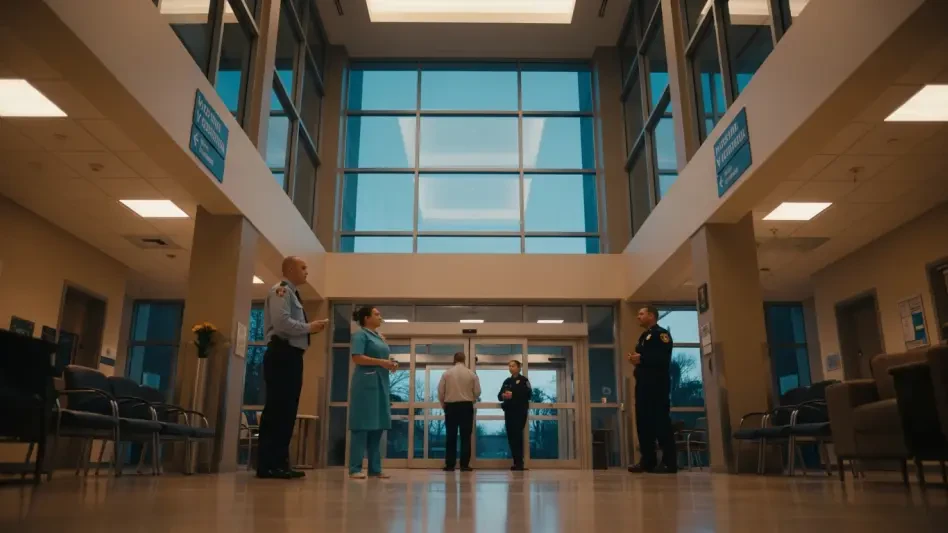

A groundbreaking legislative proposal designed to shield Oregon’s medical facilities from federal immigration enforcement has ignited a fierce debate, placing the fundamental right to health care on a collision course with the authority of the U.S. government. The bill, a collaborative effort between the labor union representing Oregon nurses and State Senator Wlnsvey Campos, aims to regulate the presence of U.S. Immigration and Customs Enforcement (ICE) agents within hospitals and clinics. This initiative, however, has drawn significant opposition from the very institutions it seeks to protect and faces a stark warning from nonpartisan legal analysts who question its constitutionality, creating a complex web of ethical intentions and legal realities.
A Question of Sanctuary Versus Federal Law
At its core, the proposed Oregon bill forces a confrontation between the mandate for health care as a sanctuary and the extensive reach of U.S. immigration enforcement. The legislation seeks to compel medical providers to monitor and, in certain situations, deny federal officers access to patient care areas, creating a legal and ethical tightrope for these institutions. This approach positions hospitals and clinics as the front line in a state-federal power struggle, a role that medical administrators argue they are unprepared and legally unequipped to assume.
The central conflict arises from an attempt to prioritize patient safety and access to care over the enforcement of federal law within the confines of a health care facility. By mandating that private employers actively discriminate against federal agents in the course of their duties, the bill challenges long-standing legal precedents. This creates an unprecedented dilemma for medical staff, who would be legally bound by the state to obstruct federal officers, potentially placing themselves and their institutions in direct violation of federal law.
The Fear Factor Fueling Legislative Action
The bill’s origins lie in a growing crisis reported by frontline medical workers: immigrant patients forgoing essential medical care out of fear. The legislation is a direct response from the Oregon nurses’ union and State Senator Campos to what they describe as a public health emergency driven by anxiety. The overwhelming majority of public testimony came from nurses and health care professionals who witness this phenomenon firsthand, arguing that the threat of an encounter with ICE is a powerful deterrent to seeking treatment.
This human cost was a recurring theme in testimony from over 200 health care workers. Amy Celichowski, a physician associate in Milwaukie, articulated a common sentiment among supporters, stating that fear of immigration enforcement has turned clinics and hospitals into zones of anxiety rather than places of healing. Proponents contend that if medical campuses can be established as “safe spaces,” it would remove a significant barrier to care for some of the state’s most vulnerable residents, even if fear persists elsewhere.
A Double Edged Sword of Protection and Confrontation
The legislation’s core provisions represent a proactive, and critics say confrontational, approach to patient protection. The bill would legally require health care facilities to monitor the presence and activities of federal immigration officers on their property. More significantly, it would mandate that staff actively block these agents from accessing patient care areas unless they produce a judicial warrant, shifting the dynamic from passive sanctuary to active defense.
The stated goal, as articulated by the bill’s supporters, is to create an environment where immigration status does not impede access to life-saving care. The legislation aims to formalize the idea that a hospital’s primary duty is to its patients, above all else. However, this method of protection through mandated confrontation is the very element that has drawn intense scrutiny and opposition, as it forces health care workers into a law enforcement role for which they have no training or authority.
A Perilous Dilemma for Hospitals and Clinics
The Hospital Association of Oregon has voiced strong opposition, arguing that the bill unfairly shifts the liability for federal agents’ actions onto hospitals. Sean Kolmer, the association’s executive for external affairs, asserted that this places staff in an “untenable legal position.” An employee who fails to comply with the state mandate could jeopardize their facility’s license, while one who is too aggressive in obstructing a federal agent could face serious federal criminal charges.
These concerns were amplified by leaders like Salem Health CEO Cheryl Wolfe, who detailed the immense operational and financial strain the bill would impose. She highlighted the significant costs and time required to train staff for high-risk duties like validating judicial warrants, all without any provided state resources or a realistic implementation timeline. Wolfe argued that these new responsibilities would inevitably detract from the primary mission of providing direct patient care, especially at a time when health care staffing is already critically stretched.
Caught in the Crossfire of Good Intentions
The bill’s reach extends to Federally Qualified Health Centers (FQHCs), which serve a high percentage of uninsured and immigrant patients, placing them in a uniquely precarious position. The Oregon Primary Care Association (OPCA), which represents these clinics, supports the bill’s intent but has warned of dangerous, unintended consequences. Marty Carty, the association’s government affairs director, stated that while they agree enforcement should not occur in their facilities, the bill’s current form is deeply problematic.
Carty identified a flawed enforcement mechanism, noting that the Oregon Health Authority likely lacks the licensing authority to penalize these federally chartered clinics for non-compliance. A more pressing concern is the risk of physical harm. Carty expressed fears that forcing clinic staff to stand between “a locked door and an aggressive federal agent” could escalate routine encounters into hazardous confrontations, ultimately making their facilities less safe for both patients and employees.
The Unyielding Wall of the Supremacy Clause
Perhaps the most formidable obstacle for the bill is a potential constitutional challenge, as flagged in a legal analysis from the nonpartisan Office of the Legislative Counsel. The memo cautioned lawmakers that the bill appears to directly violate the U.S. Constitution’s Supremacy Clause, which establishes that federal law supersedes conflicting state law. The legal opinion specified that states cannot enact legislation that discriminates against the federal government or compels private entities to do so.
Despite the circulation of this cautionary legal opinion, key lawmakers remained committed to the bill’s underlying principles. Senator Deb Patterson, Chair of the Senate Committee on Health Care, reiterated her belief that “People should be able to seek needed care without fear.” The debate revealed a deep divide between the moral imperative felt by advocates and the stark legal and operational hurdles identified by institutions. As negotiations continued ahead of a scheduled work session, the future of creating legislative safe spaces in Oregon’s health care system remained suspended between noble intent and constitutional reality.