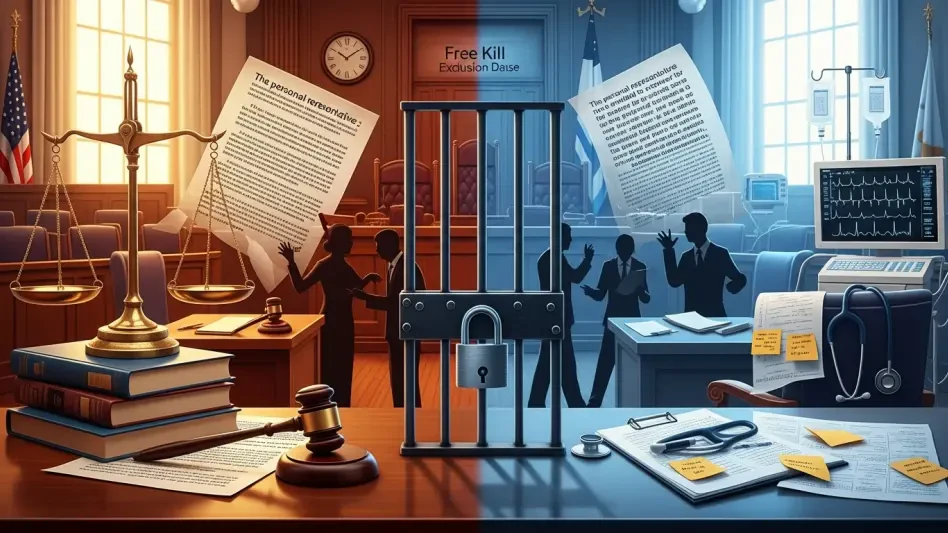

The legal architecture of Florida remains one of the most polarizing environments for medical malpractice in the United States, defined by a specific statutory exclusion that effectively devalues the lives of a significant portion of the adult population. While most states allow families to seek redress for the wrongful death of a loved one regardless of age or marital status, Florida continues to uphold a system where certain individuals are considered legally “valueless” in the eyes of the civil court system. This unique framework has created a massive rift between those advocating for fundamental human rights and those protecting the financial viability of the state’s massive healthcare infrastructure.
The Legal Landscape of Florida’s Wrongful Death Act and Medical Malpractice
A Specialized Immunity
The core of the controversy lies in a specific carve-out within the Florida Wrongful Death Act that restricts who can sue for noneconomic damages following medical negligence. Currently, if an unmarried person over the age of 25 dies due to a healthcare provider’s error and has no minor children, their surviving parents and adult children are prohibited from seeking compensation for pain and suffering. This creates a vacuum of accountability, as the only recoverable costs are often limited to funeral expenses and medical bills, which are frequently negligible compared to the loss of life.
The Economic Equilibrium Argument
From the perspective of hospital networks and insurance conglomerates, this restrictive standing is not an oversight but a calculated measure to maintain economic stability. Industry leaders argue that this “carve-out” acts as a vital buffer against the rising costs of litigation, which in turn keeps malpractice insurance premiums manageable for physicians. Without this protection, they contend, the state would see an exodus of medical professionals who would rather practice in regions with more predictable liability risks.
Historical Context of Tort Reform
The origins of this “Free Kill” designation trace back to the intense tort reform era of the 1990s, when Florida legislators were tasked with addressing a perceived crisis in medical liability insurance. During this period, lawmakers prioritized the availability of healthcare over the individual rights of survivors, crafting a tiered system of standing that has persisted for decades. While other states have expanded survivor rights, Florida has remained an outlier, clinging to a legacy of liability protection that was originally intended to be a temporary fix for a volatile market.
Stakeholder Dynamics
The current stalemate is the result of a high-stakes tug-of-war between influential interest groups. On one side, the Florida Medical Association and various insurance lobbyists exert significant pressure on the Senate to maintain the status quo to protect the bottom line of the healthcare sector. Conversely, trial lawyers and patient advocacy groups have formed an unlikely alliance, pushing for a system that treats every life with equal legal standing. This clash of priorities has made it nearly impossible for any meaningful reform to clear both chambers of the legislature simultaneously.
Shifting Trends in Litigation and Public Sentiment
The Growing Bipartisan Momentum for “Fundamental Fairness”
A Shift in Political Will
In recent legislative cycles, the Florida House of Representatives has signaled a dramatic shift in perspective, achieving a landslide 88-17 vote in favor of repealing the restrictive language. This bipartisan consensus suggests that the “discriminatory hierarchy of life” is no longer politically defensible in the lower chamber. Lawmakers from both parties have expressed discomfort with a statute that essentially tells a grieving parent that their child’s life was not worth the cost of a lawsuit simply because they passed the age of 25.
The Power of Personal Narrative
The momentum for change is largely fueled by the harrowing testimonies of families like the Jenkins and the Perritts, who have shared their stories of being turned away by law firms despite clear evidence of medical errors. These narratives have shifted the conversation from abstract legal theory to a moral crisis. When a parent explains that they cannot even get a deposition to find out why their child died because a lawyer cannot afford to take a case with no potential for damages, it highlights a profound lack of transparency in the medical system.
Constitutional Challenges
Furthermore, the legal validity of these restrictions is increasingly under fire due to precedents set by the Florida Supreme Court. In past rulings like Estate of McCall and Kalitan, the court expressed skepticism toward arbitrary caps on damages, arguing that they unfairly burden those who have suffered the most. While these cases did not directly strike down the “Free Kill” provision, they provided a judicial roadmap for critics who argue that the law violates the equal protection and access-to-courts clauses of the state constitution.
Market Data and the Economic Impact of Tort Expansion
Projections for Malpractice Premiums
Economic analysts warn that a total repeal could trigger a sharp increase in malpractice premiums, potentially rising by double-digit percentages within the first few years of implementation. The industry is particularly wary of “nuclear verdicts”—jury awards exceeding $10 million—which they believe would become more common if the pool of eligible claimants is expanded. This data is often used as a primary justification for the Senate’s refusal to hear repeal bills without significant accompanying restrictions.
Healthcare Cost Forecasts
The potential for increased liability also raises concerns about consumer healthcare costs and physician recruitment. Forecasts suggest that if the cost of doing business in Florida rises, those expenses will inevitably be passed down to patients through higher co-pays and insurance premiums. Moreover, there is a legitimate fear that specialists in high-risk fields, such as neurosurgery or obstetrics, might choose to practice in other states, exacerbating the existing physician shortage in rural Florida communities.
Major Obstacles and the Paradox of Damage Caps
The Standoff Over “Clean” Legislation
The legislative process is currently paralyzed by a fundamental disagreement over the inclusion of damage caps. The House has shown a preference for “clean” legislation that removes the standing restrictions without imposing a ceiling on what a jury can award. In contrast, the Senate has refused to move forward without a guarantee that noneconomic damages will be limited. This friction reflects a deeper philosophical divide: one side sees a person’s life as priceless, while the other sees it as a liability that must be quantified to prevent economic collapse.
The Veto Shadow
Governor Ron DeSantis has played a pivotal role in this stalemate, having previously used his veto power to strike down a similar measure. His public stance emphasizes the prevention of “jackpot justice,” a term used to describe large jury awards that he believes harm the state’s business climate. As long as the Governor signals that he will only sign a bill containing strict financial limitations, any legislative effort that lacks those caps is effectively dead on arrival, leading to the current cycle of inaction.
The Equilibrium Challenge
The ultimate challenge for Florida policymakers is finding a way to provide justice to families without dismantling the state’s healthcare infrastructure. Balancing the constitutional right to seek redress with the need for a stable insurance market is a delicate task. This paradox has led to a legislative environment where neither side is willing to blink, resulting in a status quo that satisfies the insurance industry but leaves thousands of Floridians without any legal recourse in the event of a medical tragedy.
The Regulatory Framework and Compliance Standards
Navigating Florida Statute 768.21
A technical analysis of Florida Statute 768.21 reveals the precise language that isolates medical malpractice from other forms of wrongful death. While the statute allows for the recovery of lost support and services, it specifically excludes parents of adult children and adult children of parents from claiming mental pain and suffering in medical negligence cases. This specific wording creates a unique regulatory environment where healthcare providers are held to a lower standard of financial accountability than a distracted driver or a negligent property owner.
The Role of Medical Liability Insurance
The regulatory oversight of insurance providers also complicates the reform effort. Florida’s Office of Insurance Regulation must approve rate changes, and if a repeal leads to a spike in claims, the state must navigate the political fallout of rising premiums. The interplay between legislative changes and insurance solvency is a primary concern for regulators who must ensure that carriers remain capable of paying out claims while keeping the market competitive enough to attract new providers.
Interstate Comparisons
When compared to other states, Florida’s standing rules appear increasingly antiquated. Most jurisdictions have moved toward a more inclusive definition of survivors, recognizing that the emotional bond between a parent and an adult child does not vanish at age 25. These interstate comparisons are frequently used by reformers to argue that Florida can expand survivor rights without experiencing the catastrophic economic failure that lobbyists predict, citing states that have maintained robust healthcare systems despite having broader liability laws.
Future Projections for Medical Liability Reform
Emerging Compromise Models
Looking ahead, the most likely path to a resolution involves a middle-ground approach that neither side currently embraces. This could include a tiered damage cap system, where the amount of recoverable damages is linked to the age of the deceased or the severity of the negligence. Another option being discussed is a gradual phase-in of survivor rights, allowing the insurance market to adjust its rates over several years rather than facing an immediate surge in litigation.
Technological Influence on Malpractice
As the legal debate continues, the nature of medical malpractice itself is being transformed by technology. The widespread adoption of diagnostic AI and comprehensive electronic health records is making it easier to pinpoint where errors occur, but it also creates a more complex web of liability. These technological advancements may eventually provide the transparency that families crave, potentially reducing the number of lawsuits by providing clear evidence of whether the standard of care was met, regardless of the legal standing of the survivors.
Political Realignments
The 2024 stalemate is expected to become a central issue in upcoming election cycles. As public awareness of the “Free Kill” law grows, candidates will be forced to take a definitive stand on whether they prioritize industry stability or individual rights. This political pressure may eventually break the Senate’s resistance, especially if a new wave of legislators enters office with a mandate to harmonize Florida’s wrongful death laws with the rest of the nation.
Summary of the Legislative Standoff and Path Forward
The philosophical divide between restorative justice and macroeconomic protection remained the defining feature of the recent legislative session. While the House attempted to address the moral implications of the current law, the Senate maintained its focus on the potential for systemic financial volatility. This clash of values ensured that the statutory limitations remained in place, leaving the legal status of thousands of Florida citizens unchanged. The situation illustrated a profound disagreement over the role of the judiciary in providing closure to grieving families versus its role in maintaining a business-friendly environment for healthcare providers.
The persistence of this legal uncertainty affected the state’s attractiveness for new medical practices, as providers faced a landscape that was both protective and politically charged. The standoff highlighted that any future progress would require a sophisticated compromise that addresses the reality of rising insurance costs without sacrificing the fundamental principle of equal protection under the law. Moving forward, stakeholders must consider alternative dispute resolution methods or limited damage models to break the gridlock. A resolution was ultimately impossible because neither side could agree on the financial value of human life within the specific context of medical negligence.