
The landscape of oncology care has been profoundly altered by an approval that transforms a multi-hour intravenous commitment into a brief, five-minute subcutaneous injection for certain lung cancer patients. The U.S. Food and Drug Administration (FDA) has given its consent to RYBREVANT FASPRO™, a new formulation for individuals with epidermal growth factor receptor (EGFR)-mutated non-small cell lung cancer (NSCLC). This development signifies a fundamental change in how targeted therapy is administered, promising to alleviate significant burdens on both patients and the healthcare system.
The Burden of Traditional IV Therapy
For the specific patient population with EGFR-mutated NSCLC, treatment is often a long-term journey requiring consistent and effective therapy. These mutations drive cancer growth, and targeted therapies are designed to block these specific pathways. While effective, the delivery method has traditionally been a significant challenge, tethering patients to clinical settings for extended periods.
The standard of care has long involved intravenous (IV) infusions, a process that can take several hours per session. This lengthy commitment not only disrupts a patient’s daily life but also places considerable strain on healthcare facilities, which must allocate chairs, nursing staff, and other resources for these prolonged appointments. Moreover, IV administration carries a notable risk of infusion-related reactions, which can range from mild discomfort to more severe complications, adding another layer of physical and emotional stress to the treatment experience.
A Paradigm Shift in Treatment Administration
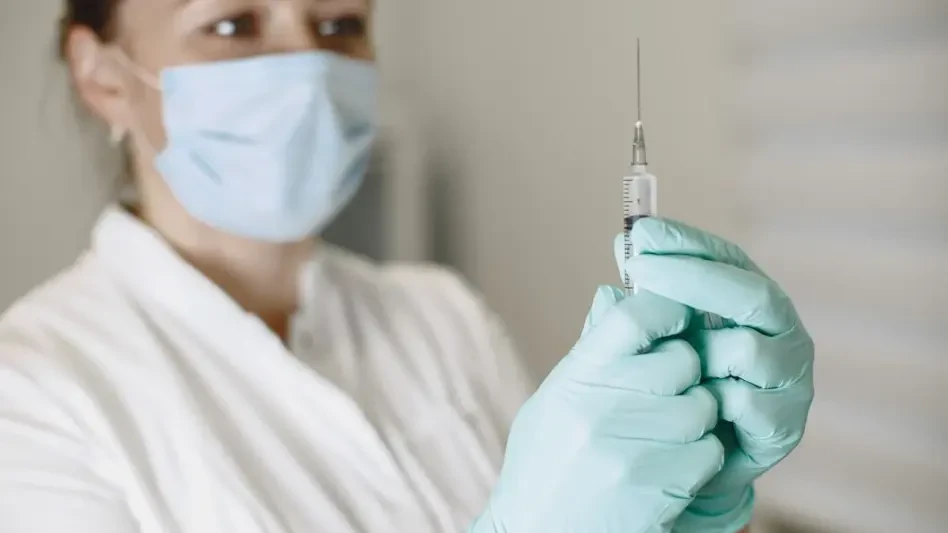
The approval of RYBREVANT FASPRO™ marks a pivotal shift away from these constraints, establishing the first-ever subcutaneous targeted therapy for this indication. This new formulation allows the treatment to be administered as an injection under the skin, a process that is completed in approximately five minutes. This represents a dramatic departure from the hours-long IV procedure, fundamentally altering the logistics and experience of receiving care.
This innovation is powered by Halozyme Therapeutics’ ENHANZE® drug delivery technology. The technology utilizes a recombinant human hyaluronidase enzyme, which temporarily and locally degrades a component of the extracellular matrix under the skin. This action facilitates the dispersion and absorption of large volumes of co-administered therapeutic drugs, enabling a rapid subcutaneous injection that was previously not possible for a biologic of this nature.
Clinical Validation of a Faster Safer Method
The FDA’s decision was supported by robust clinical data from the Phase 3 PALOMA-3 study. The trial was designed to directly compare the subcutaneous formulation to the established intravenous version, ensuring that the new delivery method maintained the treatment’s integrity and effectiveness.
The study successfully met its co-primary pharmacokinetic endpoints, demonstrating that the five-minute injection provides comparable concentrations of the active drug, amivantamab, in the bloodstream as the hours-long IV infusion. This finding is critical, as it confirms that patients receive the same therapeutic benefit without compromising efficacy for convenience. In addition, the trial revealed a dramatic improvement in the safety profile, with a fivefold reduction in administration-related reactions. The rate of these reactions dropped from 66 percent with the IV version to just 13 percent with the subcutaneous formulation.
Transforming the Patient and Provider Experience
The real-world implications of this approval are far-reaching, touching every aspect of the treatment journey. For patients, the most immediate benefit is the reclamation of time. Replacing a multi-hour clinic visit with a five-minute appointment frees up invaluable hours that can be spent with family, at work, or simply living life more fully. The simplified administration also offers a more comfortable and less invasive experience.
From a healthcare system perspective, the transition to a rapid subcutaneous injection streamlines clinic operations significantly. It reduces chair time, frees up nursing staff, and improves overall workflow efficiency, allowing facilities to better manage patient schedules and resources. This operational enhancement can lead to improved capacity and a more sustainable model for delivering high-quality cancer care, setting a new standard for how oncology treatments can be integrated into clinical practice.
The approval of this subcutaneous therapy did more than just introduce a new product; it validated a new approach to oncology care. It established a precedent where patient quality of life and healthcare system efficiency were placed at the forefront of drug development, signaling a definitive shift toward more patient-centric treatment models in the fight against cancer.