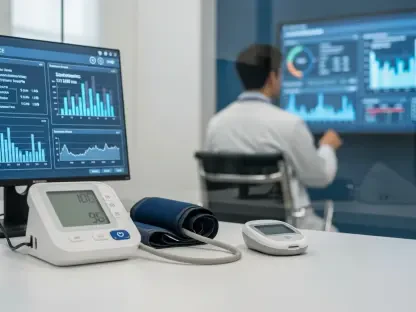

The recent memory of a government shutdown sending shockwaves through the healthcare system has catalyzed a critical push from the American Medical Association for permanent telehealth reform. The temporary lapse in coverage exposed the profound dependence of millions of Medicare beneficiaries on virtual care, transforming a theoretical debate into an urgent call for legislative stability. As the industry faces another looming deadline, the AMA is leading a charge to move telehealth from a series of temporary extensions to a permanent, integrated feature of modern healthcare delivery, arguing that the future of accessible care hangs in the balance.
The Post-Pandemic Landscape: Telehealth’s Critical Role in Modern Medicare
In the years following the public health emergency, telehealth has cemented its place as an indispensable tool within the Medicare ecosystem. It is no longer a niche service but a vital channel for maintaining continuity of care, particularly for patients managing chronic conditions like diabetes and heart disease. For those in rural and underserved communities, virtual visits have dramatically reduced barriers to access, bridging geographic divides that once made consistent medical oversight a significant challenge. This evolution has made telehealth a cornerstone of patient engagement and preventative medicine.
However, this critical infrastructure rests on a precarious foundation of temporary legislative waivers. This stopgap approach creates a persistent state of uncertainty for both patients and providers. Healthcare systems are hesitant to make long-term investments in telehealth technology and staffing without assurance of permanent reimbursement. Meanwhile, patients who have come to rely on virtual consultations for their routine and specialized care are left unsure if these services will be available in the near future, disrupting care plans and fostering anxiety.
The Telehealth Tipping Point: Alarming Trends and Market Volatility
From Emergency Measure to Essential Service: Shifting Perceptions and Utilization
The perception of telehealth has undergone a fundamental transformation, evolving from a temporary emergency measure into what many now consider a standard of care. This shift is supported by data showing that virtual appointments often lead to higher completion rates, as they eliminate common patient barriers such as transportation, time off work, and mobility challenges. As a result, healthcare systems are realizing significant efficiencies, and physicians can engage with patients more consistently, improving overall health management.
This evolution is reflected in the deeply integrated behaviors of both patients and providers. Patients have grown accustomed to the convenience and accessibility of consulting with their doctors from home, while clinicians have developed sophisticated workflows to deliver high-quality virtual care for a wide range of needs. From behavioral health sessions to post-operative follow-ups, telehealth has become a routine and expected option, demonstrating a systemic reliance that extends far beyond its initial crisis-response role.
A System Under Stress: Quantifying the Impact of Legislative Uncertainty
The fragility of this reliance was starkly illustrated during the 2025 government shutdown, which served as an inadvertent “stress test” for the telehealth system. When the temporary waivers briefly expired, the nation witnessed a staggering 24% drop in fee-for-service telehealth visits among traditional Medicare beneficiaries. This sharp decline revealed how quickly access can be compromised by legislative inaction, leaving vulnerable populations without a crucial link to their healthcare providers.
The impact was not uniform, highlighting significant geographic disparities. In certain states, particularly those with non-rural populations that had benefited from originating site flexibilities, the decline in virtual care visits exceeded 40%. While Congress ultimately reinstated coverage retroactively, this cycle of last-minute fixes does little to mitigate the long-term damage caused by such disruptions. For patients managing chronic illnesses, even a short-term lapse in care can have serious health consequences, underscoring the danger of legislative brinkmanship.
The Economic Battleground: Challenging Outdated Budgetary Roadblocks
A primary obstacle to achieving permanence remains the methodology used by the Congressional Budget Office (CBO) to score the costs of telehealth legislation. The CBO’s current model leans heavily on historical data from a pre-pandemic era, operating under the assumption that telehealth primarily adds new utilization and costs rather than substituting for more expensive in-person services. This framework fails to capture the modern realities of integrated care delivery.
The AMA is actively challenging this outdated perspective, advocating for a more robust and forward-looking analysis. The organization argues that a comprehensive budgetary model must account for the significant long-term savings generated by virtual care. These savings include reduced hospital readmissions from better post-discharge follow-up, earlier interventions that prevent costly emergency room visits, and improved management of chronic diseases that lowers overall healthcare expenditures. By ignoring these downstream financial benefits, current CBO scoring presents an incomplete and misleading picture of telehealth’s true economic impact.
Navigating the Legislative Labyrinth: The Race for Permanent Reform
The regulatory environment for Medicare telehealth is defined by a frustrating cycle of short-term extensions, with the current waivers set to expire on January 30. This recurring “legislative cliff” creates an unstable environment that hampers strategic planning and innovation across the healthcare industry. Providers cannot confidently invest in expanding telehealth programs or hiring dedicated virtual care staff when the regulatory framework could be dismantled in a matter of months.
This uncertainty has a direct and detrimental impact on patient care, especially for the millions of beneficiaries with chronic conditions who rely on consistent telehealth access for ongoing management. The AMA is therefore channeling its advocacy efforts toward definitive legislative solutions, most notably the Telehealth Modernization Act. This bill represents a critical opportunity to break the cycle of temporary fixes and establish a stable, predictable foundation for the future of virtual care in Medicare.
Charting the Course: The Future of Virtual Care in a Post-Waiver World
The healthcare system now stands at a crossroads, facing two dramatically different futures for Medicare telehealth. One path leads to a fully integrated system where virtual care is a permanent, seamless component of healthcare delivery, fostering innovation and expanding access. The alternative is a disruptive reversion to outdated, pre-pandemic restrictions that would dismantle the progress made over the last several years and severely curtail patient access.
Should the waivers expire without permanent reform, the consequences would be immediate and severe. Restrictive “originating site” rules would return, limiting telehealth services primarily to patients in designated rural areas and forcing many others to travel to a clinical setting to connect with a remote provider. Furthermore, the requirement for an in-person visit within six months of a behavioral health telehealth appointment would be reinstated, creating a significant new barrier for patients seeking mental healthcare. Failure to act risks not only stifling innovation but also exacerbating the health inequities that telehealth has begun to mitigate.
A Strategic Imperative: The Final Push for Telehealth Stability
The need for Congress to pass permanent telehealth authorization has become a strategic imperative to prevent widespread disruption and secure the gains in patient access achieved in recent years. Continued reliance on last-minute extensions is an unsustainable model that undermines the stability of the nation’s healthcare infrastructure. Securing a permanent legislative solution is essential for ensuring care continuity for millions of Americans.
For healthcare leaders, this moment demands proactive preparation and unified advocacy. Organizations should begin by auditing their service lines to identify their dependence on the current telehealth waivers, particularly the flexibility for non-rural originating sites. Concurrently, contingency plans must be developed, such as re-integrating in-person touchpoints for behavioral health workflows in case waivers lapse. Aligning these internal efforts with the AMA’s strategic push for legislation like the Telehealth Modernization Act provides the clearest path toward a stable, innovative, and accessible future for all Medicare beneficiaries.