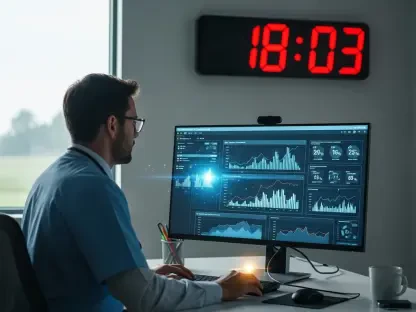

The crushing weight of administrative tasks has long overshadowed the core mission of healthcare, but the advent of intelligent automation is finally offering physicians a reprieve from their keyboards. The emergence of AI Medical Scribes represents a significant advancement in the healthcare sector. This review will explore the evolution of the technology, its key features, performance metrics, and the impact it has had on clinical applications. The purpose of this review is to provide a thorough understanding of the technology, its current capabilities, and its potential future development.
Introduction to AI in Clinical Documentation
AI medical scribe technology fundamentally redesigns the process of clinical documentation. At its heart, the software uses ambient intelligence to listen to and interpret the natural conversation between a physician and a patient, automatically generating clinical notes without manual intervention. This innovation has emerged as a direct response to the escalating crisis of physician burnout, where administrative burdens have become a primary driver of stress and dissatisfaction within the medical community.
This technology is not an isolated gadget but a key component in the broader digital transformation of healthcare. It stands alongside advancements in telehealth, predictive analytics, and personalized medicine as a tool designed to enhance efficiency, improve data quality, and ultimately return the focus of medicine to the patient. By automating one of the most time-consuming aspects of a physician’s day, AI scribes promise to free up cognitive and temporal resources for more critical clinical thinking and patient engagement.
Core Features and Underlying Technologies
Ambient Voice Capture and Transcription
The foundational layer of any AI scribe is its ability to capture and accurately transcribe spoken language in a busy clinical environment. This is achieved through ambient listening, where sophisticated microphones record the entire patient encounter. This audio is then processed by an Automatic Speech Recognition (ASR) engine, a form of AI trained on vast datasets of medical conversations to convert speech into text with a high degree of precision.
However, the clinical setting presents unique challenges that standard ASR systems struggle with, such as overlapping speakers, heavy accents, complex medical terminology, and background noise. Modern AI scribes are engineered to overcome these obstacles, employing advanced algorithms to differentiate between speakers and filter out irrelevant sounds. The continued refinement of these systems is crucial, as the quality of all subsequent AI analysis depends entirely on the accuracy of the initial transcription.
AI-Powered Summarization and Note Generation
Once a conversation is transcribed, the real intelligence of the system comes into play. Natural Language Processing (NLP) models analyze the raw text to identify and extract medically relevant information, such as symptoms, patient history, physical exam findings, and treatment plans. This technology is trained to understand clinical context and semantics, allowing it to differentiate between a chief complaint and a passing comment.
From this structured data, the AI then generates a coherent clinical note, often formatted as a standard SOAP (Subjective, Objective, Assessment, and Plan) note. A critical safeguard in this process is the mitigation of AI “hallucinations”—instances where the model generates false or unsubstantiated information. Reputable systems are designed with constraints and verification layers to ensure the output is grounded solely in the conversation that took place, preventing the introduction of erroneous data into the medical record.
Seamless EHR Integration and Workflow Automation
The ultimate value of an AI scribe is realized in its ability to integrate seamlessly with existing clinical workflows, primarily through direct connection with Electronic Health Record (EHR) systems. This integration allows the AI-generated notes to be pushed directly into the appropriate fields of the patient’s chart, often with just a single click for physician review and approval.
This automation represents a paradigm shift from the laborious process of manual typing, copy-pasting, and navigating complex EHR interfaces. By streamlining documentation, AI scribes minimize the “click fatigue” that plagues many healthcare professionals. The result is a more efficient workflow that not only saves time but also reduces the likelihood of manual data entry errors, ensuring greater consistency and reliability in patient records.
Current Trends and Recent Innovations
The field of AI scribe technology is advancing at a remarkable pace, with current trends focused on enhancing accuracy and expanding clinical utility. Recent innovations include significant improvements in speaker diarization, which is the ability to accurately identify and label who is speaking at any given moment—be it the physician, patient, or a family member. This eliminates the need for manual tagging and results in a more organized and readable transcript.
Furthermore, AI models are becoming increasingly specialized. While early iterations were more general, developers are now training models on data specific to specialties like cardiology, orthopedics, and psychiatry. This allows the technology to better understand the unique terminology, abbreviations, and conversational nuances of different medical fields. The growing sophistication of these systems is paving the way for more than just documentation, but for a deeper contextual understanding of the entire clinical encounter.
Real-World Applications and Clinical Impact
Reducing Administrative Burden and Physician Burnout
In practice, AI scribes are proving to be a powerful tool against the administrative overload that contributes to physician burnout. By automating the creation of clinical notes, these systems can save doctors several hours per day, liberating them from the screen and allowing them to focus their full attention on the patient in front of them. This shift is not just about time savings; it is about restoring the human connection at the heart of medicine.
The impact extends beyond the workday. Physicians report less “pajama time”—the after-hours work spent catching up on documentation—which leads to a better work-life balance and increased career satisfaction. By shouldering the clerical burden, AI scribes enable clinicians to practice at the top of their license, dedicating their expertise to diagnosis and treatment rather than data entry.
Improving the Accuracy and Detail of Medical Records
Beyond efficiency, AI scribes offer the potential for more comprehensive and accurate medical records. Human-generated notes are often abbreviated and subject to recall bias, as a physician may not remember every detail of a busy clinical day. In contrast, an AI scribe captures the entirety of the consultation, ensuring that subtle but important details are not lost.
This enhanced level of detail has significant downstream benefits. It supports better continuity of care, as subsequent providers have a more complete picture of the patient’s history. Moreover, a thorough and accurate record provides robust support for medico-legal defense and ensures that billing and coding are accurately reflective of the services provided, strengthening both clinical and administrative integrity.
Navigating Implementation and Medico-Legal Challenges
Patient Consent and Data Privacy Compliance
The implementation of AI scribes introduces critical medico-legal considerations, chief among them being patient consent and data privacy. Because these systems record entire consultations, healthcare providers must comply with state and territory surveillance laws, which typically require the consent of all parties to a conversation. Best practice involves obtaining written consent from new patients and confirming it verbally before each recorded encounter.
Furthermore, the handling of this sensitive health information is governed by stringent privacy laws, such as the Privacy Act. Clinics must update their privacy policies to be transparent about the use of AI scribes and the potential disclosure of data to third-party software providers. It is imperative to partner with vendors who demonstrate robust data security measures and clear policies against the unauthorized use or sale of patient information.
Ensuring Clinical Accuracy and Physician Oversight
While AI technology is highly advanced, it is not infallible. The potential for transcription errors, misinterpretations, or AI hallucinations means that physician oversight is non-negotiable. The AI-generated note should be considered a draft, not a final record. The ultimate responsibility for the accuracy and completeness of the medical record remains with the clinician.
Physicians must diligently review and edit every AI-generated note before signing off, preferably while the consultation is still fresh in their mind. This human verification step is the most critical safeguard against the propagation of errors that could impact patient care. It transforms the AI from an autonomous agent into a powerful assistant, augmenting the physician’s capabilities without usurping their clinical judgment.
System Implementation and Staff Training
The practical integration of AI scribe software into a clinical setting presents its own set of challenges. It requires a compatible IT infrastructure, seamless integration with the existing EHR system, and a carefully managed rollout to avoid disrupting patient care. Clinics must evaluate their technical readiness and choose a system that aligns with their current workflows.
Equally important is the need for comprehensive training for all medical staff. Physicians, nurses, and administrative personnel must understand how the technology works, its limitations, and the new workflows associated with it. Proper training ensures that the tool is used effectively and safely, maximizing its benefits while minimizing the risks of user error or non-compliance with privacy protocols.
Future Outlook and Potential Developments
The trajectory of AI scribe technology points toward a future where it becomes much more than a simple documentation tool. The next frontier involves real-time clinical decision support, where the AI could analyze the conversation as it happens to flag potential drug interactions, suggest relevant diagnostic tests, or highlight inconsistencies in the patient’s history. This would transform the scribe from a passive recorder to an active participant in improving patient safety.
In the long term, the anonymized data captured from countless consultations could become an invaluable resource for public health. Aggregated insights could fuel predictive analytics to identify disease trends, evaluate treatment efficacy on a population scale, and refine clinical guidelines. This evolution promises not only to enhance individual patient encounters but also to advance the science of medicine itself, all while fostering a more present and focused patient-physician relationship.
Final Assessment and Conclusion
The review of AI medical scribes showed that the technology had already established itself as a transformative force in clinical practice. It successfully addressed the critical issues of administrative burden and physician burnout by automating documentation, which in turn fostered more detailed and accurate medical records. The core technologies of ASR and NLP were found to be sufficiently advanced to provide tangible benefits in real-world clinical settings, streamlining workflows and allowing physicians to dedicate more time to direct patient care.
However, the assessment also concluded that the full potential of this technology was contingent upon navigating significant medico-legal and implementation hurdles. Its successful adoption depended on establishing transparent patient consent processes, ensuring strict compliance with data privacy regulations, and cementing the non-negotiable role of physician oversight in verifying every AI-generated note. Ultimately, when implemented with a framework of robust safeguards, AI medical scribes stood as a powerful ally in the mission to create a more efficient, effective, and humane healthcare system.