
Amidst unprecedented operational pressures and persistent staffing shortages, the global healthcare industry is increasingly turning toward artificial intelligence not as a futuristic replacement for human expertise but as an indispensable digital ally. The conversation surrounding AI in medicine has shifted dramatically from speculative science fiction to practical, on-the-ground implementation. As healthcare systems grapple with rising patient loads and overwhelming administrative demands, AI is emerging as a critical technology for optimizing workflows, enhancing diagnostic support, and ultimately, empowering clinicians to focus on what they do best: patient care. This strategic integration is redefining the very fabric of medical operations, promising a future where technology and human skill work in close partnership.
The New Digital Colleague: Mapping AI’s Footprint in Modern Healthcare
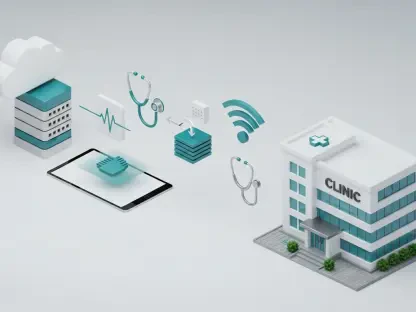
Artificial intelligence has quietly become a fixture in the modern healthcare ecosystem, its applications extending from administrative front offices to the most sophisticated diagnostic laboratories. Its integration is no longer a question of if, but how extensively it can be deployed to streamline operations. In many facilities, AI-powered tools now manage patient scheduling, assist with medical billing and coding, and optimize supply chain logistics, working behind the scenes to create a more efficient and responsive environment. This digital footprint is steadily expanding into clinical domains, where it serves as a powerful analytical engine for processing complex medical data.
The primary drivers behind this rapid adoption are born from necessity. Healthcare providers face a confluence of challenges, including critical staffing shortages, rising levels of clinician burnout fueled by administrative burdens, and the unrelenting need for greater operational efficiency. The sheer volume of paperwork, from patient charting to insurance pre-authorizations, consumes a significant portion of a clinician’s day. Consequently, AI is being embraced as a strategic solution to automate these repetitive tasks, freeing up valuable human resources and reducing the cognitive load on medical professionals.
Leading this charge are established technology developers and forward-thinking healthcare institutions that recognize AI’s potential to transform care delivery. Companies like Microsoft are developing platforms specifically designed for medical contexts, such as tools that provide preliminary analysis of medical images to assist radiologists. In parallel, pioneering hospital networks are implementing these systems to test their real-world impact on efficiency and patient outcomes, creating a feedback loop that accelerates innovation and builds a case for wider implementation across the industry.
The Momentum of Intelligent Assistance: Key Trends and Market Trajectory
From Burden to Breakthrough: How AI Is Redefining Clinical Workflows
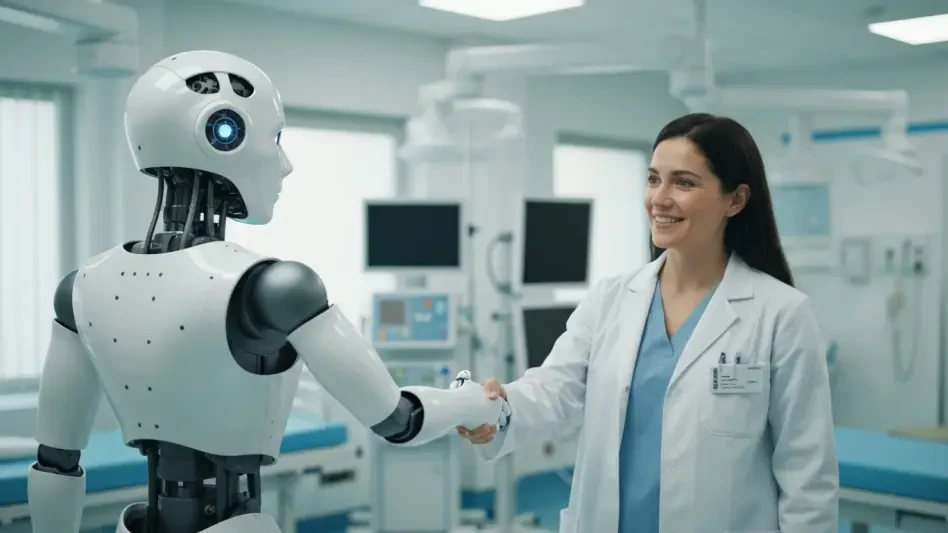
The dominant trend in medical AI is its application as an augmentative tool designed to support, not supplant, the judgment of human professionals. This philosophy of intelligent assistance is guiding development away from autonomous decision-makers and toward sophisticated systems that enhance clinical capabilities. The goal is to offload routine, time-consuming tasks, thereby allowing physicians, nurses, and technicians to dedicate more of their expertise to complex problem-solving and direct patient interaction. This approach fosters collaboration between human and machine, leveraging the strengths of each.
Nowhere is this trend more apparent than in the application of generative AI for automating administrative duties. Healthcare entities are increasingly deploying these models to handle clinical documentation, automatically generating visit summaries from doctor-patient conversations and organizing unstructured notes into standardized formats. This technology significantly reduces the documentation burden that is a major contributor to clinician burnout. Furthermore, it can create initial drafts of patient communications or referral letters, streamlining workflows and ensuring consistency.
Beyond administration, AI is making significant inroads in medical imaging analysis. In fields like radiology and pathology, which rely on the interpretation of vast amounts of visual data, AI algorithms can perform preliminary assessments of X-rays, CT scans, and digital slides. These systems can flag anomalies, prioritize urgent cases, and provide quantitative measurements, presenting a pre-analyzed report to the specialist for final review and diagnosis. This not only accelerates the diagnostic process but also acts as a second set of eyes, potentially improving accuracy.
The Data-Driven Diagnosis: Measuring AI’s Impact and Future Growth
Market data reflects a strong and growing adoption of AI within healthcare facilities, particularly for solutions focused on workflow automation and imaging analysis. Hospitals and clinics are investing in systems that can be integrated directly into their existing operational platforms, demonstrating a clear preference for practical tools that deliver measurable efficiency gains. The adoption rates are highest in specialties where data volume is immense and the potential for time savings is greatest.
Growth projections for the medical AI sector remain robust, with forecasts from 2025 through 2029 indicating sustained expansion. This trajectory is supported by a growing body of evidence confirming AI’s positive impact. Studies have consistently shown that AI-assisted radiograph reporting, for example, can reduce turnaround times without compromising diagnostic quality. These proven returns on investment are fueling further research and development, creating a virtuous cycle of innovation and adoption.
Looking forward, the growing confidence in AI’s reliability is poised to drive broader implementation. As clinicians become more comfortable with these tools and validation studies continue to affirm their performance, AI will likely transition from task-specific applications to more integrated roles within the care continuum. This will fuel further investment in technologies that can offer predictive insights and more personalized patient management support, solidifying AI’s place as a standard component of modern medical practice.
Navigating the Hurdles: Overcoming Barriers to AI Integration and Trust
Despite its promise, the deployment of medical AI faces significant technological challenges. Chief among them is the need for rigorous validation to ensure that models perform reliably and equitably across diverse patient populations and varied clinical settings. An algorithm trained on data from one demographic may not perform as well with another, creating a risk of built-in bias. To address this, developers are creating tools that allow hospitals to test and verify AI model performance using their own local data before full-scale deployment.
Integrating AI into existing hospital IT infrastructures and clinical workflows presents another layer of operational complexity. Legacy systems are often not designed to accommodate sophisticated AI models, requiring substantial investment in modernization. Furthermore, workflows must be carefully redesigned to incorporate AI-driven insights without disrupting the natural cadence of patient care. This requires close collaboration between IT specialists, clinical staff, and AI developers to ensure a seamless and intuitive user experience.
Perhaps the most critical barrier is the human factor. Clinician skepticism remains a considerable hurdle, as trust in AI-driven recommendations is not automatic. Overcoming this requires comprehensive training that not only teaches staff how to use the new tools but also educates them on the technology’s capabilities and limitations. Fostering a culture of trust is paramount, and it depends on transparency, demonstrated reliability, and a clear understanding that AI is a tool to assist, not replace, their indispensable expertise.
Building a Framework for Trust: The Evolving Ethics and Governance of Medical AI
In response to the rapid proliferation of AI, a new regulatory landscape is beginning to take shape. Governmental bodies and professional organizations are collaborating to establish clear guidelines and industry-wide codes of conduct for the responsible development and deployment of medical AI. These frameworks aim to ensure patient safety, efficacy, and ethical use, creating a standardized approach to validating and monitoring AI systems throughout their lifecycle.
Central to this effort is the emphasis on transparency, accountability, and meticulous documentation. So-called “black box” models, whose decision-making processes are opaque, are increasingly seen as unsuitable for high-stakes medical environments. The industry is moving toward explainable AI (XAI), where the rationale behind an algorithm’s output can be inspected and understood by a human clinician. This ensures that professionals can critically evaluate AI-generated insights and remain accountable for the final clinical decision.
Protecting sensitive patient data is another cornerstone of responsible AI governance. All medical AI systems must be designed for strict compliance with privacy regulations and fortified with robust cybersecurity measures. These protocols are essential for maintaining the integrity of both the data used to train the models and the patient information processed during clinical use. By embedding security and privacy into the core architecture of these systems, the industry is working to ensure that the benefits of AI are realized without compromising patient trust or data confidentiality.
The Next Generation of Care: Envisioning AI’s Future as a Clinician’s Ally
The future trajectory of medical AI points toward its evolution into an even more sophisticated and indispensable clinical assistant. While current applications focus largely on automating existing tasks, the next generation of AI will likely provide deeper analytical support. This includes predictive models that can identify patients at high risk for certain conditions, tools that help formulate personalized treatment plans based on genomic data, and systems that can forecast resource needs within a hospital.
Emerging AI technologies are already poised to further enhance both operational efficiency and diagnostic capabilities. Advances in natural language processing will enable more nuanced interactions between clinicians and electronic health records, while innovations in computer vision will allow for more detailed analysis of a wider range of medical images and videos. The convergence of these technologies promises to create a more interconnected and intelligent healthcare environment.
Throughout this evolution, the “human-in-the-loop” model will remain the guiding principle for development. The consensus within the medical and tech communities is that AI’s role is to augment human intelligence, not replace it. Future systems will be designed to present information, highlight potential concerns, and offer recommendations, but the ultimate responsibility for interpretation, critical thinking, and patient-centered decision-making will continue to rest firmly with the clinical expert.
The Final Verdict: AI as a Supportive Partner, Not a Replacement
The core finding of this analysis was clear: AI’s true and most effective role in medicine is to enhance operational capacity and improve workflow efficiency. The technology’s primary value was found not in its potential to replace human practitioners, but in its proven ability to function as a powerful force multiplier, handling the routine tasks that bog down the healthcare system.
Through this supportive function, AI empowered medical professionals to better manage their escalating workloads. The evidence showed that by automating administrative burdens and providing preliminary analytical support, these systems enabled clinicians to dedicate more time to direct patient interaction and the complex decision-making that defines their profession. This shift allowed for a renewed focus on the human aspects of care.
Ultimately, the trajectory pointed toward an increasingly symbiotic relationship between human expertise and artificial intelligence. The most successful implementations were those that seamlessly integrated AI into existing clinical pathways as a reliable tool. This integration cemented AI’s position not as a competitor, but as a supportive partner in the collective mission to deliver better, more efficient healthcare.