
The American healthcare payer industry is currently navigating a precarious crossroads, where the rigid constraints of outdated legacy systems clash directly with the dynamic demands of a profoundly shifting regulatory and consumer-driven landscape. This critical inflection point is forcing a reckoning, as organizations struggle with technologies ill-equipped for modern challenges. Consequently, AI-powered care management is emerging not as a luxury but as a necessary evolution. It offers a strategic response to mounting pressures, including new federal interoperability mandates, escalating operational costs, and an intensifying need for proactive, personalized member engagement. This analysis examines the market forces accelerating this trend, spotlights real-world applications of visionary platforms, incorporates insights from industry experts, and projects the future of intelligent healthcare operations.
The Ascent of Intelligent Care Management Platforms
Market Dynamics and Adoption Drivers
A deep and growing dissatisfaction with inflexible, difficult-to-update legacy systems is fueling a significant market shift among payer organizations. These older platforms, often built on monolithic architectures, are proving incapable of supporting the agile workflows and data-driven strategies required in today’s healthcare ecosystem. Their inability to easily integrate new technologies or adapt to evolving medical management practices has become a critical bottleneck, hindering both efficiency and innovation.
This internal frustration is amplified by a convergence of powerful external pressures. New interoperability rules centered on FHIR (Fast Healthcare Interoperability Resources) standards demand seamless data exchange, a task that legacy systems struggle to perform. Simultaneously, emerging AI regulations require a sophisticated approach to governance and transparency. These regulatory hurdles are compounded by the relentless economic drive to reduce the total cost of care and the dynamic enrollment shifts within large government programs like Medicare Advantage, the Affordable Care Act (ACA), and managed Medicaid, all of which necessitate more responsive and intelligent operational frameworks.
The momentum behind this technological migration is now being formally recognized by leading industry analysts. The 2025 Gartner Market Guide for U.S. Healthcare Payer Care Management Workflow Applications serves as a key indicator of this trend, validating the strategic importance of modern, intelligent platforms. This recognition signals a broader market acknowledgment that the future of care management lies with visionary solutions designed for agility, interoperability, and advanced analytics.
Real-World Applications and Industry Trailblazers
Among the platforms leading this charge, ZeOmega’s Jiva Population Health Enterprise Management Platform stands out as a primary example of an AI-powered solution built to address these distinct industry pain points. It is designed from the ground up to move beyond the limitations of older systems by offering a unified, data-centric approach to managing member health across the entire care continuum.
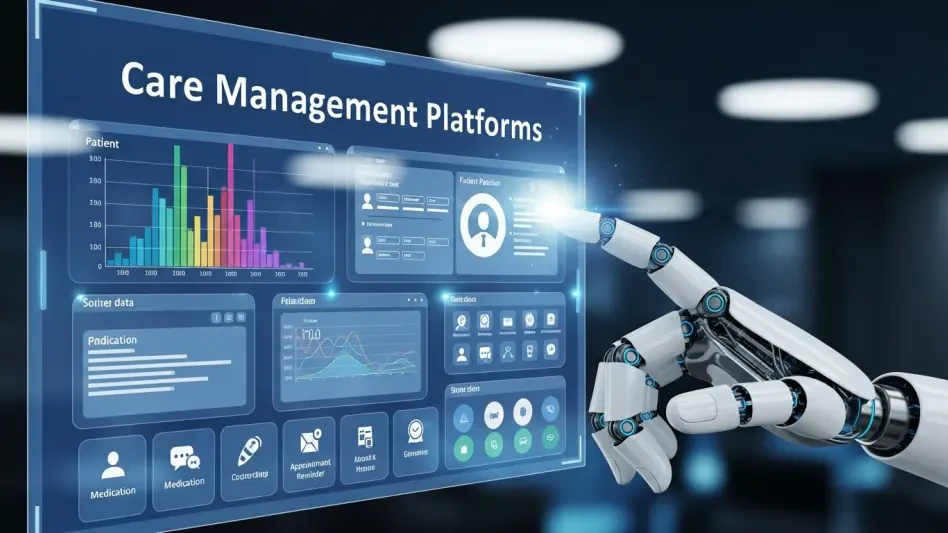
At its core, the Jiva platform embeds advanced analytics and artificial intelligence to automate complex workflows, proactively identify members at high risk for adverse health events, and guide clinical teams toward timely and effective interventions. This capability transforms the care management model from reactive to predictive, allowing health plans to allocate resources more efficiently and improve outcomes before costs escalate. Furthermore, its architecture is engineered to support real-time, FHIR-based data exchange, directly answering federal interoperability mandates while also facilitating sophisticated, omnichannel member outreach that strengthens engagement and satisfaction.
The platform’s market impact is substantiated by significant industry accolades. Gartner’s recognition of ZeOmega as a “Visionary Incumbent” affirms its forward-thinking approach and robust capabilities. This is further reinforced by its consistent leadership in user-based evaluations, having been named Best in KLAS for Payer Care Management Solutions for four consecutive years from 2022 to 2025. Such consistent recognition serves as compelling evidence of the platform’s effectiveness and ZeOmega’s established position as a market trailblazer.
Insights from the Forefront of Health Tech Innovation
Expert perspectives from within the health technology sector reinforce the significance of this shift. Suhas Ramachandra, Vice President of Product Strategy and Innovation at ZeOmega, views the recent Gartner recognition not merely as an award but as a direct reflection of deep customer trust. He emphasizes that such accolades affirm the company’s strategic commitment to staying “ahead of the curve” by anticipating market needs and developing solutions that empower clients to navigate an increasingly complex environment.
This viewpoint underscores a broader industry consensus: continuous and purposeful innovation is no longer optional but is crucial for preparing health plans to meet future challenges. The pace of change in healthcare—driven by new regulations, evolving clinical standards, and rising consumer expectations—demands technological partners that are equally dynamic. The ability to integrate emerging technologies like generative AI, enhance data interoperability, and refine predictive models is what will distinguish the leaders from the laggards in the years to come.
The Future Trajectory of AI in Healthcare Operations
The evolution of AI-powered care management is poised to accelerate, moving beyond current predictive models to create truly proactive and personalized healthcare ecosystems. The next generation of these platforms will leverage more sophisticated machine learning algorithms and real-time data streams to not only identify at-risk individuals but also to prescribe specific, preventative actions for members and their care teams, fundamentally changing the dynamic between payers, providers, and patients.
This forward trajectory promises a host of transformative benefits. For members, it means superior health outcomes achieved through earlier and more precise interventions. For the healthcare system, it points toward enhanced collaboration between payers and providers, fueled by shared data and aligned incentives. This, in turn, is expected to drive greater operational efficiency and lead to a significant, sustainable reduction in the total cost of care.
However, this path is not without its challenges. Navigating the intricate web of emerging AI and data-sharing regulations will require careful governance and a commitment to ethical principles. Ensuring the security and privacy of sensitive health information remains paramount, demanding robust cybersecurity measures. Moreover, the initial cost and organizational effort required for this technological transformation can be substantial, representing a significant hurdle for some organizations. The broader implication is clear: an industry-wide shift is underway where an organization’s very survival and success will be defined by its ability to adopt and master intelligent, interconnected, and agile technology.
Conclusion: Navigating the New Era of Care Management
The analysis revealed that the healthcare payer industry’s migration from monolithic legacy systems toward dynamic, AI-driven platforms was an essential and non-optional evolution. This movement was driven by a perfect storm of regulatory mandates, economic pressures, and the inherent limitations of outdated technology that could no longer meet the demands of a modern healthcare landscape.
This shift positions AI-powered solutions as the core enabler for payers to ensure compliance with complex rules, effectively manage costs, and deliver tangible, lasting value to members. The ability to harness data, automate workflows, and engage individuals proactively is becoming the new standard for operational excellence and competitive differentiation in the market.
Ultimately, risk-bearing organizations that embraced this technological transformation not only secured their own viability but also took the lead in shaping a more efficient, interconnected, and effective future for population health. Their investment in intelligent platforms set a new benchmark for the industry, proving that innovation is the key to navigating the new era of care management successfully.