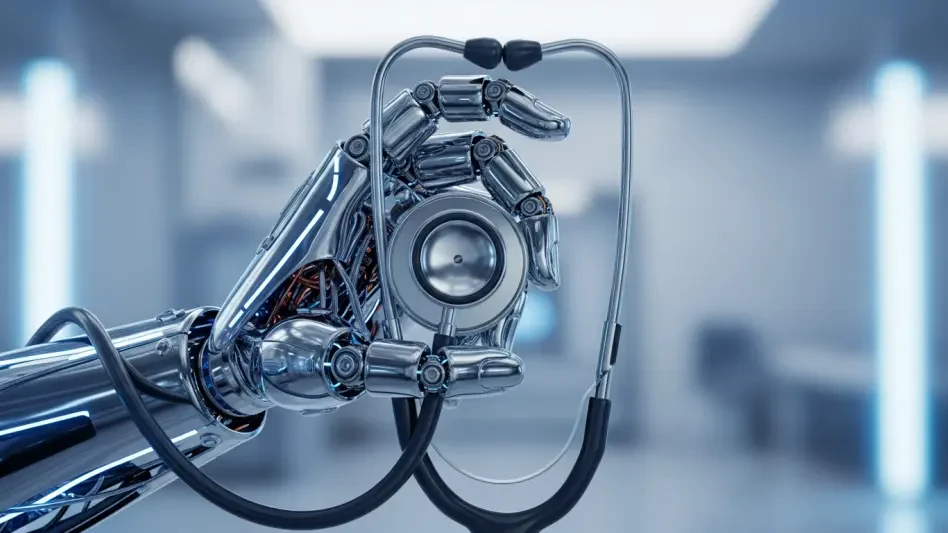

Imagine a hospital where diagnoses are made in mere seconds, administrative burdens are lifted from overworked staff, and patient outcomes improve dramatically—all thanks to an invisible digital partner working behind the scenes. This is no longer a distant dream but a reality unfolding through the integration of artificial intelligence (AI) in healthcare. As technology reshapes the medical landscape, AI stands out as a transformative force, tackling systemic issues like workforce shortages and rising chronic disease rates. This review dives deep into the capabilities of AI in healthcare, exploring its core features, real-world performance, and the hurdles it must overcome to fulfill its potential. With patient expectations soaring and global health systems under strain, understanding this technology’s impact is more crucial than ever.
Core Features and Performance of AI in Healthcare
Clinical Decision-Support Tools: Empowering Precision
At the heart of AI’s role in healthcare lies its clinical decision-support (CDS) tools, designed to enhance the decision-making process for clinicians. These systems analyze vast amounts of patient data in real time, offering evidence-based recommendations that can shape treatment plans with remarkable precision. By pulling from extensive medical databases, CDS tools help doctors and nurses identify patterns or risks that might otherwise go unnoticed, especially in high-pressure environments like emergency rooms.
Moreover, the performance of these tools often hinges on their ability to integrate seamlessly with existing electronic health record systems. When implemented effectively, they reduce diagnostic errors and save critical time, directly impacting patient outcomes. However, their success depends on the quality of data input and the trust clinicians place in their outputs—a balance that remains a work in progress in many settings.
Workflow Optimization: Streamlining Operations
Beyond clinical applications, AI excels in optimizing healthcare workflows, tackling the administrative bottlenecks that frustrate providers daily. From automating appointment scheduling to managing billing processes, these technologies aim to free up valuable time for healthcare professionals to focus on patient care. The technical sophistication behind such systems often involves machine learning algorithms that adapt to specific hospital needs over time.
In practice, workflow optimization tools have shown promising results in reducing staff burnout by minimizing repetitive tasks. For instance, AI-driven transcription services can convert physician notes into structured records with minimal human intervention. Yet, the challenge lies in customizing these solutions to diverse healthcare settings, where one-size-fits-all approaches often fall short.
Latest Innovations and Industry Trends
Turning to recent advancements, AI in healthcare is experiencing a surge of innovation, with new tools emerging to address niche challenges. Technologies like predictive analytics for patient monitoring are gaining traction, enabling early intervention for at-risk individuals. Meanwhile, natural language processing systems are improving how medical literature is accessed, empowering clinicians with up-to-date research at their fingertips.
Additionally, industry behavior reflects a shift from hesitant exploration to bold investment in AI solutions. Global health leaders are prioritizing scalable platforms that can adapt to regional differences in care delivery. This momentum, fueled by partnerships between tech companies and medical institutions, signals a growing confidence in AI’s ability to deliver measurable value over the next few years, starting from this year onward.
Real-World Impact and Applications
AI’s practical impact spans a wide range of healthcare settings, demonstrating its versatility across the care continuum. In diagnostics, for example, imaging algorithms can detect abnormalities in X-rays or MRIs with accuracy rivaling that of seasoned radiologists. Such applications not only speed up the diagnostic process but also alleviate the burden on specialists facing overwhelming caseloads.
In another striking use case, AI-driven wearable devices monitor chronic conditions like diabetes, alerting patients and providers to concerning trends before they escalate. These implementations highlight how technology can extend care beyond hospital walls, fostering proactive health management. The tangible benefits in terms of improved outcomes and reduced costs underscore why many organizations are doubling down on these tools.
Challenges Hindering Broader Adoption
Despite its promise, AI in healthcare faces significant barriers that temper its widespread integration. Technical limitations, such as inconsistent data quality or interoperability issues between systems, often undermine the reliability of AI outputs. These hurdles are compounded by regulatory constraints that demand rigorous validation to ensure patient safety, slowing the pace of deployment.
On top of that, market resistance poses a formidable obstacle, as healthcare professionals sometimes view AI with skepticism, fearing it might erode their autonomy or introduce errors. Addressing this requires not just better technology but also comprehensive training programs to build trust and competence among users. Without such efforts, even the most advanced systems risk gathering dust in clinical settings.
Equally important is the need for robust digital infrastructure to support AI tools, an area where many institutions lag. Overcoming these challenges demands a concerted push toward aligning technology with the practical realities of care delivery. Collaborative efforts between developers and frontline staff are essential to ensure that solutions enhance rather than disrupt existing workflows.
Reflecting on AI’s Journey and Path Forward
Looking back, the journey of AI in healthcare revealed both extraordinary potential and sobering realities. Its capacity to transform clinical precision and operational efficiency stood out as a beacon of hope for strained systems worldwide. Yet, the road was not without bumps, as technical, regulatory, and cultural barriers tested the resolve of innovators and adopters alike.
Moving ahead, the focus should pivot to actionable strategies that bridge these gaps. Healthcare leaders must prioritize investments in training and infrastructure to equip staff with the skills needed to embrace AI confidently. Simultaneously, fostering partnerships between technologists and clinicians can yield tools that truly resonate with real-world needs. By championing a human-centered approach, the healthcare sector can ensure that AI evolves into a trusted ally, paving the way for a more resilient and responsive future in patient care.