
The intricate dance of patient care within a hospital, from admission to discharge, has long been choreographed by principles designed to eliminate waste and perfect every step. For decades, the rigorous methodology of Lean Six Sigma (LSS) served as the master choreographer, streamlining workflows and standardizing procedures to improve safety and efficiency. This system brought manufacturing-level precision to the often-chaotic world of healthcare, saving time, resources, and lives. However, the very nature of modern medicine is undergoing a seismic shift, driven by a relentless torrent of data from countless digital sources. This new reality demands a more dynamic, intelligent approach, transforming the established practice of process improvement into a predictive science where problems are solved before they can even affect a patient.
Beyond the Stethoscope and Stopwatch: Can Hospitals Predict Problems Before They Happen?
The traditional approach to improving hospital operations has been largely retrospective, relying on manual observation and historical data analysis. Improvement teams would map processes, time tasks with stopwatches, and conduct audits to find inefficiencies, much like mechanics inspecting an engine after a breakdown. This method, while effective, is inherently reactive. By the time a bottleneck in the patient discharge process is identified through chart reviews, hundreds of patients may have already experienced unnecessary delays, occupying beds needed for incoming emergencies. This reactive posture is no longer sufficient in a healthcare ecosystem striving for proactive, patient-centered care.
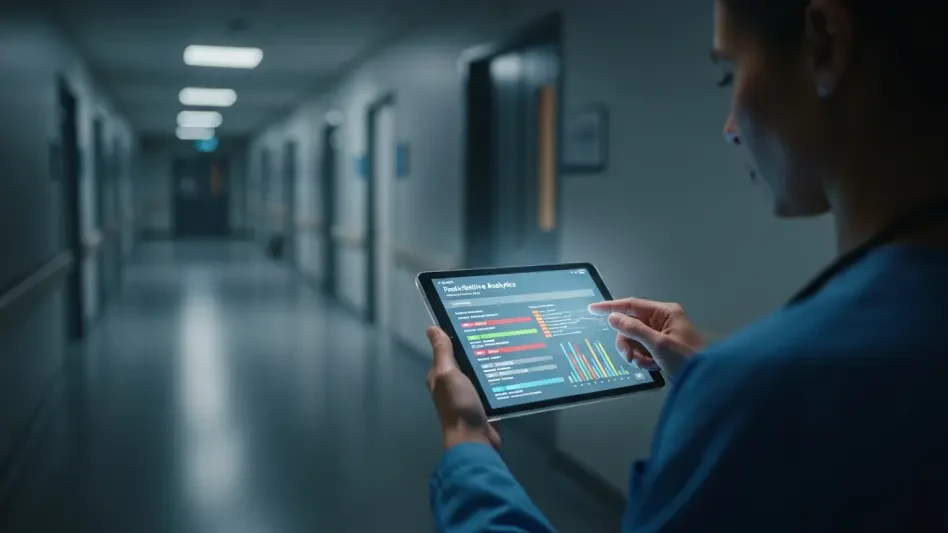
The fundamental shift now underway is from retrospective analysis to predictive foresight. The goal is no longer just to fix broken processes but to anticipate stress points within the system and intervene before they fail. This involves moving beyond simply asking “What went wrong?” to proactively asking “What is likely to go wrong, where, and when?” By harnessing advanced analytical capabilities, healthcare organizations are beginning to model the complex interplay of patient flow, resource availability, and staffing levels. This transition marks a pivotal evolution in operational management, turning the hospital from a series of disjointed workflows into an intelligent, responsive organism capable of adapting to challenges in real time.
The Proven Foundation and Its Modern-Day Bottleneck
For years, Lean Six Sigma has been the gold standard for process improvement in healthcare, providing a structured framework that delivered tangible results. By applying principles aimed at reducing waste (Lean) and minimizing process variation (Six Sigma), hospitals successfully standardized clinical pathways, shortened wait times in emergency departments, and reduced medication errors. The DMAIC (Define, Measure, Analyze, Improve, Control) cycle became the common language for problem-solving, empowering clinical and administrative teams to make data-informed decisions that enhanced both patient safety and the bottom line. This legacy is undeniable, having built a culture of continuous improvement in institutions worldwide.
However, the very data environment that LSS relies on has exploded in complexity, creating a new kind of operational bottleneck. Today’s hospitals generate a constant stream of information from a dizzying array of sources: electronic health records (EHRs), real-time location systems, internet-of-things (IoT) sensors on medical equipment, and digital patient feedback platforms. The sheer volume and velocity of this data overwhelm traditional LSS tools. Manual data collection, which involves sampling small datasets, cannot capture the full picture, and historical analysis often misses the subtle, real-time patterns that signal impending issues. The stopwatch and clipboard are simply no match for the digital deluge, leaving improvement teams struggling to keep pace with the dynamic reality of hospital operations.
The New Synergy: Real-World Examples of AI-Powered Process Excellence
The fusion of artificial intelligence with Lean Six Sigma principles is already yielding remarkable results in leading healthcare systems. At Mayo Clinic, the challenge of inefficient operating room (OR) scheduling was met not with revised spreadsheets but with machine-learning models. Instead of relying on static historical averages for surgical times, these AI systems predict procedure durations and cancellation risks with high accuracy by analyzing countless real-time variables. This predictive power has enabled more dynamic scheduling, leading to a 15 percent reduction in idle OR time and ensuring that valuable surgical suites and clinical staff are utilized more effectively.
Similarly, Mount Sinai Health System tackled the pervasive problem of hospital congestion caused by discharge delays. While traditional LSS projects identified the issue, pinpointing the root cause was difficult. By deploying AI-powered process mining technology, the system automatically mapped every step of the discharge journey using timestamps from the EHR. This analysis revealed that the most significant delays were not clinical but administrative. Armed with this precise insight, Mount Sinai re-engineered its workflows, achieving a 22 percent reduction in average discharge times. This improvement not only enhanced patient experience but also directly increased bed capacity, allowing the hospital to serve more patients.
Across the Atlantic, the National Health Service (NHS) in the United Kingdom is using predictive analytics to manage the unpredictable nature of emergency department demand. AI models analyze historical admission trends alongside external factors like weather patterns and public health data to forecast patient surges. This foresight allows hospital management to proactively adjust staffing levels and allocate resources before a rush begins, rather than reacting to an overcrowded waiting room. The result is a more balanced workload for staff and significantly reduced wait times for patients in urgent need of care, embodying the LSS principle of maintaining smooth and continuous flow.
Re-engineering the Engine of Improvement: AI’s Role in the DMAIC Framework
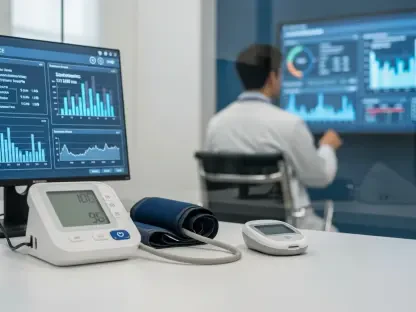
Artificial intelligence is not replacing the DMAIC framework but is instead supercharging each of its phases. In the Define stage, where problems are identified, Natural Language Processing (NLP) can analyze thousands of unstructured patient comments and clinical notes to uncover systemic issues that anecdotal evidence would miss. This allows teams to define problems based on a comprehensive, data-driven consensus rather than isolated complaints. The Measure phase is transformed from a laborious, manual process into a continuous, automated one. Connected systems and IoT devices capture real-time data on everything from patient wait times to equipment utilization, providing a constant and accurate stream of metrics without the need for manual sampling.
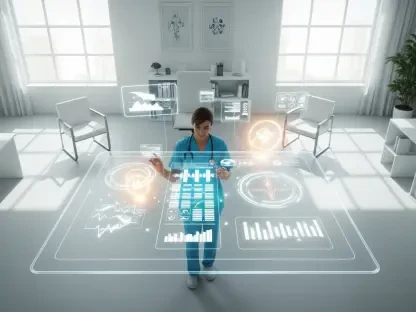
During the Analyze phase, machine-learning algorithms shine by uncovering complex correlations and hidden bottlenecks that are invisible to the human eye. These tools can sift through millions of data points to determine precisely which factors contribute most to adverse outcomes, such as hospital-acquired infections or patient readmissions. For the Improve stage, AI offers the ability to test solutions with unprecedented certainty. Digital twins—virtual replicas of a hospital’s operations—allow leaders to simulate changes to staffing models or patient workflows in a risk-free environment, ensuring that a proposed improvement will work as intended before it is implemented. Finally, AI revolutionizes the Control phase by enabling perpetual oversight. Intelligent dashboards monitor key performance indicators in real time and issue automated alerts when a process deviates from its optimal state, ensuring that improvements are not only achieved but are also sustained over the long term.
Implementing a System of Continuous Intelligence: A Practical Guide
Adopting this new paradigm requires a thoughtful and strategic approach, beginning with a clearly defined problem. Rather than attempting a broad, organization-wide AI implementation, successful initiatives focus on a specific, high-impact area, such as patient flow in the emergency department or resource utilization in the operating room. This focused approach ensures that the efforts of both the LSS and data science teams are directed toward solving a tangible problem, making it easier to demonstrate value and build momentum for future projects.
Success is also contingent on building a robust data infrastructure. AI models are only as good as the data they are trained on, which necessitates a concerted effort to ensure that information from disparate sources like EHRs, scheduling systems, and medical devices is clean, accessible, and standardized. Beyond the technology, fostering a culture of human-AI collaboration is paramount. Leaders must emphasize that these intelligent tools are designed to augment, not replace, the invaluable expertise of clinicians and operational staff. AI can identify a pattern, but it takes human experience and judgment to interpret its meaning and implement a practical solution.
Finally, the integration of AI into healthcare operations must be guided by a strong ethical framework. Establishing clear governance principles for data privacy, model transparency, and human oversight is non-negotiable. Patients and clinicians must have trust in the systems that are shaping care delivery. By prioritizing responsible innovation, healthcare organizations can build a system of continuous intelligence that is not only more efficient and effective but also fundamentally more transparent and trustworthy. This commitment ensures that the pursuit of operational excellence always serves its ultimate purpose: delivering safer, higher-quality care to every patient.
The evolution of Lean Six Sigma through artificial intelligence marked a significant turning point in healthcare operations. This integration provided the tools to move beyond reactive problem-solving toward a proactive and predictive model of management. The journey revealed that technology, when thoughtfully applied, could amplify proven methodologies, creating a system of continuous intelligence that learned and adapted in real time. For the organizations that embraced this synergy, the result was a healthcare environment that was not only more efficient but also more resilient and responsive to the needs of its patients and staff.