
The silent crisis of diagnostic fatigue has reached a critical threshold where the sheer volume of medical imagery produced globally now exceeds the collective processing capacity of human eyesight alone. This imbalance has catalyzed a fundamental restructuring of the radiological department, moving away from a reliance on the individual practitioner’s stamina toward a sophisticated, automated ecosystem. The integration of artificial intelligence into these workflows is no longer a peripheral experiment but a central architectural necessity for diagnostic medicine. By examining the current technological landscape, it becomes clear that the shift from manual interpretation to intelligent orchestration is redefining the boundaries of clinical precision and operational efficiency.
The Evolution of Intelligent Radiological Systems
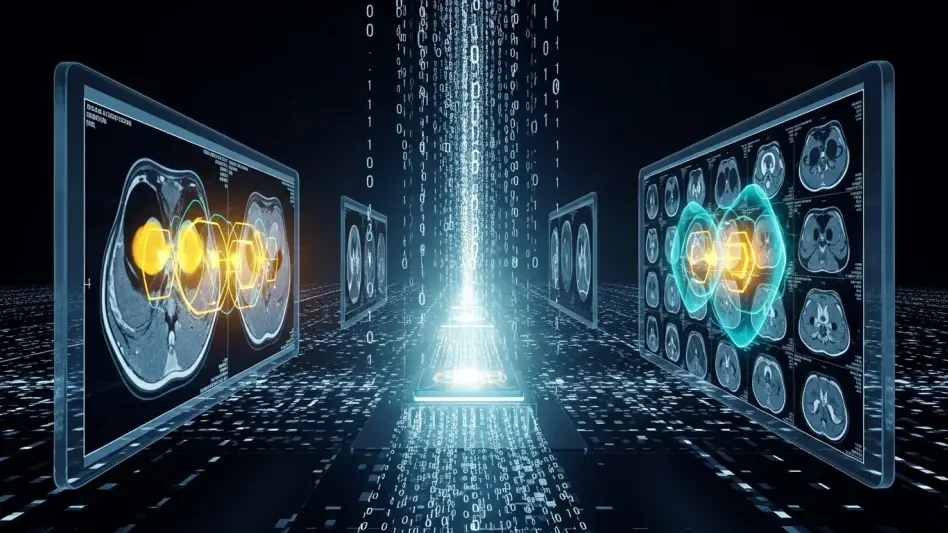
The transformation of radiological practice is rooted in the necessity of managing a modern imaging surge that has seen the number of scans per patient increase exponentially. As deep learning and computer vision matured, they transitioned from being simple academic interests to becoming the core principles of the imaging department. This shift was largely driven by the increasing complexity of diagnostic requirements, where a single patient might generate thousands of slices in a high-resolution CT study. Manual interpretation of such high volumes is not only time-consuming but also prone to the limitations of human perception during long, high-pressure shifts.
Automated systems now act as a primary filter, using computer vision to identify regions of interest before a human observer even opens the file. This evolution represents a departure from the traditional “first-come, first-served” model of image reading. Instead, intelligent systems categorize and organize data based on the suspected severity of the findings. This modernization is a direct response to the global data throughput crisis, where the goal is to mitigate clinician burnout by offloading the repetitive, low-level cognitive tasks of image sorting and initial screening to specialized software agents.
Engineering and Informatics Foundations of AI Workflows
Pattern Recognition: The Role of Convolutional Neural Networks
Convolutional Neural Networks (CNNs) serve as the fundamental backbone for modern image analysis due to their unique ability to process spatial hierarchies in data. Unlike traditional algorithms that rely on hard-coded features, CNNs learn to identify subtle pathologies by analyzing millions of pixels across various layers of abstraction. In the context of high-resolution CT and MRI datasets, these networks excel at detecting minute structural anomalies, such as early-stage nodules or micro-fractures, which might be obscured by surrounding anatomical noise. The implementation of these networks allows for a level of consistency that is difficult to maintain manually across different imaging hardware and patient populations.
Natural Language Processing: Standardized Reporting and Integration
While image analysis is the most visible aspect of AI, Natural Language Processing (NLP) provides the essential link between visual findings and actionable medical records. NLP algorithms are now capable of translating complex visual data into standardized medical reports, which significantly reduces the time spent on manual transcription. Beyond mere speed, this technology ensures that the terminology used is consistent with international classification standards, thereby improving the interoperability of data across different hospital systems. By automating the documentation process, NLP minimizes the risk of human error during the high-stress reporting phase, ensuring that critical findings are clearly communicated to the referring physician.
Reinforcement Learning: Optimizing the Order of Operations
The “order of operations” within a radiology department is a complex logistical puzzle that reinforcement learning algorithms are uniquely equipped to solve. These systems function as intelligent traffic controllers, using historical data and real-time inputs to sequence tasks in a way that maximizes equipment utilization and minimizes patient wait times. By predicting which cases are likely to be urgent, the AI can re-prioritize the worklist, ensuring that a suspected stroke or trauma case is moved to the front of the queue immediately. This dynamic sequencing reduces idle time for expensive machinery and ensures that the most critical medical decisions are made with the shortest possible delay.
Emerging Trends in AI-Augmented Imaging
The current trajectory of the field is moving toward multimodal data integration, where imaging is no longer viewed in a vacuum. Advanced models are beginning to incorporate laboratory results, genetic profiles, and electronic health records to provide a more holistic view of the patient’s condition. This shift marks a transition from reactive image reporting—where the goal is simply to describe what is seen—to proactive prognostic insights. By analyzing patterns across different data types, AI can help clinicians predict how a specific pathology might progress over time, allowing for more personalized and effective treatment plans.
Another significant trend is the rise of federated learning, which addresses the perennial problem of data privacy in healthcare. This method allows models to be trained on diverse datasets across multiple institutions without the actual patient data ever leaving its home server. By using decentralized training and differential privacy techniques, the industry can develop more robust and less biased algorithms. This approach ensures that the resulting models are effective for a wider variety of demographics while maintaining the strict security standards required by global healthcare regulations.
Real-World Applications and Clinical Implementation
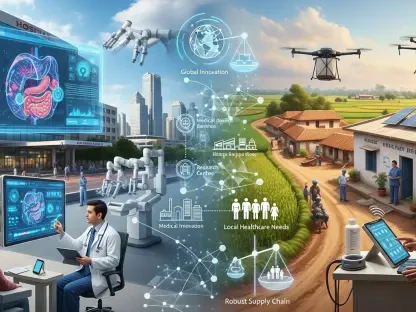
The practical deployment of AI-driven workflows is bridging the gap between high-volume academic centers and resource-constrained rural clinics. In large hospitals, AI serves as an essential tool for “image overload” management, acting as a second set of eyes that never tires. In contrast, for smaller facilities that may not have sub-specialized radiologists on-site, these tools provide a critical layer of diagnostic support, helping generalists identify complex conditions that might otherwise require an immediate external consultation. This democratization of expertise is one of the most tangible benefits of the current technological surge.
Predictive triaging stands out as one of the most impactful use cases in clinical practice today. Algorithms can now scan through background imaging data to identify high-risk patients who may not yet be exhibiting acute symptoms. For instance, an AI might detect early signs of cardiovascular calcification during a routine chest scan intended for an entirely different purpose. By flagging these incidental findings, the system enables early interventions that can prevent major health events, shifting the focus of radiology from purely diagnostic to fundamentally preventative.
Critical Challenges and Integration Barriers
Despite the technical prowess of these systems, the “workflow tax” remains a significant hurdle to widespread adoption. This phenomenon occurs when an AI tool is poorly integrated with existing Picture Archiving and Communication Systems (PACS) or Radiology Information Systems (RIS). If a clinician is forced to toggle between multiple windows or manually input data from one system to another, the cognitive burden increases rather than decreases. For AI to be truly effective, it must function as an invisible layer within the existing ecosystem, providing insights without disrupting the established clinical flow.
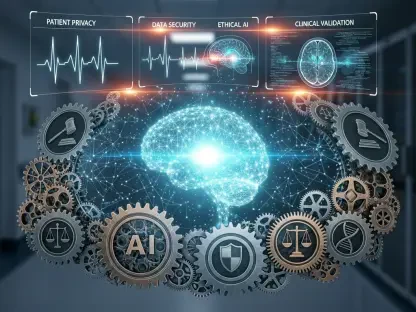
Institutional and regulatory obstacles also present a formidable challenge to the evolution of the field. Current reimbursement models are often poorly suited for AI-assisted diagnostics, as they frequently prioritize the sheer volume of images read over the qualitative value added by an algorithm. Furthermore, the issue of algorithmic bias continues to demand rigorous oversight. If a model is trained on a non-diverse dataset, it may perform poorly for specific patient populations, leading to inequities in care. Addressing these barriers requires a coordinated effort between developers, clinicians, and policymakers to ensure that the technology is both effective and fair.
The Future of Radiology as a Data-Driven Discipline
The role of the radiologist is currently being redefined as the profession moves toward the nexus of precision medicine and genomics. Rather than being confined to the interpretation of pixels, the radiologist is becoming a central diagnostic consultant who synthesizes vast amounts of multimodal data into a coherent clinical strategy. This evolution will likely lead to deeper physician-AI collaborative models where the human expert focuses on high-level decision-making and ethical considerations, while the machine handles the heavy lifting of data processing and pattern identification.
Breakthroughs in physician-AI interaction are expected to enhance the transparency of “black box” algorithms, making the reasoning behind a specific suggestion more accessible to the clinician. As these tools become more intuitive, the boundary between human and machine observation will continue to blur. This synergy will be the cornerstone of a new era of diagnostic medicine, where the speed of computational analysis is balanced by the nuanced judgment of a seasoned medical professional, ultimately leading to a more reliable and patient-centric healthcare system.
Summary and Global Assessment
The transition toward AI-driven radiological workflows represented a necessary response to the unsustainable pressures of modern medical imaging. It was observed that the shift from simple diagnostic accuracy to longitudinal clinical value metrics provided a more accurate measure of a technology’s success. The implementation of CNNs and NLP allowed for a more structured and efficient environment, while the introduction of federated learning protected the integrity of patient data during the training process. These advancements collectively reduced the time required for critical diagnoses and helped stabilize the workload for practitioners facing increasing demands.
In the final assessment, the integration of these intelligent systems was found to be the most viable path forward for a profession burdened by data saturation. Strategic investments in infrastructure and a commitment to cultural adaptation proved to be the decisive factors in whether a facility successfully navigated this technological transition. Ultimately, the adoption of AI did not replace the human element of radiology but instead amplified its most essential qualities. The industry successfully moved beyond the initial hurdles of technical friction and bias, establishing a foundation where precision and efficiency became the standard of care across the global medical landscape.