
The silent failure of a missed medical follow-up can have devastating consequences, a systemic vulnerability that large health systems are now tackling with unprecedented technological precision. AI-Based Workflow Automation represents a significant advancement in the healthcare sector, moving beyond simple task management to create intelligent, high-reliability safety nets. This review will explore the evolution of the technology through the lens of Sentara Health’s implementation of an AI and analytics platform, its key features, performance metrics, and the impact it has had on clinical operations and patient safety. The purpose of this review is to provide a thorough understanding of the technology, its current capabilities as demonstrated in a real-world setting, and its potential for future development across the industry.
The Emergence of AI in Clinical Follow-up Management
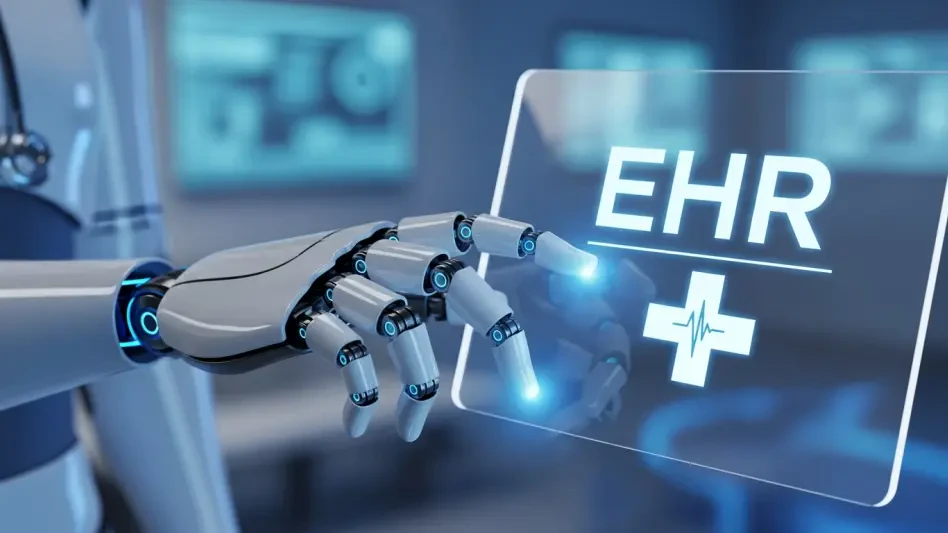
At its core, the technology under review is designed to automate the identification and management of radiology follow-up recommendations, a process historically fraught with manual effort and human error. Such systems leverage artificial intelligence, specifically natural language processing, to interpret clinical documentation and trigger a cascade of automated actions. The primary components include an AI engine for data extraction, a workflow orchestrator for task management, and a deep integration layer that communicates with the hospital’s core Electronic Health Record (EHR). This architecture is engineered to address a pervasive challenge in modern healthcare: ensuring that crucial next steps in a patient’s care journey are not lost in the deluge of clinical data and administrative tasks.
The emergence of these platforms is a direct response to systemic process gaps that pose significant risks to patient safety. Missed or delayed diagnoses stemming from overlooked follow-up recommendations are a well-documented problem, leading to poorer patient outcomes and increased liability for healthcare organizations. Traditional methods, relying on individual clinician diligence, manual worklists, or cumbersome EHR workarounds, have proven inadequate for the scale and complexity of large health systems. Consequently, the industry is increasingly turning toward AI-driven solutions as a critical component in building high-reliability organizations—entities that can consistently deliver safe and effective care despite inherent operational complexities.
Deconstructing the AI Engine and Its Architecture
Natural Language Processing for Clinical Text
The foundational feature of this technology is its ability to “read” and comprehend unstructured clinical text using advanced artificial intelligence and large language models (LLMs). This process functions in real time, analyzing finalized radiology reports the moment they are signed by a radiologist. The AI is trained to identify and extract any language that constitutes an actionable follow-up recommendation, such as “recommend follow-up CT in six months to evaluate lung nodule.” Its core function is to achieve 100% identification of these recommendations, a goal unattainable through manual methods.
This automated extraction stands in stark contrast to previous processes, which were entirely dependent on human intervention. Before this technology, the responsibility to flag a follow-up rested on the radiologist, the ordering provider, or other clinical staff, creating multiple potential points of failure. These manual processes were not only labor-intensive and prone to error but also nearly impossible to standardize or scale across a large enterprise like Sentara Health. The AI engine replaces this fragmented, unreliable system with a single, consistent, and highly accurate mechanism for capturing every critical follow-up need.
Orchestrating the Clinical Response
Beyond simply identifying recommendations, a key component of the platform is its capacity to orchestrate the subsequent complex clinical workflow. Once a case is identified by the AI, the system automatically enriches it with essential patient and provider data pulled directly from the EHR. This includes demographics, contact information, and details of the care team. The platform then uses this contextual information to prioritize the case based on clinical urgency and due dates, routing it into a centralized queue for care navigation and patient scheduling teams.
This automated orchestration transforms what was once a chaotic and decentralized process into a structured, manageable workflow. Instead of relying on disparate spreadsheets, sticky notes, or inbox messages, care coordinators work from a single, dynamic worklist that presents the right task to the right person at the right time. This ensures accountability, as every identified follow-up has a clear owner and a defined path to completion. The technology effectively converts unstructured recommendations into structured, trackable tasks, providing an unprecedented level of control and visibility over the entire follow-up lifecycle.
Seamless Integration with Core Clinical Systems
The practical success of any new healthcare technology hinges on its ability to integrate seamlessly with existing clinical IT infrastructure, most notably the EHR. This AI platform is designed for deep, bidirectional integration with systems like Epic, which is critical for user adoption and workflow efficiency. The data exchange occurs securely in the background, allowing the AI platform to perform the heavy lifting of identification, tracking, and analytics without disrupting established clinical routines. This approach ensures that sensitive patient data remains protected while enabling a fluid transfer of information between the two systems.
This tight integration is paramount because it allows clinicians to interact with the system from within their native EHR environment. For instance, tasks, notifications, and patient communication prompts can be delivered directly into a provider’s or care navigator’s standard Epic in-basket. This design philosophy avoids the common pitfall of introducing yet another standalone application that requires separate logins and training, which often leads to poor adoption. By embedding its functionality within familiar workflows, the technology minimizes disruption and allows clinical teams to focus on patient care, not on navigating new software.
The Shift Toward Proactive Safety Nets
The latest developments in this field, as exemplified by Sentara Health’s strategic investment, signal a significant trend away from simplistic worklist tools and toward comprehensive, AI-driven “safety nets.” Early-generation solutions often did little more than create lists of potential follow-ups, leaving the difficult work of verification, prioritization, and patient outreach entirely to manual effort. In contrast, modern platforms automate the entire process, from initial detection to final appointment scheduling, creating a closed-loop system that actively prevents patients from falling through the cracks.
This technological evolution reflects a broader shift in the healthcare industry’s approach to patient safety. Organizations are moving from a reactive posture, where problems are addressed after an adverse event occurs, to a proactive one focused on system-wide risk mitigation. The goal is no longer just to solve an isolated problem but to build a resilient infrastructure that anticipates and prevents failures before they happen. This proactive mindset is influencing the trajectory of technology development, driving demand for intelligent, integrated platforms that provide enterprise-level visibility and control over high-risk clinical processes.
A Case Study in Enterprise-Wide Deployment
The real-world application of this technology at Sentara Health, a large not-for-profit health system, offers a clear demonstration of its impact. The organization deployed the AI platform to manage a particularly challenging use case: “non-urgent but not optional” follow-ups originating from high-volume radiology service lines like CT and MRI. These incidental findings, such as small nodules or lesions, require timely monitoring but are often the most likely to be overlooked amidst more urgent clinical demands. The implementation was designed to create a reliable process for ensuring these critical follow-ups were completed.
The transformation of workflows was immediate and profound for multiple teams across the health system. Radiologists could continue their work uninterrupted, confident that their recommendations were being systematically captured and acted upon. Care navigators and schedulers, previously burdened with manual chart reviews, now operate from a centralized, prioritized queue that directs their efforts efficiently. Most importantly, leadership gained real-time, dashboard-based visibility into follow-up performance across the entire enterprise, enabling them to identify bottlenecks and measure the program’s impact on patient safety and operational efficiency.
Overcoming Historical Barriers to Follow-Up
This technology is specifically engineered to overcome the systemic challenges that have long plagued follow-up management. These include the technical hurdles of manually tracking recommendations buried within unstructured notes, the functional limitations of standard EHR systems that are not designed for proactive case management, and the market obstacles related to scaling a solution across a large, multi-facility enterprise. The AI platform addresses these by automating data extraction, providing a purpose-built workflow engine, and offering an architecture designed for enterprise-wide deployment.
Sentara’s journey underscores the importance of this integrated approach. The health system had previously attempted to solve this problem with less-integrated tools that ultimately failed to deliver a truly automated path to completion. Those earlier systems created worklists but left the burden of closing the loop on clinical teams, resulting in a highly manual and unsustainable workflow. The success of the new AI-based platform was rooted in its ability to mitigate these historical limitations, providing a fully orchestrated, closed-loop system that connected identification with concrete action.
The Future Trajectory of Clinical AI
Looking ahead, the potential for this technology to expand and evolve is substantial. The immediate future likely involves scaling the platform beyond radiology to other clinical domains where high-risk follow-ups are common, such as pathology, cardiology, and ambulatory care. The same AI and workflow orchestration engine can be adapted to manage recommendations for repeat lab tests, specialty referrals, or chronic disease monitoring, creating a universal safety net that spans the entire patient journey. This expansion would further solidify the technology’s role as a core component of a high-reliability healthcare system.
Further into the future, potential breakthroughs in predictive analytics could elevate these platforms from being reactive safety nets to proactive instruments of preventive care. By analyzing vast datasets, the technology may one day be able to identify patients at high risk of non-compliance or predict which clinical findings are most likely to require intervention. Such advancements could have a transformative impact on patient safety, the delivery of value-based care, and the financial health of healthcare organizations by enabling earlier interventions, reducing downstream costs, and improving long-term patient outcomes.
Review Verdict and Key Outcomes
The review of Sentara Health’s implementation found that the AI-based workflow automation platform delivered on its promise to close critical care gaps. The quantifiable outcomes achieved within the first six months were impressive, highlighted by a 61% follow-up completion rate for appointments managed through the new process. This figure, along with the 4,032 completed follow-ups directly attributable to the system, demonstrated a tangible improvement in ensuring patients received necessary ongoing care.
Ultimately, the analysis concluded that this technology represented a major step forward from previous manual or semi-automated methods. The ability to generate $1.7 million in attributable revenue in just six months provided a powerful business case that aligned financial incentives with the primary mission of enhancing patient safety. This review confirmed the technology’s significant impact and underscored its strong potential to become a standard of care for managing clinical follow-ups across the healthcare industry.