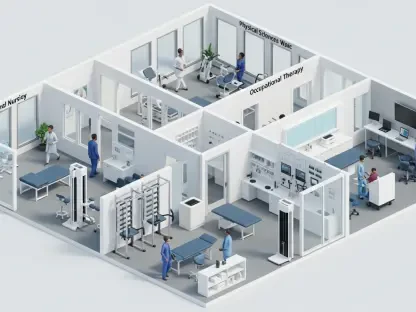

The relentless evolution of technology is fundamentally reshaping industries worldwide, and nowhere is this transformation more critical than in healthcare, where the integration of Artificial Intelligence into Hospital Management Systems is heralding a new era of operational efficiency and patient-centric care. The healthcare landscape is rapidly shifting from a reliance on traditional, manual operations to an intelligent, automated, and data-driven ecosystem. The incorporation of AI into these systems is no longer a futuristic concept but a foundational technology for building the resilient and responsive healthcare infrastructure of tomorrow. This analysis will dissect the accelerating growth of AI in hospital management, explore its practical applications across clinical and administrative domains, examine its future trajectory with its associated challenges and opportunities, and summarize its transformative impact on providers and patients alike.
The Current Landscape AI Adoption and Application
The Momentum of Digital Transformation in Healthcare
The healthcare industry is currently in the midst of a profound digital transformation, a movement driven by an escalating need for technological solutions that are not only sophisticated but also scalable and secure. This trend marks a decisive departure from the fragmented, paper-based systems of the past, which were often inefficient and prone to error. Hospitals and clinics are increasingly recognizing that to meet the demands of modern patient care, they must adopt unified, intelligent platforms that can manage complex workflows and vast amounts of data seamlessly. This shift is not just a matter of convenience; it is a strategic imperative for survival and growth in an increasingly competitive and regulated environment.
This momentum is particularly visible in emerging markets, where healthcare infrastructure is often being built with modern technology from the ground up, allowing facilities to bypass legacy system constraints. The growing investment in cloud-based and AI-powered Hospital Management Systems serves as compelling evidence that this trend is gaining significant traction globally. Financial commitments from both private and public sectors underscore a collective belief that intelligent automation is the key to unlocking new levels of efficiency, improving clinical outcomes, and ensuring the long-term sustainability of healthcare institutions. This investment cycle is creating a fertile ground for innovation, accelerating the development and adoption of even more advanced AI tools tailored for the unique challenges of hospital administration.
Real-World AI Integration in Hospital Operations
One of the most immediate and tangible impacts of AI in hospital management is its ability to drive intelligent automation, thereby enhancing operational efficiency. AI algorithms are now adept at handling a wide array of repetitive administrative and clinical tasks that previously consumed a significant portion of staff time. These tasks include patient appointment scheduling, insurance claim processing, medical billing, and routine data entry into electronic health records. By automating these processes, AI not only accelerates workflows but also dramatically reduces the likelihood of human error, leading to more accurate financial records, fewer claim rejections, and a more streamlined administrative backbone for the entire facility.
This integration extends deep into specialized clinical departments, optimizing their unique functions. In pharmacy management, for instance, AI enables predictive stock management, analyzing usage patterns to prevent shortages of critical medications while minimizing overstocking. It also facilitates automated dispensing and creates a seamless connection to Electronic Medical Record (EMR) systems, ensuring that prescriptions are accurately filled and documented, which is a critical step in reducing medication errors. Similarly, in laboratory and radiology departments, AI automates sample processing workflows, provides real-time flagging of abnormal or critical test results for immediate clinical attention, and enhances diagnostic imaging analysis, helping radiologists identify subtle anomalies more quickly and accurately.
Beyond the administrative and clinical backend, AI is fundamentally enhancing the patient journey itself. Outpatient and queue management systems, powered by predictive analytics, are moving beyond simple ticketing to dynamically adjust schedules based on real-time patient flow, staff availability, and clinic resources. This intelligent coordination significantly reduces patient wait times, a common source of dissatisfaction. Furthermore, AI helps personalize care coordination by tracking a patient’s progress through various consultations and procedures, ensuring a smooth and efficient visit. By optimizing every touchpoint, from initial appointment booking to final discharge, AI contributes to a more positive, responsive, and satisfying healthcare experience for every patient.
Key Viewpoints and Professional Insights
The Shift to Data-Driven Decision-Making
A core tenet of the AI revolution in healthcare is the definitive shift from reactive problem-solving to proactive, predictive management. Professionals in the field emphasize that AI’s greatest strength lies in its capacity to analyze the colossal and complex datasets generated within a hospital every day. By identifying subtle patterns, historical trends, and correlations that would be impossible for a human to detect, AI provides clinicians and administrators with actionable, evidence-based insights. This empowers them to make faster, more informed decisions regarding patient care, resource allocation, and operational strategies, transforming the very nature of hospital leadership.
This transition to data-driven governance moves decision-making away from intuition or anecdotal experience and grounds it firmly in empirical evidence. For administrators, this means optimizing staff schedules based on predicted patient admission rates or managing supply chains to prevent interruptions. For clinicians, it translates to enhanced clinical decision support, where AI algorithms can analyze a patient’s complete medical history alongside population-wide data to suggest potential diagnoses or optimal treatment pathways. This analytical power equips healthcare leaders with the foresight needed to anticipate challenges and capitalize on opportunities, fostering a culture of continuous improvement and clinical excellence.
Breaking Down Departmental Silos
Healthcare professionals have long pointed to departmental silos as a primary obstacle to efficient and cohesive patient care. In a traditional hospital structure, departments such as pharmacy, laboratory, billing, and various clinical wards often operate with disparate information systems, leading to communication bottlenecks, redundant data entry, and fragmented patient information. An integrated, AI-driven Hospital Management System acts as a powerful unifying force, creating a centralized nervous system that connects these previously isolated units. This creates a single source of truth for all patient and operational data.
This interdepartmental connectivity fosters a new level of seamless communication and collaboration. When a physician orders a lab test, the request is instantly and accurately transmitted to the laboratory module, and the results are automatically populated back into the patient’s electronic record upon completion, alerting the physician in real-time. This eradicates delays and miscommunications, leading to faster diagnostic and treatment cycles. Moreover, by providing a holistic view of the entire hospital’s operations, these unified systems enable administrators to optimize resource allocation with unprecedented precision, ensuring that beds, specialized equipment, and staff are deployed where they are needed most.
Focusing on the Human Element
Perhaps the most crucial professional insight is that the primary benefit of AI is not to replace healthcare workers but to empower them. The technology’s true value lies in its ability to liberate highly skilled clinicians, nurses, and support staff from the crushing weight of administrative burdens and repetitive, low-value tasks. By automating the paperwork, scheduling, and data management that often dominate a healthcare professional’s day, AI allows them to redirect their time, energy, and expertise toward what matters most: direct patient interaction, complex clinical reasoning, and compassionate care.
This focus on the human element is a critical strategy in addressing the pervasive issue of professional burnout, which has become a crisis in the healthcare industry. When medical staff are less encumbered by administrative friction, they experience greater job satisfaction and are better equipped to provide the empathetic, high-quality care that patients deserve. AI, therefore, functions as a powerful support tool, an intelligent assistant that handles the logistical complexities of modern healthcare, allowing human professionals to operate at the top of their license and rediscover the fulfilling aspects of their vocation.
The Future Trajectory Challenges and Opportunities
The Next Wave of AI-Powered Healthcare
Looking ahead, the long-term benefits of AI integration for both providers and patients are profound. For providers, the future promises a significant and sustained reduction in workload, coupled with increasingly sophisticated clinical decision support tools that will act as expert partners in diagnosis and treatment planning. This synergy will not only enhance the accuracy and efficacy of care but also foster an environment of continuous learning and professional growth. For patients, this evolution translates into a healthcare experience that is fundamentally more convenient, responsive, and safer. Personalized treatment plans derived from comprehensive data analysis will become the norm, and predictive systems will help prevent adverse events before they occur.
The synergy between AI and cloud-based platforms is a critical enabler of this next wave of healthcare innovation. Cloud technology provides the essential foundation of scalability, allowing hospitals to expand their digital infrastructure without massive upfront capital investment. It also offers unparalleled remote accessibility, enabling secure access to patient data and management tools from anywhere, a crucial capability for telehealth and multi-facility health systems. Furthermore, reputable cloud platforms deliver robust data security and disaster recovery protocols, ensuring the integrity and privacy of sensitive health information. This powerful combination makes healthcare facilities more agile, resilient, and adaptable to the dynamic operational demands of a constantly changing world.
Overcoming Barriers to Widespread Adoption
Despite the immense potential, the path to widespread AI adoption is not without its challenges. One of the most significant barriers is the high initial cost and complexity of implementation. Integrating a sophisticated new AI system with a hospital’s existing legacy infrastructure can be a daunting technical and financial undertaking. Ensuring seamless data interoperability between old and new systems is paramount for success but often requires substantial investment in both technology and expert personnel. These initial hurdles can be particularly prohibitive for smaller or less-resourced healthcare facilities.
Beyond the technical and financial considerations, there are important ethical and workforce challenges that must be addressed. The use of patient data to train AI algorithms raises critical questions about privacy, consent, and security. It is imperative to develop and enforce strong governance frameworks to prevent misuse and protect patient confidentiality. Another key concern is the potential for algorithmic bias, where AI systems might perpetuate or even amplify existing health disparities if not carefully designed and audited. Finally, the successful adoption of AI requires a cultural shift within the healthcare workforce, necessitating comprehensive training and education programs to equip staff with the skills and confidence to use these new tools effectively and ethically.
Conclusion Building the Future-Ready Hospital
The analysis revealed that the integration of Artificial Intelligence into Hospital Management Systems represented the definitive pathway toward creating a sustainable, scalable, and high-performing healthcare future. This trend was not merely an incremental upgrade to existing processes but a fundamental re-engineering of how hospitals operate. The shift from manual, siloed operations to a unified, intelligent ecosystem was identified as the core mechanism driving improvements in both administrative efficiency and clinical excellence.
The investigation further reinforced that AI has established itself as a core engine of progress within the healthcare sector. It was shown to be a transformative force that redefines operational workflows, enhances the precision of clinical diagnostics, and personalizes the patient experience from start to finish. By empowering healthcare teams with predictive insights and relieving them of administrative burdens, AI-powered systems proved their capacity to make hospital operations faster, more accurate, and more profoundly patient-centric.
Ultimately, the findings presented a clear imperative for healthcare facilities to strategically adopt AI-powered systems. In an increasingly complex and competitive environment, such technologies are no longer a luxury but a necessity for survival and growth. The ability to leverage intelligent automation and data-driven decision-making will be the key differentiator for institutions aiming to not only meet the challenges of today but also to build a future-ready foundation capable of delivering a consistently higher standard of care.