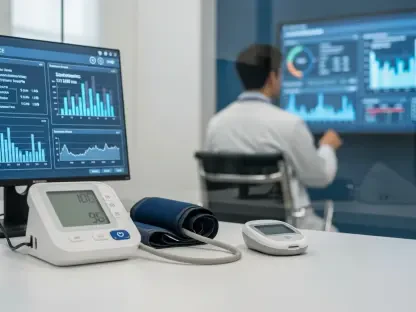

In an era where a single patient’s journey can generate more data points than the entire human genome project, healthcare organizations find themselves at a critical crossroads between information overload and transformative insight. The sheer volume of information produced daily promises a future of personalized, predictive, and efficient care. However, this potential remains largely locked away within fragmented systems and underdeveloped analytical capabilities. The key to unlocking this value lies not in collecting more data, but in cultivating data maturity—the organizational ability to translate raw information into life-saving action. This report explores the path to data maturity, from its foundational principles to its most advanced applications, outlining a strategic imperative for every modern healthcare provider.
The Current State of Healthcare Data A Landscape of Untapped Potential
The modern healthcare data ecosystem is a vast and complex network, encompassing everything from structured electronic health records (EHRs) and billing information to unstructured clinical notes and patient-generated data from wearables. This explosion of sources has created a paradox where institutions are simultaneously data-rich and insight-poor. Information often exists in isolated pockets, with different departments and legacy systems unable to communicate effectively, preventing the creation of a unified, longitudinal view of a patient’s health.
This fragmented landscape involves a diverse set of stakeholders, each with a distinct role in the data value chain. Providers generate and use clinical data at the point of care, payers analyze claims data to manage risk and costs, technology vendors build the platforms that house this information, and patients are increasingly contributing their own health data. For this ecosystem to function effectively, a data-driven culture is paramount. Such a culture moves beyond simple data collection, fostering an environment where analytics inform decisions at every level to improve clinical outcomes, streamline operational efficiency, and ultimately enhance the patient experience.
Ascending the Data Maturity Ladder From Information to Insight
The Four Levels of Data Proficiency in Healthcare
The journey toward data-driven care can be mapped across four distinct levels of proficiency. The first is Foundational Excellence, where the focus is on collecting accurate, standardized, and reliable data. This involves establishing clear data dictionaries and governance protocols to ensure that terms like “readmission” or “length of stay” are interpreted consistently across the organization. Following this is Level 2, Descriptive Analytics, which moves beyond simple collection to identify historical trends and performance patterns. Here, organizations begin to answer the question, “What has happened?” by analyzing past data to understand clinical and operational performance.
The upper tiers of maturity unlock proactive capabilities. Level 3, Predictive Analytics, leverages historical data and statistical models to forecast future events, such as a patient’s risk of developing a certain condition or projected emergency department volumes. This allows for proactive interventions rather than reactive responses. The pinnacle is Level 4, Prescriptive Action, where advanced models and artificial intelligence (AI) not only predict what will happen but also recommend optimal actions. At this stage, systems can suggest the best course of treatment for a patient or automate resource allocation, turning data-driven insights into automated, intelligent decisions that directly impact care.
Quantifying the Impact The ROI of Data Driven Care
The tangible benefits of advancing along the data maturity model are reflected in the rapid expansion of the healthcare analytics sector. Market analysis indicates robust growth, with the global market projected to expand significantly from 2025 through the end of the decade as more organizations invest in turning data into a strategic asset. This investment is driven by the clear return it generates across clinical, operational, and financial domains.
Advancing data proficiency directly transforms key performance indicators (KPIs) that define quality and efficiency in healthcare. Organizations with mature data capabilities have demonstrated measurable success in reducing hospital readmission rates, optimizing patient length of stay, and improving patient safety by identifying risks before adverse events occur. The clinical and financial returns become increasingly substantial at higher maturity levels, where predictive and prescriptive analytics can prevent costly complications, improve resource utilization, and support value-based care models, solidifying the business case for continued investment.
Navigating the Hurdles on the Path to Data Maturity
The path to data maturity is often impeded by significant technological barriers. Many healthcare systems are saddled with legacy infrastructure and siloed data repositories that prevent seamless information exchange. Achieving true interoperability—the ability for different systems to share and interpret data—remains a formidable challenge, requiring substantial investment in modernizing technology and adopting standardized communication protocols.
Beyond technology, organizational and cultural challenges present equally stubborn obstacles. Securing sustained buy-in from leadership is critical, as is fostering a culture of cross-functional collaboration between clinical, IT, and administrative teams. Resistance to change is a natural human element, and staff may be skeptical of data-driven methodologies if they are not properly educated on their value. Overcoming this inertia requires strategic solutions, including the development of a practical implementation roadmap that delivers early, visible wins. Furthermore, investing in staff training and building trust in analytical tools are essential steps to ensure that new capabilities are not just implemented but also embraced.
Building on a Foundation of Trust The Regulatory and Ethical Framework
Progress in data utilization must be built upon an unwavering commitment to regulatory compliance and ethical principles. Navigating complex data privacy laws, such as the Health Insurance Portability and Accountability Act (HIPAA) and the HITECH Act, is a fundamental requirement. These regulations set the baseline for protecting sensitive patient information, but true data stewardship goes further by implementing robust security measures to guard against breaches in an increasingly interconnected digital environment.
Effective data governance is the mechanism that ensures both compliance and data integrity. By establishing standardized data dictionaries, clear ownership protocols, and access controls, organizations can maintain the quality and consistency of their data assets. As healthcare moves further into the age of AI and predictive modeling, these governance structures become even more critical. Organizations must confront significant ethical considerations, including the potential for algorithmic bias that could perpetuate health disparities and the need for transparency in how AI-driven recommendations are generated and applied in clinical settings.
The Next Frontier AI Personalization and the Future of Patient Care
High data maturity serves as the essential launchpad for deploying effective artificial intelligence and machine learning applications in healthcare. Without clean, standardized, and accessible data, AI algorithms cannot deliver reliable or meaningful results. As organizations climb the maturity ladder, they unlock the ability to power sophisticated tools that can analyze complex patterns in medical images, predict disease outbreaks, and personalize treatment plans based on an individual’s unique genetic and lifestyle data.
This synergy between data maturity and AI is fueling a wave of innovation, including the rise of precision medicine, predictive diagnostics that identify diseases before symptoms appear, and automated clinical workflows that free up clinicians’ time. This shift is also creating a new competitive landscape, where data-native companies and technology disruptors are challenging traditional healthcare models with advanced analytics platforms. Looking ahead, the greatest areas for growth lie in proactive population health management, real-time clinical decision support embedded directly into workflows, and truly patient-centric care models that empower individuals to take an active role in managing their health.
From Raw Data to Life Saving Action A Strategic Imperative
The journey from basic data collection to predictive, actionable intelligence represented a fundamental transformation in healthcare delivery. Organizations that successfully navigated this path moved beyond simply recording what happened and began to proactively shape what would happen next, turning their data from a passive byproduct of care into an active, life-saving asset. This evolution was not merely a technological upgrade but a deep, strategic shift in organizational culture and capability.
Ultimately, achieving data maturity was no longer an option but had become a core priority for every forward-thinking healthcare organization. It was the critical differentiator that enabled providers to enhance patient outcomes, improve operational efficiency, and innovate in an increasingly complex and competitive environment. Successful leaders recognized this imperative and took decisive action. They began by honestly assessing their organization’s position on the maturity model, then charted a clear, incremental course for advancement that balanced investments in technology with a commitment to developing their people and refining their processes for a data-driven future.