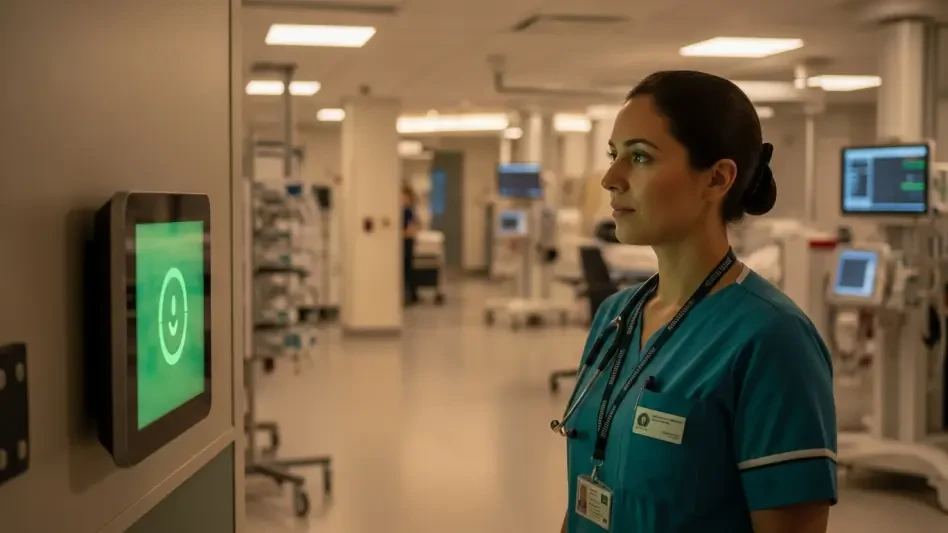

Andrea Greco is a seasoned leader in healthcare safety who currently serves as the Senior Vice President of Healthcare Safety at CENTEGIX. With decades of experience dedicated to enhancing employee, patient, and family engagement, she has become a leading voice in the movement to redefine how medical institutions protect their most valuable asset: their people. Her work focuses on the deployment of layered, innovative safety solutions that move beyond physical barriers to address the profound emotional and psychological challenges facing today’s clinicians.
The following discussion explores the critical distinction between physical security and psychological safety, the impact of workplace violence on staff retention, and the strategic implementation of technology to foster a culture of support.
How should healthcare leaders distinguish between immediate physical security and the long-term emotional erosion caused by workplace violence? What specific steps can be taken to ensure that daily hypervigilance does not transform into permanent burnout or clinical disengagement?
Immediate physical security is about containment and response, but emotional erosion is a silent, cumulative process that happens between incidents. We must recognize that while a security guard can stop a physical threat, they cannot stop the anxiety that lingers for months or years after the event. To prevent hypervigilance from turning into permanent burnout, leaders need to shift from an “incident response” mindset to one that treats psychological safety as a foundation of everyday work. This involves creating an environment where workers don’t feel they have to be “on guard” at all times, which we can achieve by implementing proactive support systems and acknowledging that these emotional responses are rational reactions to unsafe conditions, not personal weaknesses.
With nearly half of the workforce contemplating departure due to safety concerns, how can organizations move beyond standard exit interviews? What practical metrics should executives track to identify the internal emotional toll on staff before it leads to a resignation?
When 45% of healthcare workers say they are likely to leave in the next 12 months, waiting for an exit interview is far too late to take action. Executives should be tracking “stay metrics” that measure psychological safety, such as the frequency of staff disengagement, the avoidance of specific high-risk units, and self-reported levels of emotional exhaustion. We know that 30% of workers in low-safety environments report difficulty focusing and nearly 40% experience a lack of energy, so these behavioral shifts serve as early warning signs. By monitoring how many staff members feel the employer’s response to violence is “insufficient”—a figure that currently stands at 68% for physicians—leaders can quantify the trust gap and intervene before a resignation letter is ever written.
Since traditional security is often reactive, what does a truly proactive safety environment look like on a typical shift? How can peer support or debriefing protocols be structured so that experiencing violence is no longer dismissed as just part of the job?
A proactive environment is one where the safety net is invisible but ever-present, ensuring that no clinician ever feels truly alone during their shift. Instead of waiting for a crisis to escalate to the point of a “code,” a proactive system uses discreet wearable technology that allows staff to signal for help at the very first sign of tension. Debriefing protocols must be formalized so that every incident, no matter how “minor,” is met with an immediate check-in that validates the worker’s experience rather than normalizing it as “part of the job.” This shift in culture ensures that the 80% of nurses who experienced workplace violence in 2023 feel heard and supported, transforming the workplace from a site of endurance into a site of care.
Repurposing tracking systems for safety can sometimes feel like digital micromanagement to clinicians. How can leaders implement wearable alert technology without triggering fears of surveillance, and what privacy safeguards are essential to maintaining workforce trust during these rollouts?
Trust is fragile, and we must avoid the “efficiency trap” where systems like Real-Time Location Systems (RTLS), originally designed for inventory management, are retrofitted for people. When a tool requires continuous location monitoring throughout a shift, it feels like surveillance, which only adds to the administrative burden and stress clinicians already face. The key is to implement safety-first technology that remains dormant or respects privacy until the user actively triggers an alert. By prioritizing solutions that are grounded in how care is actually delivered rather than how efficiently assets are tracked, we send a message that the technology exists to protect the person, not to monitor their every move.
Behavioral health units and emergency departments face different risks than a NICU or standard ward. How should safety protocols be customized for these high-stress environments, and what are the operational trade-offs when balancing open visitation with strict staff protection?
A one-size-fits-all approach to visitor management and safety protocols simply does not work because the risk profiles of a NICU and a behavioral health unit are fundamentally different. Behavioral health and emergency departments require more restrictive, nuanced protocols that account for the high-stress nature of the patient population while still allowing for compassionate care. The trade-off often involves a tighter control over movement and visitation, but these measures must be seen as a prerequisite for safety rather than an obstacle to service. Customization means layering technology and personnel in a way that provides a specific safety net for the unique vulnerabilities of each department, ensuring that the staff feels protected regardless of the intensity of their environment.
When workers begin avoiding certain units or disengaging emotionally as a form of self-protection, what is the immediate impact on patient care quality? How can leadership bridge the trust gap with employees who feel that current safety responses are insufficient?
The immediate impact of emotional disengagement is a measurable decline in the compassion and focus required for high-quality patient care. When 30% of stressed workers report difficulty focusing, the risk of clinical errors increases, and the patient experience suffers because the provider is operating in a state of self-preservation. Leadership can bridge this trust gap by moving beyond empty “culture” metrics and investing in tangible safety solutions that clinicians actually ask for. When leaders demonstrate a commitment to mitigating the lasting harm of violence—not just the physical injuries—they begin to rebuild the foundational trust necessary for a stable and functional healthcare workforce.
What is your forecast for psychological safety in healthcare?
My forecast is that psychological safety will soon be recognized as the primary indicator of an organization’s long-term viability and retention success. As we face persistent workforce shortages, healthcare systems will be forced to move away from reactive security and toward holistic environments where emotional well-being is treated with the same urgency as physical health. If we do not make this shift, we will continue to see a mass exodus of talent; however, I believe that by integrating respect-based technology and proactive support protocols, we can stabilize the profession. Ultimately, the future of healthcare depends on our ability to protect the caretakers as much as the patients, ensuring that the industry remains a sustainable and safe calling for the next generation of providers.