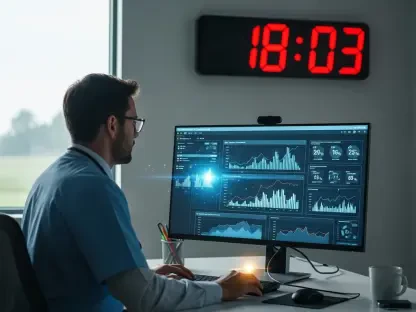
The digital transformation of healthcare has created an environment where a nurse’s ability to navigate complex data systems is becoming as vital as their capacity for clinical compassion. As electronic health records, data analytics, and telehealth platforms become standard, the proficiency of the nursing workforce in using these tools directly impacts patient safety and care quality. This shift has propelled nursing informatics—the integration of nursing science with information science—from a niche specialty to a core competency. The central challenge now facing healthcare organizations and academic institutions is identifying the essential attributes that enable a nurse to not just use technology, but to master it for optimal clinical decision-making.
The industry is grappling with a skills gap that cannot be closed by technical training alone. While proficiency with specific software is necessary, it is not sufficient. The true measure of a technologically adept nurse lies in their ability to synthesize data, solve problems within digital environments, and apply information critically to patient care. This report examines the crucial connection between cognitive abilities, psychological traits, and technical skill. It analyzes emerging research that pinpoints the foundational pillars of nursing informatics competency, offering a new blueprint for how the next generation of nurses must be trained to meet the demands of a tech-driven healthcare system.
The New Nexus Where Nursing Science Meets Information Science
Nursing informatics is the formal convergence of nursing, data management, and analytical sciences, designed to manage and communicate information in healthcare. In the modern clinical setting, this field is no longer an abstract concept but a practical reality that underpins daily operations. It allows nurses to leverage vast amounts of patient data to identify health trends, predict risks, and implement evidence-based interventions. The goal is to transform raw data into actionable knowledge that enhances clinical workflows and improves patient outcomes. This makes informatics competency a non-negotiable skill for every professional entering the field.
The integration of technology is indispensable for delivering safe, efficient, and high-quality care. From automated medication dispensing systems that reduce human error to predictive analytics that flag at-risk patients, technology serves as a critical support system for clinical judgment. The ability of a nurse to effectively operate within this digital ecosystem is directly linked to their capacity to optimize patient care. Consequently, the pressure is on educational programs to produce graduates who are not only clinically sound but also technologically fluent, capable of adapting to a constantly evolving landscape of digital health tools.
This educational imperative presents a significant challenge. Preparing future nurses for the demands of informatics requires a curriculum that goes beyond basic computer literacy. It involves cultivating a deep understanding of data management principles, information systems, and the ethical implications of digital health. The core challenge lies in shifting from a traditional, practice-based pedagogy to one that seamlessly integrates technological training with clinical reasoning. Success depends on a collaborative effort among key stakeholders. Academic institutions must develop and implement forward-thinking curricula, while clinical settings must provide practical, hands-on experience with the specific informatics tools used at the point of care. This partnership is essential to bridge the gap between classroom theory and real-world application.
Decoding Competency From Abstract Thought to Applied Skill
The Critical Thinking Imperative A Foundational Pillar for Digital Proficiency
A strong positive correlation exists between a student’s disposition toward critical thinking and their ability to achieve competency in nursing informatics. Research confirms that individuals with an analytical mindset—those who naturally question, analyze, and evaluate information—are better positioned to adopt and master complex technologies. This cognitive foundation allows them to move beyond rote memorization of software functions and instead understand the logic behind the systems they use. They are more likely to troubleshoot technical issues, interpret data accurately, and recognize how information flows through different clinical systems to impact patient care.
These advanced problem-solving skills translate directly into navigating the intricate informatics tools prevalent in today’s healthcare environments. Electronic health records, for instance, are not merely digital filing cabinets; they are complex databases that require users to locate, synthesize, and document information with precision. A nurse with strong critical inquiry skills can efficiently extract relevant data from a patient’s history, identify inconsistencies, and apply that information to their clinical assessment. This ability is crucial in high-stakes situations where quick, data-informed decisions can significantly affect patient outcomes.
In response to these industry needs, nursing curricula are increasingly designed to foster critical inquiry. Educational trends show a move away from passive learning toward active, problem-based models that compel students to think analytically. Pedagogical strategies such as case studies, clinical simulations, and data analysis projects are being integrated to challenge students to think like clinicians who use technology as a primary tool. The objective is to cultivate a mindset where technology is not just a task to be completed but an integral component of the critical thinking process itself.
The Self-Control Catalyst How Personal Discipline Amplifies Technical Mastery
While critical thinking provides the cognitive framework for success, recent findings unveil self-control as a key performance moderator that amplifies a nurse’s technical mastery. Self-control, or the capacity for self-regulation, acts as the engine that drives cognitive potential toward a tangible outcome. It encompasses traits like discipline, focus, and persistence, which are essential for overcoming the challenges inherent in learning sophisticated digital systems. A student may possess a brilliant analytical mind, but without the discipline to engage in focused practice, that potential may never fully translate into proficient performance.
Analysis of student performance data reveals how self-regulation transforms abstract thought into applied skill. Students reporting higher levels of self-control demonstrate a significantly stronger connection between their critical thinking disposition and their informatics competency. These individuals are better at managing their time, setting learning goals, and persevering through the frustrations of technical troubleshooting. Self-control enables them to engage in the deliberate practice required to internalize complex workflows and develop muscle memory for navigating digital interfaces, ultimately achieving a higher level of mastery than their less-disciplined peers.
Looking ahead, the importance of such psychological traits in technology-centric roles is projected to grow. As healthcare systems become more complex and the cognitive load on nurses increases, the ability to maintain focus and regulate one’s learning process will become a critical differentiator. Future hiring and training models will likely need to account for these attributes, viewing them not as soft skills but as essential components of professional competence. The nurse of tomorrow must be both a sharp thinker and a disciplined practitioner.
Bridging the Implementation Gap Why Cognitive Skill Alone Is Not Enough
The primary obstacle to developing a fully tech-proficient nursing workforce is the systemic neglect of psychological attributes in traditional training models. For decades, nursing education has rightly prioritized the development of clinical knowledge and critical thinking. However, the assumption has been that if a student can think critically, they will naturally succeed in any applied domain. Recent evidence challenges this notion, highlighting that without a concurrent focus on self-regulatory skills like self-control, even the most astute thinkers may struggle to achieve high-level technical proficiency. The implementation gap lies in the failure to recognize and cultivate the personal discipline needed to convert thought into action.
Integrating concepts like self-regulation into traditional nursing pedagogy is a complex endeavor. Nursing curricula are already dense with essential clinical content, and educators may lack the training or resources to teach psychological skills explicitly. Furthermore, these attributes are often viewed as innate personality traits rather than malleable skills that can be developed through targeted intervention. Overcoming this requires a paradigm shift, where self-control is reframed as a teachable competency that is just as vital as clinical assessment or medication administration.
To bridge this gap, a more holistic educational model is needed. Strategies for developing this model include incorporating high-fidelity simulations that demand sustained focus and disciplined execution under pressure. Structured workshops on time management, goal-setting, and reflective practice can provide students with the tools to manage their own learning more effectively. Additionally, the introduction of mindfulness practices into curricula can enhance students’ self-awareness and regulatory capabilities, equipping them with the mental resilience needed to master challenging technical skills and thrive in a high-stress clinical environment.
Redefining Professional Standards for a Tech-Driven Era
The proliferation of digital health regulations and standards has a direct impact on the competency requirements for nurses. Legislation governing patient data privacy, such as the Health Insurance Portability and Accountability Act (HIPAA), and standards for electronic health record interoperability necessitate a sophisticated understanding of compliance and security. Nurses are on the front lines of data entry and retrieval, making their adherence to these standards critical for protecting both patients and their organizations. As a result, professional competency is no longer defined solely by clinical skill but also by the ability to practice safely and ethically within a regulated digital landscape.
This evolution in professional practice standards demands a corresponding alignment in educational curricula. Nursing programs must ensure their informatics training goes beyond functional use of technology to include a robust education on the regulatory environment. Curricula must be continuously updated to reflect changes in digital health policy, data security protocols, and professional codes of conduct related to information management. The goal is to produce graduates who not only know how to use an electronic health record but also understand their professional and legal responsibilities in handling sensitive patient information.
The growing importance of compliance and security is fundamentally shaping the content of informatics training. Education must now cover topics such as cybersecurity threats, secure communication practices, and the proper protocols for documenting and sharing electronic health information. This ensures that new nurses are prepared to act as vigilant guardians of patient data, thereby minimizing risks of breaches and protecting patient trust. This focus on security and compliance is transforming informatics from a technical skill into a core professional responsibility.
Architecting the Nurse of Tomorrow A New Educational Blueprint
The future of nursing education lies in a fully integrated approach that intentionally develops mind, skill, and discipline in parallel. This new blueprint moves beyond siloed courses on technology and instead weaves informatics and self-regulatory training into the entire fabric of the curriculum. The nurse of tomorrow must be architected to be a critical thinker who can analyze complex data, a skilled technician who can operate advanced digital tools, and a disciplined professional who can maintain focus and persistence in a demanding environment. This holistic model recognizes that these three pillars are interdependent and equally essential for modern practice.
To build this new kind of professional, emerging pedagogical strategies are being deployed. High-fidelity simulations are becoming more sophisticated, creating realistic clinical scenarios where students must use real informatics tools under pressure, forcing them to integrate their thinking, technical skills, and self-control. Another promising trend is the introduction of mindfulness and resilience training, which equips students with the psychological tools to manage stress and sustain focus. These innovative methods move education from the theoretical to the practical, preparing students for the cognitive and emotional demands of a tech-infused workplace.
A key component of this new blueprint is the rise of interprofessional collaboration between nursing and informatics specialists. By bringing together clinical educators and IT experts, institutions can create richer, more relevant learning experiences. These partnerships can lead to the co-development of cutting-edge training modules, joint research projects, and mentorship opportunities that expose students to the realities of team-based, technology-driven care. This collaborative approach ensures that nursing education remains aligned with industry needs and prepares graduates to function effectively in interdisciplinary healthcare teams from day one.
The Integrated Mandate A Unified Path to Enhanced Healthcare
The analysis within this report synthesized core findings that identified critical thinking and self-control as dual necessities for modern nursing. It was established that while a strong disposition for critical inquiry created the foundation for informatics competency, its ultimate realization was significantly amplified by a nurse’s capacity for self-regulation. This interplay underscored a clear mandate for a paradigm shift in nursing education toward a more holistic model that cultivates both cognitive and psychological attributes simultaneously.
Final recommendations were directed at educators and healthcare leaders to champion this integrated approach. The evidence called for a strategic redesign of curricula to explicitly teach and assess self-regulatory skills alongside technical and clinical competencies. For healthcare leaders, the imperative was to foster a workplace culture that supports continuous learning and provides resources for developing these essential skills throughout a nurse’s career. These actions were positioned not as optional enhancements but as fundamental requirements for building a resilient and effective workforce.
The ultimate prospect illuminated by these findings was the creation of a technologically adept nursing workforce capable of delivering superior patient care. The report concluded that by architecting the nurse of tomorrow around the integrated pillars of critical thought and personal discipline, the healthcare industry could more effectively harness the power of digital innovation. This unified path was presented as the most promising strategy for improving clinical efficiency, enhancing patient safety, and ultimately achieving better health outcomes for all.