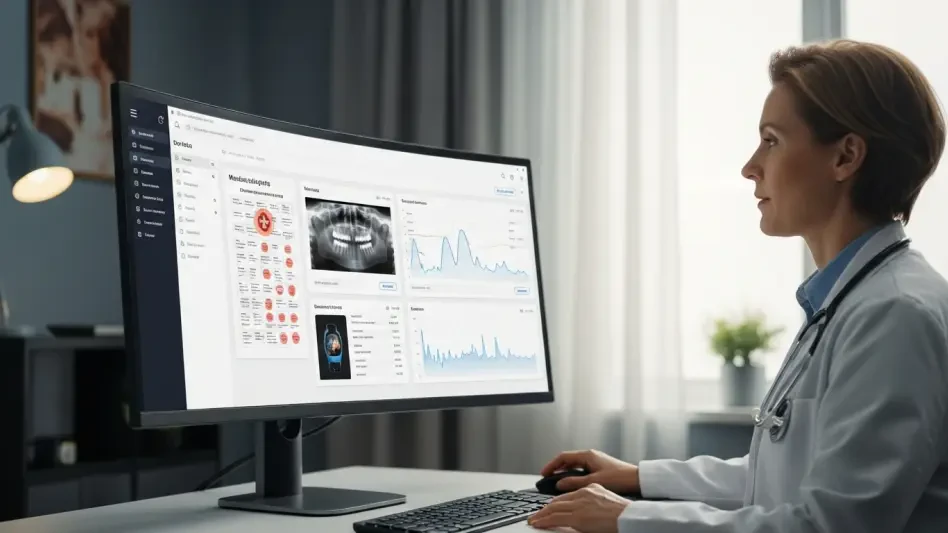

A healthcare system equipped with cutting-edge digital tools and vast repositories of information still struggles to assemble the most fundamental document needed for effective care: a patient’s complete and current health story. This critical paradox lies at the heart of modern medicine, where technological advancement has outpaced the practical ability to share and synthesize data. While individual facilities have digitized records, these pockets of information remain isolated, creating a fragmented landscape where a patient’s journey is scattered across countless disconnected systems. The consequence is a system operating with blind spots, where the promise of data-driven care is consistently undermined by the reality of digital silos. This is not merely an issue of technical inconvenience; it represents a fundamental barrier to achieving safer, more efficient, and truly patient-centered healthcare.
In an Age of Digital Everything, Why Does a Patient’s Complete Health Story Remain a Puzzle Their Doctor Can’t Solve?
The modern healthcare environment is characterized by an abundance of digital information, yet this wealth of data does not translate into a coherent, unified patient record. The core of the problem lies in a persistent lack of interoperability—the capacity for different information systems to communicate and exchange data seamlessly. A patient’s information from a primary care physician, a specialist, a hospital visit, a dental check-up, and a therapy session often resides in separate, incompatible electronic health record (EHR) systems. Each system acts as a digital island, trapping vital context and preventing the formation of a longitudinal health narrative. This fragmentation forces clinicians to navigate a maze of incomplete histories, making it exceedingly difficult to coordinate care effectively and understand the full scope of a patient’s health status.
This situation creates a high-risk environment where critical decisions are made with only a fraction of the necessary information. For clinicians, the absence of a comprehensive patient view means piecing together clues from patient recall, manually chasing down records from other providers, and often proceeding without key details from recent tests or consultations. For patients, the impact is direct and significant. It materializes as disjointed care journeys where specialists are unaware of treatments prescribed by other doctors, leading to a heightened risk of medical errors, the ordering of redundant and costly diagnostic tests, and frustrating delays in receiving appropriate and timely treatment. The promise of digitized health remains unfulfilled as long as these digital barriers persist.
The High Cost of Disconnected Data: From Patient Risk to System Inefficiency
Expanding the definition of health data beyond the traditional confines of the EHR reveals just how much critical information is missing from the clinical picture. A person’s health is not solely defined by lab results and physician notes; it is a complex mosaic of lifestyle habits, social conditions, and care received outside of typical medical settings. Crucial pieces of this puzzle, such as behavioral health notes, dental records, data from wearable fitness trackers, and information on social determinants of health (SDOH) like housing stability and food security, are rarely integrated into a patient’s primary medical record. This omission prevents clinicians from understanding the holistic context of a patient’s life, which often directly influences health outcomes.
The systemic non-interoperability between medical and dental care provides a stark illustration of this divide. Oral health is intrinsically linked to overall systemic health, with conditions like gum disease associated with diabetes and heart disease. However, the two fields operate in nearly complete informational isolation, using separate record-keeping systems that do not communicate. This disconnect persists even in integrated care settings. For example, in health centers where medical and dental services are co-located, a mere 42% of dental providers can enter data into a patient’s primary medical record. This gap hinders coordinated care, preventing a primary care physician from seeing a dentist’s findings that might indicate a larger health issue and vice versa.
Mapping the Gaps in the Modern Health Record
The clinician experience confirms the immense challenge of working within this fractured data ecosystem. According to a study in JAMA Open Network, the problem is less about data access and more about its practical usability. While many physicians can obtain outside records, only 23% find that external data is “very easy” to integrate into their clinical workflow. The difficulty is compounded when dealing with information from different EHR vendors; in these cases, a mere 8% of physicians report that the data is “very easy” to use. This friction at the point of care means that even when data is available, it often remains unused due to the effort required to incorporate it, leaving clinicians to rely on an incomplete patient picture.
This challenge is not unique to the United States, but the nation’s performance lags significantly on the global stage. A report from Black Book Research, which assesses interoperability based on the percentage of healthcare entities actively exchanging patient data, ranked the U.S. at just 59.8%. This figure stands in sharp contrast to the near-universal connectivity achieved by international leaders like Estonia (99.1%) and Finland (98.9%). These countries have successfully built national health information exchange infrastructures that provide clinicians with seamless access to comprehensive patient records, regardless of where care was delivered. The comparison highlights a systemic gap in the American healthcare framework, underscoring the urgent need for a more cohesive national strategy.
The Evidence of a Fractured System: National and Global Benchmarks
A multi-pronged approach combining policy, technology, and incentives is essential to build a truly unified data ecosystem. A foundational step involves strengthening policy and regulatory expectations, such as applying information blocking rules more broadly across the healthcare landscape to ensure data flows freely and securely where it is needed. This creates a clear mandate for sharing and discourages the hoarding of information that has long plagued the industry. On the technical front, continued advancement and adoption of standards are paramount. Frameworks like the Trusted Exchange Framework and Common Agreement (TEFCA) establish the governance and technical requirements for nationwide exchange, while data standards like HL7 FHIR (Fast Healthcare Interoperability Resources) provide a common language for how that data is structured and shared, making it more usable across different systems.
Fostering equitable participation is another critical component of this blueprint. Sectors like behavioral health, social care, and long-term care possess invaluable information that shapes patient outcomes but have historically been left out of the national data exchange. Creating clear pathways and financial incentives for these organizations to adopt interoperable systems and join the network is necessary to capture a more complete view of a patient’s health. Furthermore, the ecosystem must embrace new frontiers of data, particularly patient-generated information from wearables and remote monitoring devices. Initiatives like the CMS ACCESS model, which encourages the integration of this data into care delivery, signal a growing recognition that a patient’s story is written not just in the clinic but in the moments of their daily life.
A Blueprint for Connection Strategies to Build a Unified Data Ecosystem
The path forward requires a deliberate and sustained effort to dismantle the barriers that have kept critical health information in silos. The healthcare industry’s core goals of improving quality, advancing equity, and delivering value-based care were contingent upon the ability to see the whole patient. By expanding data standards to encompass new and diverse sources, strengthening policies that mandate and incentivize sharing, and ensuring that all contributors to a patient’s health—from dentists and social workers to device manufacturers—could participate in a nationwide exchange, a foundation was laid. Building these more complete, multi-dimensional health records was essential for creating the supportive and effective care models required for the 21st century. The work to connect these disparate data islands ultimately enabled a system where information could follow the patient, empowering both providers and individuals to make better, more informed health decisions.