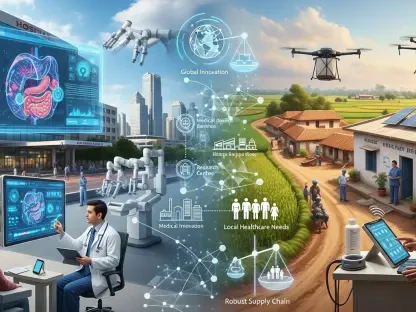

The modern clinical landscape is currently processing more data in a single day than entire hospital systems managed during the previous decade, creating a high-stakes race to turn this information into life-saving outcomes. Healthcare has evolved into a deeply interdisciplinary ecosystem where the health arc of a patient is no longer defined by a single visit but by a continuous stream of data points shared between providers, researchers, and patients. This shift toward data-driven operations requires a move away from reactive, episodic care toward proactive population health management. By integrating holistic health records, organizations are beginning to see a clearer picture of community wellness trends before they manifest as crises in the emergency room.
Core segments of the industry, ranging from Electronic Health Records (EHR) to Human Capital Management (HCM) and supply chain logistics, are increasingly intertwined. When clinical data interacts with staffing metrics and equipment availability, administrators can make more informed decisions that affect both patient safety and the bottom line. The impact of Software as a Service (SaaS) and on-premises applications has moved beyond mere digital storage; these tools now serve as the primary engines for financial decision-making. As these systems become more sophisticated, the focus is shifting toward how this metadata can be synthesized to provide a longitudinal view of the patient experience.
The Modern Healthcare Ecosystem: A Shift Toward Data-Driven Operations
Analyzing the interdisciplinary nature of healthcare involves recognizing that data is the connective tissue between disparate stakeholders. Patients now expect their health information to be as mobile and accessible as their banking data, forcing a transition in how providers handle record ownership. This evolution is driving the industry to look at Electronic Health Records not as static digital files, but as dynamic assets that must inform every level of the organization, from the bedside to the boardroom. Consequently, the integration of HCM and supply chain data ensures that the right clinician and the necessary medical supplies are available exactly when the data predicts a patient will need them.
The significance of holistic health records lies in their ability to facilitate a shift from reactive medicine to proactive population health management. When health systems can view a patient through a wide-angle lens—considering social determinants, historical trends, and real-time biometric data—the focus moves toward prevention. This transition is heavily supported by the interplay between SaaS platforms and on-premises clinical applications, which now allow for more nuanced financial and clinical modeling. By leveraging these tools, healthcare leaders are identifying inefficiencies and reallocating resources to areas with the highest potential for improving patient longevity and quality of life.
Catalysts for Change and the Economic Impact of Analytics
Emerging Technological Trends and Evolving Patient Expectations
The rise of the Data Lakehouse architecture represents a fundamental change in how the industry handles information, simplifying access to disparate sources that were previously locked in incompatible formats. This architectural shift allows organizations to run complex queries across structured clinical data and unstructured notes or images simultaneously. Moreover, consumer behavior is acting as a primary catalyst for this change, as individuals demand greater interoperability and portable health identities that move seamlessly across state or national borders. This demand is pushing the industry away from simple descriptive reporting and toward real-time interventional insights that can alter a treatment plan mid-course.
Integration of the Internet of Things (IoT) and genomics data into the longitudinal patient record is no longer a peripheral experiment but a core requirement for modern care. As wearable devices provide a constant stream of physiological data, the clinical record is becoming a living document that reflects a patient’s life outside the hospital walls. When combined with genomic sequencing, this data allows for a level of predictive modeling that was previously impossible. This trend is creating a more personalized healthcare experience where the “average” patient no longer exists; instead, every intervention is tailored to the specific biological and behavioral profile of the individual.
Market Growth Projections and Performance Indicators
Market growth forecasts for artificial intelligence and machine learning within the global healthcare sector indicate a period of rapid expansion through 2028. This growth is fueled by the necessity of cloud infrastructure, which significantly reduces the cost associated with cold storage and manual data consolidation. By moving away from expensive, fragmented legacy hardware, health systems are freeing up capital to invest in sophisticated algorithms that can identify patterns of disease or operational bottlenecks. The economic argument for these technologies is clear: they transform raw data from a liability into a high-value asset.
Performance metrics are also undergoing a revolution as optimized resource allocation becomes the primary indicator of institutional health. Hospitals are now using advanced analytics to target and reduce readmission rates, which directly impacts their financial standing under value-based care models. By applying predictive analytics to patient discharge patterns, facilities can identify high-risk individuals who may require additional post-acute support. These indicators provide a roadmap for sustainable growth, ensuring that as the volume of care increases, the quality remains high and the waste is minimized through precise, data-backed interventions.
Overcoming Structural and Technical Barriers to Transformation
The persistence of data silos remains one of the most significant hurdles to achieving a truly integrated healthcare environment. Patient histories are often fragmented across multiple providers, leading to a “broken mirror” effect where no single clinician sees the complete picture. To address this, organizations are adopting strategies for data normalization, ensuring that raw information is not just collected but is also logical and actionable across different platforms. Without this curation, the sheer volume of data can become overwhelming, leading to “analysis paralysis” rather than informed action.
Mitigating clinician burnout is a critical component of the technical transformation, as many providers feel burdened by the administrative requirements of digital systems. Advanced analytics can alleviate this by automating data synthesis and reducing the manual entry tasks that currently consume hours of a physician’s day. Furthermore, robust change management practices are essential to bridge the gap between legacy systems and the next generation of analytics. Successful organizations have recognized that technology alone is not a cure-all; it must be accompanied by a culture that values data literacy and encourages staff to embrace new workflows.
Navigating the Global Regulatory Landscape and Security Standards
Data sovereignty laws are increasingly shaping how international healthcare is delivered, with strict rules governing where patient information can be stored and who can access it. These regulations protect patient privacy but also require healthcare organizations to implement sophisticated governance frameworks that can handle complex cross-border requirements. Upholding security measures through data anonymization has become the gold standard, allowing for large-scale research while maintaining the absolute privacy of the individual. This balance is crucial for fostering an environment where innovation does not come at the expense of personal trust.
Ensuring compliance with evolving information standards is vital for fostering interoperability between pharmaceutical companies and healthcare providers. As clinical trials become more data-intensive, the ability to share information securely and transparently is a competitive advantage. Building patient trust requires a high level of transparency regarding how personal health information is utilized for research and drug development. When patients understand that their data is being used ethically to advance medical science, they are more likely to participate in the digital health ecosystem, creating a virtuous cycle of data sharing and discovery.
The Future Roadmap: Precision Medicine and AI-Driven Innovation
Predictive diagnostics are set to play a central role in forecasting public health crises and seasonal surges in patient volume. By analyzing environmental data and early clinical indicators, health systems can prepare for influenza spikes or other outbreaks weeks in advance, ensuring that staffing and supplies are positioned correctly. This level of foresight will move the industry toward a model of precision medicine where interventional insights are tailored to specific patient criteria. Instead of a one-size-fits-all approach, AI will enable clinicians to select the most effective treatment based on a patient’s unique genetic makeup and lifestyle data.
Potential market disruptors, such as real-time IoT monitoring and AI-facilitated drug development, will likely redefine the boundaries of care delivery. We are moving toward a future where a significant portion of chronic disease management occurs in the home, monitored by intelligent systems that only alert a human clinician when an intervention is necessary. This shift envisions a more equitable healthcare system where reduced overhead and optimized workflows allow for higher quality care at a lower cost. By streamlining the path from diagnosis to treatment, these innovations promise to make the most advanced medical care accessible to a broader segment of the population.
Strategic Summary and the Future Path for Healthcare Investment
The investigation into the digital healthcare landscape revealed that breaking down data silos was the fundamental requirement for achieving the next level of patient care. It became clear that the integration of disparate data sources was not merely a technical goal but a strategic necessity for institutional survival. Leaders who prioritized the development of data science skills within their workforce found themselves better positioned to navigate the complexities of modern regulation and patient expectations. The move toward a Data Lakehouse architecture proved to be a turning point, allowing for the normalization of vast amounts of previously unusable information.
Investment strategies focused on identifying process gaps and implementing scalable analytics that could grow alongside the organization. The most successful implementations were those that addressed clinician burnout directly by automating the most tedious aspects of data management. Ultimately, the industry demonstrated that technology-enabled efficiency could significantly elevate the human experience by giving providers more time to focus on empathy and direct patient interaction. Looking forward, the path for healthcare investment will likely center on refining these AI tools to ensure they remain transparent, secure, and deeply integrated into the clinical workflow.