
The very walls of a modern hospital are beginning to think, transforming sterile rooms once defined by beeping monitors and call bells into dynamic ecosystems of proactive and deeply personalized patient care. This shift represents more than an upgrade; it is a fundamental redefinition of the healthcare environment, moving away from reactive treatment toward a model of constant, intelligent observation and support. This digital transformation is not a distant vision but an urgent reality, underscored by a global market poised for exponential growth, projected to nearly triple in value between now and 2030.
The accelerating pace of this evolution is compelling health systems nationwide to move beyond pilot programs and toward system-wide adoption. The question is no longer if smart technology will be integrated, but how it can be implemented effectively, scalably, and with a clear return on investment in patient safety and clinical efficiency. By examining the core technologies, tangible benefits, and strategic blueprints from leading healthcare organizations, a clear playbook emerges for navigating this new standard of care, where data-driven insights and seamless connectivity become the bedrock of the patient experience.
From Blueprint to Bedside: The Mechanics of Modern Healthcare
Beyond the Buzzwords: Deconstructing the Integrated Patient Room
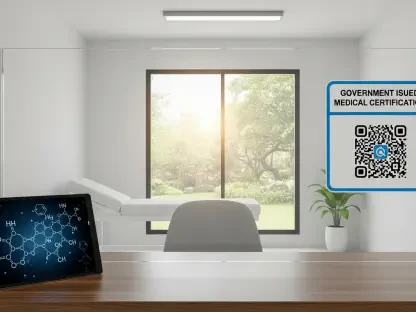
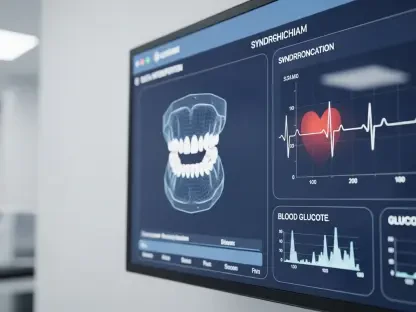
The term “smart hospital room” often evokes images of futuristic gadgets, but its true power lies in its integrated network architecture. At its core, a smart room is an interconnected web of hardware, software, and artificial intelligence, all meticulously anchored to the facility’s Electronic Health Record (EHR). This ecosystem includes devices like digital door signs, interactive patient whiteboards, in-room cameras for virtual observation, and a host of connected medical instruments. The system’s intelligence, however, comes from its ability to synchronize data in real time, creating a single source of truth for the entire care team.
This constant data flow translates into powerful, yet subtle, improvements in clinical workflow and patient safety. For example, a digital sign outside a patient’s room can silently glow yellow, instantly and non-verbally communicating a fall risk to any staff member approaching. Before even entering, a clinician can tap the screen to see updated care notes or team assignments, information that is pulled directly from the EHR. This level of integration presents a significant challenge for health systems, which must not only plan for these features in new construction but also develop strategic plans for retrofitting legacy infrastructure to ensure a consistent standard of care across all facilities.
Unlocking Measurable Gains in Patient Safety and Clinical Efficiency
The most compelling argument for smart hospital technology is its proven ability to deliver quantifiable improvements in patient outcomes. Health systems that have embraced these tools are reporting significant gains. At WellSpan Health, the implementation of an AI-powered monitoring system led to a remarkable 52% reduction in patient falls. This system uses intelligent sensors to detect when a high-risk patient is attempting to get up unaided, alerting a virtual observer who can intervene verbally and notify on-site staff before an incident occurs.
Beyond direct safety enhancements, this technology profoundly impacts clinical efficiency by automating routine administrative and communication tasks. This automation frees clinicians from a significant portion of their documentation burden, allowing them to dedicate more time to direct, hands-on patient care. The same initiative that reduced falls also resulted in a 92% decrease in the need for in-room sitters, a costly and labor-intensive safety measure. Further augmenting this is the rise of centralized virtual care hubs, such as the one established by UMass Memorial Health, where a dedicated team of nurses and specialists provides an additional layer of expert oversight, conducting virtual rounds and offering rapid response consultations to bedside teams across the hospital.
The Patient as an Active Participant: Personalizing the Care Journey
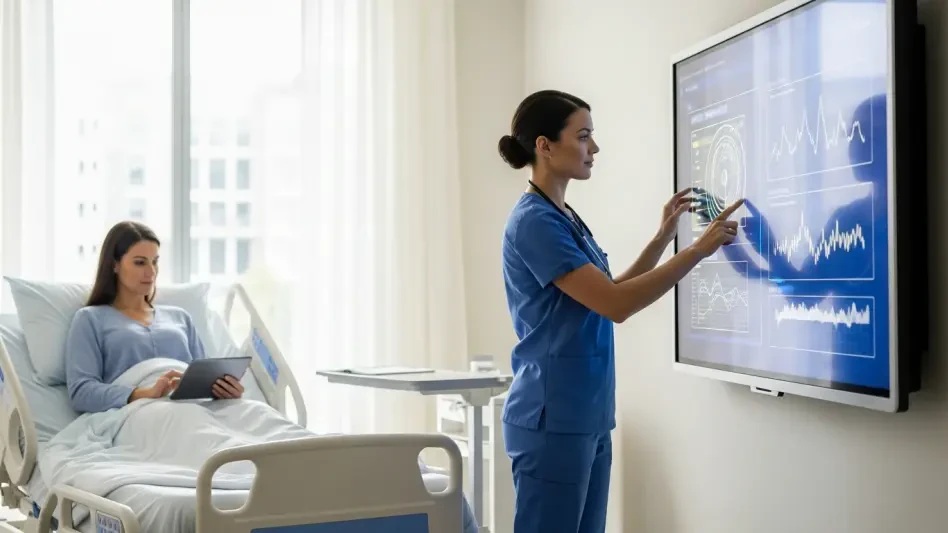
A crucial, and sometimes overlooked, aspect of the smart hospital is its capacity to empower patients, transforming them from passive recipients of care into active participants in their own health journey. By placing control of the room’s environment, educational content, and entertainment options directly into the patient’s hands via an in-room tablet or interactive television, these systems restore a sense of agency that is often lost during a hospital stay. Patients can review their daily schedule, learn about their medications, or even participate in virtual visits with family members, all from their bed.
This focus on the human experience is paramount. A user-centered design process, exemplified by OhioHealth’s stakeholder-driven approach, ensures that technology is deployed to solve real-world problems. Their initial research revealed a powerful insight: patients’ deepest desire was to not “be treated like a number.” This finding directly shaped their technology choices, leading to features that foster personalization and direct communication. Consequently, the common assumption that technology creates an impersonal distance is being challenged; instead, when implemented thoughtfully, it facilitates deeper engagement, better-informed patients, and a more humane and personalized hospital experience.
Strategic Pathways to Implementation: Contrasting Rollout Philosophies
As health systems move to adopt smart technology, distinct strategic models for implementation have emerged. UMass Memorial Health represents a “build new” flagship approach, investing heavily in a state-of-the-art digital hub and opening a new hospital wing with fully integrated smart rooms from day one. This strategy establishes a gold standard of care that can serve as a blueprint for future modernization across their network. In contrast, WellSpan Health pursued a data-driven pilot program, starting with a flexible, cart-based system to test concepts and gather concrete metrics. The overwhelming success of this pilot provided the undeniable evidence needed to justify a large-scale, system-wide expansion to hardwired rooms.
These differing approaches highlight the growing importance of technologically agnostic and interoperable platforms that can be scaled across diverse, multi-facility health networks. A system with a mix of new and aging buildings cannot be locked into a single, proprietary solution. A key lesson can be extracted from OhioHealth’s model, which strikes a balance between the two extremes. After launching their initial smart hospital, they developed a phased, needs-based retrofitting plan for their older facilities. This demonstrates that a measured and strategic modernization plan is a highly viable and effective path for elevating the standard of care across an entire hospital system without requiring a complete rebuild.
The Playbook for a Successful Smart Hospital Transition
The collective experience of these early adopters reveals a clear set of drivers behind the widespread embrace of smart hospital technology. Demonstrable improvements in patient safety, measurable gains in clinical efficiency, and enhanced satisfaction for both patients and staff are the undeniable forces making this transition an operational imperative. These benefits are not abstract concepts but are backed by hard data, providing a compelling business case for the significant investment required.
From these successful implementations, a best-practice framework emerges for other organizations to follow. The journey should begin with a collaborative design phase that involves all stakeholders—from nurses and physicians to IT specialists and patients themselves—to identify core challenges and define clear goals. This should be followed by a metrics-focused pilot program to validate the chosen technologies and quantify their impact. Finally, the entire initiative must be built on a scalable and interoperable technological foundation that can grow with the organization and adapt to future innovations.
The most critical, non-negotiable element of this playbook is the central role of the Electronic Health Record. Seamless, real-time, and bidirectional integration with the EHR should not be treated as a feature but as the essential backbone of any smart hospital initiative. It is this integration that transforms a collection of disparate devices into a cohesive, intelligent system that empowers clinicians with the right information at the right time, ultimately ensuring that technology serves its primary purpose: to enhance human care.
Charting the Future of Connected, Proactive, and Personalized Care
The evidence gathered from across the healthcare landscape confirmed that smart hospitals were no longer an experiment but a fundamental component of modern healthcare delivery. The integration of connected devices and centralized data platforms had moved from the pilot stage to become the standard for both new construction and strategic retrofitting, establishing a new baseline for patient care in the process.
The journey, however, was clearly evolving beyond simple connectivity. The industry’s focus had shifted toward leveraging artificial intelligence and predictive analytics to prevent adverse events before they happened. By analyzing subtle changes in patient data and movement patterns, these advanced systems aimed to create a truly proactive care environment.
Ultimately, the forward-looking vision articulated by these pioneers was one of an environment so intelligent and responsive that it could anticipate the needs of both patients and clinicians. The ultimate goal of the smart hospital was to create a system that silently manages logistics, flags potential risks, and personalizes the patient journey, ensuring a safer and more humane experience for every individual who passes through its doors.