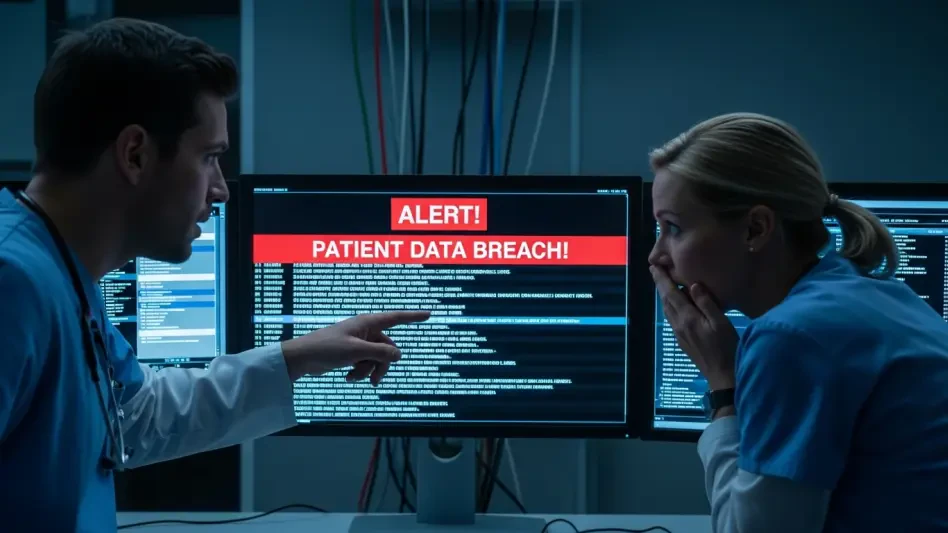

The promise of instant access to personal health records for millions of New Zealanders was abruptly overshadowed by the stark reality of digital vulnerability following a significant data breach that has sent tremors through the nation’s healthcare sector. As private technology firms become the custodians of vast public health datasets, an incident involving one of the country’s largest digital health portals has exposed the critical gap between rapid technological adoption and the maturation of essential security protocols. This event serves as a potent case study, forcing a nationwide conversation about data stewardship, regulatory oversight, and the foundational principles of cybersecurity in an increasingly connected medical landscape.
The Digital Pulse of New Zealand’s Healthcare System
The digital transformation of healthcare in New Zealand has been largely driven by platforms like Manage My Health (MMH), which offer patients unprecedented access to their own medical information. These portals have become central to the daily operations of general practices, allowing users to book appointments, request prescriptions, and view lab results with ease. This shift reflects a broader trend toward patient empowerment and administrative efficiency, placing complex health data directly into the hands of consumers.
Central to this ecosystem are private technology companies entrusted with developing and maintaining the infrastructure that supports the public health system. Their role extends beyond simple software provision; they manage sensitive data for millions of citizens, integrating their platforms with a wide network of general practitioners (GPs), specialists, and other healthcare providers. The responsibility associated with this position is immense, as the integrity and confidentiality of personal health information (PHI) are paramount.
The resulting technological landscape is a complex web of interconnected systems. Core patient management systems must interface seamlessly with third-party applications, diagnostic laboratories, and pharmacy networks. While essential for a fluid healthcare experience, this integration creates numerous potential points of failure. The security of the entire ecosystem is only as strong as its weakest link, making robust oversight of all partnerships and data pathways a non-negotiable requirement.
Emerging Risks in a Connected Health Environment
The Rush to Digitize: Convenience Versus Consequence
Modern patient expectations have fundamentally reshaped the healthcare industry. In an on-demand world, consumers now expect the same level of instant access and digital convenience from their healthcare providers as they do from retail or banking services. This has fueled a powerful demand for portals that provide immediate access to health records, prescription management, and direct clinical communication, pressuring providers to adopt digital solutions quickly.
This demand aligns with market drivers pushing for greater efficiency within the healthcare sector. The seamless sharing of data between GPs, specialists, hospitals, and patients is seen as a key to reducing administrative overhead, minimizing errors, and improving patient outcomes. Consequently, platforms that facilitate this interoperability have grown rapidly, becoming indispensable tools for modern medical practices aiming to stay competitive and provide contemporary standards of care.
However, this rapid digital expansion introduces a significant trade-off. The pressure to roll out new features and scale user bases can often outpace the development and implementation of corresponding security controls. As platforms become more complex and interconnected, the attack surface expands, yet the security architecture may not evolve at the same rate. This creates a dangerous lag where convenience is prioritized over consequence, leaving sensitive data vulnerable to emerging threats.
Quantifying the Digital Footprint: Data Growth and Projections
The scale of digital health platforms in New Zealand is substantial, underscoring the magnitude of the data at risk. A platform like Manage My Health, with its 1.8 million registered users, represents a significant portion of the country’s population, making it a high-value target for cybercriminals. The sheer volume of users translates into a massive and ever-growing repository of personal health information.
This data is not only voluminous but also incredibly sensitive. PHI includes everything from diagnoses and treatment histories to prescriptions, lab results, and personal notes, making it one of the most valuable types of data on the black market. As more clinical summaries, referral letters, and patient-uploaded documents are digitized, the value and sensitivity of the data stored within these portals increase exponentially.
Looking ahead, the trend toward digitization shows no signs of slowing. The continued integration of telehealth services, wearable device data, and AI-driven diagnostics will further expand the digital health ecosystem. While this promises significant benefits for patient care, it also means the attack surface will continue to grow. Without a proportional investment in advanced security measures, the risk of large-scale data breaches will become an even more pronounced threat to the healthcare sector.
Anatomy of a Breach: Unpacking the Manage My Health Incident
Timeline in Question: Discovery, Disclosure, and Discrepancy
The initial public disclosure of the Manage My Health incident was marked by confusing and contradictory information regarding its discovery. The company first announced it was notified of a breach on December 31, but a subsequent statement claimed it became aware of the issue on December 30 following a notification from a partner. This discrepancy immediately raised questions about the company’s internal monitoring capabilities and the precise timeline of the attack, creating uncertainty at a critical moment.
Upon confirming the breach, MMH reported that it took immediate steps to contain the threat and engaged international forensic consultants to validate its response. The primary goal of the investigation was to understand the scope of the compromise and ensure the unauthorized access was terminated. This swift action was crucial to prevent further data exfiltration and begin the process of assessing the damage.
The investigation determined that the breach was not a systemic failure of the entire platform but was isolated to a specific “Health Documents” module. According to the company, there was no evidence that the core patient database, which contains user credentials and other fundamental records, was accessed. This distinction, while important, did little to reassure patients whose sensitive clinical documents were stored within the compromised module.
The Attacker’s Gambit: A Public Ransom and Exposed Data
Responsibility for the attack was publicly claimed by a hacker using the alias “Kazu,” who demanded a ransom of US$60,000 to prevent the release of the stolen data. To validate the claim, the attacker published a sample of the compromised files, confirming the legitimacy of the threat. This public extortion tactic placed immense pressure on MMH and brought the incident into the national spotlight.
The stolen data included a range of highly sensitive information, primarily affecting patients in the Northland region and beyond. Compromised files contained historical clinical discharge summaries, referral records from hundreds of GP practices, and personal health documents that patients had uploaded themselves. The breach exposed the detailed medical histories of an estimated 125,000 individuals, making the potential for harm significant.
In response to the ransom demand, MMH adopted a firm stance, aligning with the New Zealand government’s official policy of not paying cybercriminals. The company articulated that paying ransoms provides no guarantee that the data will be returned or deleted and, more importantly, directly funds criminal enterprises, encouraging future attacks. While principled, this decision meant the risk of the stolen data being publicly leaked remained high.
The Core Vulnerability: Beyond a Single Failure to Systemic Flaws
Security experts analyzing the incident suggest that its root cause extends beyond a simple technical exploit to more fundamental, systemic flaws in access control. The breach is viewed as a classic example of failures in privileged access management (PAM), where controls over who can access what data, and under what circumstances, are insufficient to prevent unauthorized entry.
These failures often create invisible gaps in an organization’s security posture. As digital platforms grow and integrate with numerous third-party systems, access pathways can become “broader or less visible than intended.” In a fragmented environment with disconnected systems, it becomes exceedingly difficult to enforce a consistent security policy, leaving pathways open for attackers to exploit.
This incident underscores the critical need for a modern security architecture, particularly the adoption of a zero-trust model. A zero-trust framework operates on the principle of “never trust, always verify,” requiring strict identity verification for every person and device trying to access resources on a private network, regardless of whether they are inside or outside the network perimeter. Such an approach helps mitigate the inherent risks of complex, interconnected systems by ensuring that access is granted on a least-privilege basis.
The Regulatory Fallout: Scrutiny, Compliance, and Accountability
Following the breach, Manage My Health fulfilled its legal obligation by reporting the incident to the Office of the Privacy Commissioner. This step initiated a formal regulatory process to assess the company’s compliance with New Zealand’s privacy laws and hold it accountable for protecting patient data.
The Privacy Commissioner has made it clear that MMH and any other involved health agencies will be required to demonstrate that “appropriate security safeguards” were in place to protect the sensitive information they held. If these measures are found to be deficient, the organizations must provide a clear explanation for the failure and outline the corrective actions they will take to prevent a similar incident from occurring in the future.
The high-profile nature of the breach also prompted a response from the highest levels of government. The Health Minister announced a government review of the incident, signaling a broader inquiry into the standards of data protection across both public and private entities in the healthcare sector. This review aims to address systemic issues and reinforce the expectation that all organizations handling patient data are held to the highest standards of stewardship.
Fortifying the Future: Rebuilding Trust in Digital Health
The Manage My Health breach serves as a critical inflection point for New Zealand’s entire healthcare sector. It is a stark reminder that the benefits of digital innovation must be balanced with an unwavering commitment to robust cybersecurity. The incident is expected to act as a catalyst for change, forcing organizations across the country to re-evaluate their security postures and investments.
The path toward greater resilience lies in the widespread adoption of modern security frameworks. This includes implementing a zero-trust architecture to minimize implicit trust within networks, enhancing real-time monitoring to detect and respond to threats faster, and enforcing stringent access controls to ensure data is only accessible to authorized individuals for legitimate purposes. These measures are no longer optional enhancements but essential components of digital health infrastructure.
Ultimately, this event also highlights the evolving role of the patient in the digital age. As consumers of digital health services, individuals must become more proactive in understanding and monitoring their digital footprint. While the onus of protection lies with the data custodians, greater consumer awareness about the risks and the importance of security practices can contribute to a more secure ecosystem for everyone.
Final Analysis: Lessons Learned and the Path Forward
The investigation and subsequent analysis of this breach made it clear that the event was not merely the result of a singular technical exploit but a manifestation of a deeper failure in access control. It exposed how fragmented systems and inadequate management of privileged access could create vulnerabilities that, while perhaps invisible to the organization, were readily identifiable to a determined attacker.
The key strategic recommendation emerging from this incident was a call for all healthcare organizations, both public and private, to move beyond reactive security measures. It became evident that a fundamental re-engineering of access management protocols was necessary. This involved investing in modern security frameworks like zero-trust and making privileged access management a core pillar of their cybersecurity strategy, rather than an IT afterthought.
Ultimately, the incident reinforced a critical viewpoint for the digital age: robust cybersecurity is not an operational expense but a non-negotiable component of patient care and safety. Just as a hospital must maintain sterile operating rooms, a digital health provider must maintain a secure data environment. The trust between a patient and the healthcare system now extends to the digital realm, and protecting that trust is fundamental to the future of healthcare.