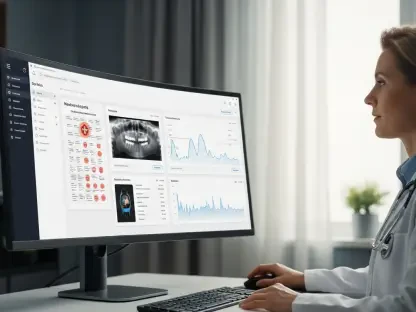

The tightly controlled environment of the traditional clinical trial, long the gold standard for medical discovery, is now being complemented by a far more complex and representative source of knowledge: the everyday health experiences of millions of patients. For more than two decades, the American healthcare system has been on a slow but steady journey away from a fee-for-service model, where volume dictates revenue, toward a value-based system focused on achieving the best possible patient outcomes at the lowest sustainable cost. This fundamental shift has exposed a critical gap between how a treatment performs under idealized trial conditions and how it works in the messy, unpredictable real world. Filling this gap is essential for every stakeholder, from providers and payers to researchers and regulators, as they navigate the demands of modern patient care.
Beyond the Clinical Trial: Defining the New RWE Ecosystem
From Anecdote to Actionable Data: The Sources and Scope of RWE
Real-World Evidence (RWE) represents a departure from the highly selected patient cohorts found in clinical trials. It is derived from the analysis of Real-World Data (RWD), which is collected from a vast and growing number of sources outside of conventional research settings. This data offers a panoramic view of patient health, capturing the nuances of treatment in routine clinical practice.
Key sources include electronic health records (EHRs), which provide detailed clinical charts and physician notes, and claims and billing databases that track healthcare utilization. Moreover, the ecosystem is rapidly expanding to include patient-generated data from wearable devices and mobile health applications, public health records, and information from clinical research registries. This aggregation of diverse data streams creates a rich, dynamic resource for understanding treatment effectiveness across broad, heterogeneous populations that more accurately reflect society.
The Key Players: How Providers Payers and Researchers Shape the Field
The RWE landscape is a collaborative ecosystem where providers, payers, and life science researchers all play pivotal roles. Healthcare providers are the primary generators of clinical data through their daily patient interactions captured in EHRs. Payers, including insurance companies and government agencies, contribute vast amounts of claims data and are key consumers of RWE, using it to inform coverage policies and value assessments.
Life science companies and academic researchers, in turn, leverage RWE to design more efficient clinical trials, understand disease progression, and monitor the long-term safety and effectiveness of therapies post-approval. The interplay between these stakeholders is crucial; their collective efforts in generating, sharing, and analyzing data are what transforms isolated data points into a powerful tool for system-wide improvement. This synergy is essential for advancing a healthcare model where decisions are grounded in comprehensive evidence.
A Paradigm Shift: Embracing Value-Based Care Over Volume
The rise of RWE is intrinsically linked to the healthcare industry’s pivot toward value-based care. In a system that rewards outcomes rather than procedures, stakeholders require proof that an intervention is not just efficacious but also effective and cost-efficient for the populations they serve. Traditional clinical trials, with their strict inclusion criteria and controlled settings, often fail to predict how a therapy will perform among patients with multiple comorbidities, varying adherence levels, and diverse backgrounds.
RWE bridges this critical knowledge gap. It provides a more accurate picture of a treatment’s real-world benefit-risk profile, allowing for a more nuanced understanding of its value. By demonstrating how therapies perform in everyday settings, RWE equips payers and providers with the evidence needed to navigate value-based contracts, optimize treatment pathways, and ultimately allocate resources toward interventions that deliver tangible, positive results for patients.
The Rising Tide of Data: Charting RWEs Growth and Market Momentum
The Digital Health Explosion: How Technology Is Fueling the RWE Revolution
The exponential growth of RWE is being propelled by a technological revolution in healthcare. The proliferation of digital health tools, from sophisticated EHR systems to consumer-grade wearable devices and health-tracking apps, has dramatically increased the volume, velocity, and variety of available health data. This digital transformation means that RWD is no longer a static historical record but an increasingly real-time stream of information.
This continuous data flow offers an unprecedented opportunity to monitor patient health and treatment effects longitudinally, far beyond the limited timeframe of a clinical study. As digital health technologies become more integrated into routine care and daily life, the depth and breadth of RWD will only continue to expand, making RWE an even more powerful and indispensable resource for evidence-based decision-making across the entire healthcare spectrum.
Measuring the Momentum: RWE Adoption Rates and Future Forecasts
The industry’s growing reliance on RWE is not just anecdotal; it is a measurable trend with significant market momentum. A recent GlobalData report highlights a substantial increase in the use of RWE, with strong growth projected to continue. This trend is reinforced by industry surveys that identify RWE as one of the most impactful developments in healthcare, valued for its ability to generate truly representative and long-term data.
This momentum is being actively accelerated by influential regulatory bodies around the world, including the U.S. Food and Drug Administration (FDA) and the European Medicines Agency (EMA), which are increasingly accepting RWE in their decision-making processes. This regulatory embrace signals a fundamental shift in how medical evidence is perceived and utilized, cementing RWE’s position as a cornerstone of modern healthcare strategy and innovation.
Unlocking the Data Vault: Overcoming Barriers to RWE Implementation
Bridging the Divide: Tackling Data Fragmentation and Silos
Despite its immense potential, the path to fully leveraging RWE is paved with significant obstacles. The healthcare data infrastructure is notoriously fragmented, with crucial information often trapped in disparate, non-communicable systems across different provider networks, payer databases, and research institutions. This siloed environment severely impedes the aggregation and analysis necessary to generate meaningful insights.
Furthermore, the lack of standardized data collection methods and terminologies creates inconsistencies that complicate the process of pooling data from various sources. Overcoming these structural barriers requires a concerted effort toward greater interoperability and the adoption of common data standards. Without a more integrated and cohesive data ecosystem, the full power of RWE will remain locked away in isolated digital vaults, hindering progress toward a truly data-driven healthcare system.
From Messy to Meaningful: The Challenge of Unstructured Data
A substantial portion of the most valuable clinical information resides in unstructured formats, presenting a major challenge for analysis. Physician’s notes, pathology reports, and diagnostic imaging contain rich narrative details about a patient’s journey, but this information is not easily processed by traditional analytical tools. This free-text data captures the subtleties of clinical reasoning and patient experience that are often missing from structured fields.
Extracting and standardizing this unstructured data is a complex but essential task for building a comprehensive view of patient care. Without the ability to interpret these narrative elements, a significant amount of clinical context is lost, limiting the depth and accuracy of the insights that can be derived. Therefore, unlocking the value hidden within unstructured data is a critical frontier in the RWE revolution.
The AI and ML Solution: Turning Raw Data into Actionable Insights
Addressing the challenges of data fragmentation and unstructured information requires advanced technological solutions. Artificial intelligence (AI) and machine learning (ML) are emerging as essential tools for transforming raw, messy RWD into high-integrity, analysis-ready datasets. These technologies can process vast quantities of complex information, identify patterns, and extract meaningful insights that would be impossible to uncover through manual methods.
AI-powered algorithms, particularly natural language processing (NLP), can interpret unstructured text from sources like physician notes, converting narrative descriptions into standardized, analyzable data points. Companies like Veradigm are at the forefront of this effort, creating systems that aggregate and standardize data from millions of patient records. By applying these advanced analytical capabilities, the industry can overcome key implementation hurdles and turn the deluge of RWD into a source of actionable evidence.
The Regulatory Embrace: How Global Agencies Are Championing RWE
Beyond Approval: Using RWE for Post-Market Safety and Surveillance
The utility of RWE extends far beyond the initial approval of a new drug or medical device. Regulatory agencies are increasingly leveraging RWE for robust post-market safety surveillance. Clinical trials, by nature, are limited in duration and population size, which means rare or long-term side effects may not be detected until a product is widely used.
RWE allows for the continuous monitoring of a treatment’s safety profile in a large, diverse patient population over extended periods. This longitudinal observation enables the early detection of adverse events that may not have been apparent during clinical development, particularly in underrepresented groups like the elderly or patients with complex clinical profiles. This ongoing surveillance provides a more realistic assessment of a therapy’s benefit-risk profile and helps ensure patient safety throughout a product’s lifecycle.
Setting the Standard: The FDA and EMAs Role in Accelerating Adoption
Global regulatory bodies, led by the U.S. Food and Drug Administration (FDA) and the European Medicines Agency (EMA), are playing a critical role in formalizing the use of RWE in healthcare decision-making. These agencies have issued guidance and established frameworks for the submission and evaluation of RWE, signaling its growing acceptance as a valid source of scientific evidence.
This regulatory endorsement is accelerating adoption across the industry by providing clarity and confidence to life science companies, researchers, and other stakeholders. By setting clear standards for data quality, study design, and analytical methods, regulators are helping to ensure that RWE is generated and used responsibly. This top-down support is instrumental in integrating RWE into the fabric of drug development, regulatory approval, and post-market evaluation, fostering innovation while upholding rigorous scientific standards.
From Insight to Impact: How Stakeholders Leverage RWE for Better Outcomes
For Payers: Driving Smarter Coverage and Cost-Benefit Decisions
For payers, RWE is a transformative tool for navigating the complexities of a value-based reimbursement environment. To make informed coverage and formulary decisions, payers need evidence of a therapy’s effectiveness across the broad populations they cover, not just the selective cohorts of a clinical trial. RWE provides this crucial insight by showing how treatments perform under real-world conditions, accounting for variables like patient adherence and comorbidities.
This evidence allows payers to conduct more sophisticated cost-benefit analyses, linking treatment choices to downstream outcomes like hospital readmissions and chronic disease management. Armed with this data, they can identify and promote cost-effective clinical practices, negotiate value-based contracts with manufacturers, and design benefits that prioritize therapies with demonstrated real-world value. The result is a more efficient allocation of resources and better health outcomes for members.
For Life Sciences: Enhancing Clinical Trials and Market Strategy
Life science companies are leveraging RWE across the entire product lifecycle, from early research to commercial strategy. By analyzing large datasets from diverse patient populations, researchers can gain deeper clinical insights that inform more efficient and effective clinical trial design. RWE helps identify unmet medical needs, optimize participant recruitment by locating eligible patients, and can even serve as an external control arm in certain studies, reducing the time and cost of development.
Post-approval, commercial biopharma teams use RWE to build a compelling value proposition that resonates with payers and providers. This evidence demonstrates a therapy’s real-world impact beyond the confines of its initial trials, supporting market access negotiations and informing post-launch strategy. By grounding their development and commercialization efforts in real-world data, life science firms can better align their innovations with the needs of the healthcare system.
For Providers: Closing Gaps in Care at the Point of Service
For healthcare providers on the front lines, RWE can be translated into actionable insights that improve care delivery at the individual patient level. Integrated clinical networks, such as the Veradigm Network, can facilitate the timely sharing of data between payers and providers, embedding insights directly into clinical workflows. This creates a powerful feedback loop for continuous quality improvement.
For instance, EHR alerts powered by RWE analytics can flag potential care gaps, such as missed follow-up appointments or risks of non-adherence to a prescribed medication. These real-time prompts empower clinicians to intervene proactively, addressing patient-specific needs before they escalate into more serious health issues. By connecting data-driven insights to the point of care, RWE helps align the goals of all stakeholders around the shared objective of improving patient outcomes.
The Verdict on RWE: A New Foundation for Modern Healthcare
Synthesizing the Transformation: Key Takeaways on RWEs Role
Real-World Evidence is no longer an emerging concept but a foundational pillar of the modern healthcare ecosystem. It provides a necessary counterbalance to traditional clinical trials by reflecting the true complexity of patient care. By drawing from an expanding universe of data sources, RWE offers a more holistic and representative view of how medical interventions perform in routine practice. This evidence is becoming indispensable for navigating the transition to value-based care, where outcomes and efficiency are paramount.
The ability of RWE to inform decisions across the entire healthcare landscape—from regulatory approvals and payer coverage to clinical practice and drug development—marks a significant evolution in evidence-based medicine. It empowers stakeholders to move beyond one-size-fits-all approaches and toward a more personalized, effective, and sustainable model of care. The continued integration of RWE promises to close critical knowledge gaps and align incentives around the ultimate goal of improving patient health.
The Path Forward: Recommendations for a Data-Driven Future
To fully realize the potential of RWE, the healthcare industry must continue to address the persistent challenges of data fragmentation and a lack of standardization. This requires a sustained commitment to advancing interoperability, allowing for the seamless and secure exchange of information across different systems and stakeholders. Investing in technologies like AI and machine learning is crucial for unlocking the insights hidden within vast and complex datasets, particularly unstructured information.
Looking ahead, fostering greater collaboration between providers, payers, life science companies, and regulators will be key to building a robust and trustworthy RWE ecosystem. Establishing clear and consistent standards for data quality and analytical methods will build confidence and ensure that the evidence generated is reliable and actionable. By embracing this data-driven future, the healthcare system can accelerate innovation, optimize resource allocation, and deliver more effective and equitable care for all.