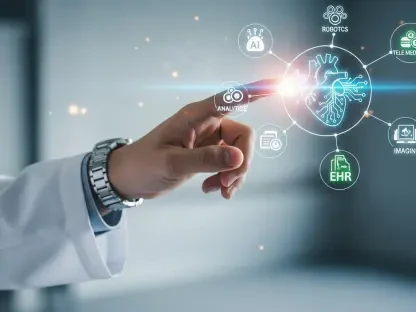

The vast and intricate network of global healthcare now generates nearly a third of the world’s total data volume, creating an unprecedented digital ecosystem ripe for transformation. This explosion of information, ranging from genomic sequences to real-time vital signs, marks a fundamental turning point for the medical field. Historically a discipline rooted in reactive treatment and individual clinical judgment, medicine is undergoing a seismic shift. Data science, with its powerful arsenal of advanced analytics, machine learning, and artificial intelligence, is not merely supplementing existing practices but is actively redefining the core principles of patient care. It is the catalyst for a new era of proactive, predictive, and profoundly personalized healthcare, promising to solve some of the most persistent challenges that have long plagued the industry, including escalating costs and variable quality of care.
The New Digital Anatomy: Data as the Bedrock of Modern Healthcare
The modern patient’s health profile is no longer confined to a paper chart; it is a dynamic, multidimensional digital entity. This new anatomy is composed of electronic health records (EHRs), high-resolution medical images, complex genomic blueprints, and continuous streams of data from wearable sensors. Together, these sources form a data-rich environment that offers a holistic view of human health and disease. This digital bedrock provides the raw material for data science to build models that can decipher complex biological patterns, predict disease trajectories, and identify optimal interventions with a level of precision that was previously unimaginable.
However, the sheer volume and complexity of this information present a formidable challenge. The data is often unstructured, housed in disparate systems, and filled with inconsistencies. This is where the true value of data science emerges. By applying sophisticated algorithms and computational power, data scientists can clean, integrate, and analyze these vast datasets, transforming a chaotic deluge of information into actionable clinical intelligence. This process is essential for moving beyond anecdotal evidence and toward a system where medical decisions are consistently informed by evidence derived from the experiences of millions of patients, ultimately creating a more efficient and effective healthcare system.
From Diagnosis to Discovery: Charting the Impact of Data-Driven Medicine
The application of data science in medicine spans the entire healthcare continuum, from early disease detection and diagnosis to the development of novel therapeutics and the optimization of hospital operations. This data-driven revolution is not a distant theoretical concept but a present-day reality, with tangible impacts on both clinical decision-making and patient outcomes. Its influence is most profoundly felt in the move toward care models that are not only more precise but also more anticipatory, fundamentally altering the relationship between provider and patient.
The Rise of Predictive and Personalized Care
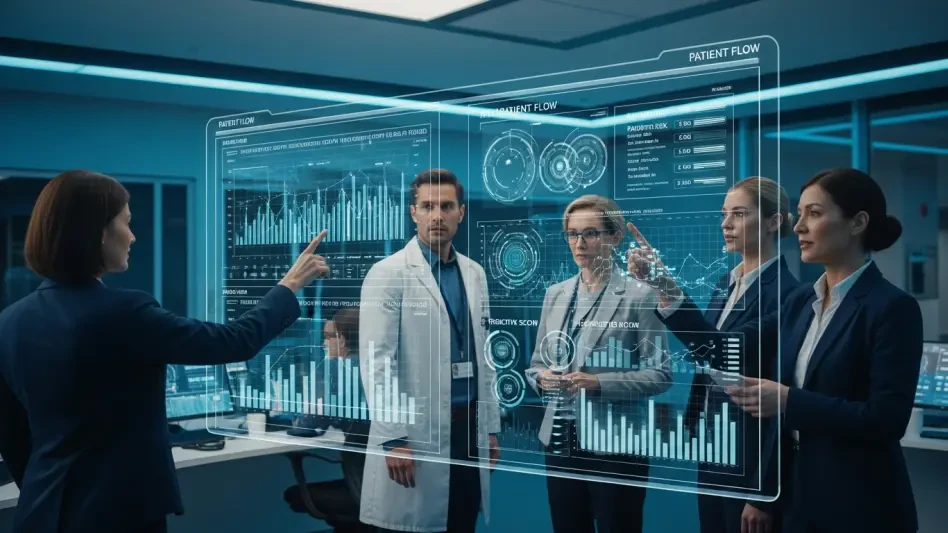
One of the most significant advances driven by data science is the ability to forecast adverse medical events before they become critical. Predictive analytics models are now being deployed in hospitals to continuously monitor patient data, identifying subtle changes that signal a high risk for conditions like sepsis or cardiac arrest. These systems generate real-time risk scores that alert clinical teams, creating a crucial window for early, life-saving interventions. This proactive stance, exemplified by early warning systems at institutions like The Johns Hopkins Hospital, is demonstrating remarkable success in reducing mortality rates and preventing costly escalations in care.
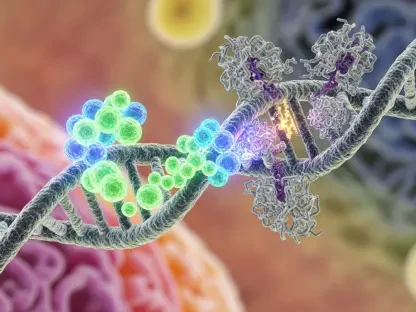
This move toward proactive care is complemented by the rise of precision medicine, particularly in fields like oncology. By analyzing a tumor’s unique genomic profile against vast databases of treatment outcomes, machine learning algorithms can recommend targeted therapies with the highest probability of success for an individual patient. This approach is invaluable for guiding the use of powerful but expensive treatments, such as immunotherapy, by predicting which patients are most likely to respond. Consequently, this personalization spares others from the side effects of ineffective treatments while optimizing the allocation of healthcare resources.
Beyond individual treatment, data science is enabling a broader, more preventative approach to population health management. Health systems are now integrating demographic information, environmental factors, and social determinants of health to identify entire communities at high risk for chronic diseases like diabetes and hypertension. This allows for the deployment of targeted public health interventions and preventive care programs. Driven by the shift toward value-based payment models, which reward providers for positive health outcomes, these strategies use predictive analytics to identify patients on a trajectory toward high-cost care, enabling care teams to intervene with supportive programs before acute health crises occur.
Quantifying the Revolution: Market Growth and Performance Metrics
The impact of data science extends far beyond the clinical setting, reshaping the operational and administrative functions that underpin the healthcare system. Hospitals are leveraging predictive models to forecast patient admission volumes with greater accuracy, which allows for more efficient staff scheduling, optimized supply chain management, and proactive bed allocation. For example, by analyzing historical admission patterns and real-time community health data, emergency departments can anticipate patient surges, enabling administrators to adjust staffing and prepare resources. Health systems implementing these tools have reported significant improvements, with some seeing reductions in average patient wait times by as much as 20-30%.
In the pharmaceutical sector, data science is dramatically accelerating the long and expensive process of drug discovery and development. Machine learning algorithms can screen millions of molecular compounds in a fraction of the time required by traditional methods, identifying promising drug candidates and compressing development timelines from years to months. Furthermore, data analytics is revolutionizing clinical trials by using EHR data to more efficiently identify eligible participants and predict patient adherence. The growing acceptance of “real-world evidence,” derived from the analysis of millions of anonymized patient records, is also supplementing traditional trial data, providing regulators with a broader understanding of a drug’s safety and effectiveness across diverse, real-world populations.
The field of medical imaging has also been transformed by computer vision, a subfield of artificial intelligence. Deep learning models, trained on millions of X-rays, CT scans, and MRIs, can now detect subtle abnormalities with an accuracy that rivals, and sometimes exceeds, that of human radiologists. These AI tools serve as powerful assistants, flagging potential areas of concern in mammograms or identifying early signs of diabetic retinopathy from retinal scans. This augments the capabilities of human experts, allowing them to focus their attention on the most complex cases while improving the speed and accuracy of routine screenings, ultimately expanding access to high-quality diagnostics.
Navigating the Hurdles: Overcoming Barriers to Data-Driven Transformation
Despite its transformative potential, the integration of data science into mainstream healthcare is not without its challenges. A primary obstacle is the inconsistent quality and fragmented nature of healthcare data. Electronic health records, the primary source of clinical information, often suffer from missing values, erroneous entries, and a lack of standardized coding, which can compromise the accuracy of analytical models. Compounding this issue is the persistent lack of interoperability between different healthcare IT systems, which creates data silos that prevent the formation of a comprehensive and longitudinal view of a patient’s health journey.
These technical barriers are accompanied by significant workforce and cultural challenges. There is a growing demand for a new class of professional—the healthcare data scientist—who possesses a rare combination of technical expertise in statistics and programming, as well as deep domain knowledge of clinical workflows and medical terminology. Educational institutions are racing to develop specialized programs to fill this talent gap. Moreover, implementing data-driven tools requires a cultural shift within clinical settings, demanding that healthcare professionals trust and effectively integrate insights from algorithms into their decision-making processes, which necessitates robust training and transparent model development.
The Ethical Blueprint: Balancing Innovation with Patient Privacy and Security
The immense power of healthcare data carries an equally immense responsibility. The highly sensitive nature of medical information necessitates an unwavering commitment to patient privacy and data security. The potential for data breaches represents a significant threat not only to individual privacy but also to the public’s trust in the healthcare system. Navigating the complex web of regulations, such as the Health Insurance Portability and Accountability Act (HIPAA), requires sophisticated governance frameworks that ensure compliance while still enabling the data access required for meaningful innovation.
Addressing these ethical considerations is fundamental to the sustainable advancement of data science in medicine. The industry is actively exploring privacy-preserving techniques, such as federated learning, which allows models to be trained across multiple institutions without centralizing sensitive patient data. Another promising approach is differential privacy, which involves adding statistical noise to datasets to protect individual identities while maintaining analytical utility. Striking the right balance between fostering innovation and safeguarding patient rights is not merely a technical or legal challenge; it is an ethical imperative that will define the future of data-driven healthcare.
The Next Frontier: Peering into the Future of AI-Enhanced Healthcare
Looking ahead, the synergy between data science and medicine is set to deepen, driven by continuous technological advancement. The proliferation of wearable devices and remote monitoring technologies is generating an unprecedented volume of real-time, continuous health data, offering new opportunities to manage chronic conditions and detect health declines before a patient even feels symptoms. This constant stream of information will power more dynamic and personalized care models that adapt to an individual’s changing health status day by day.
Furthermore, advances in areas like natural language processing (NLP) are poised to unlock the wealth of information currently trapped in unstructured clinical notes, physician dictations, and medical literature. By converting this text into structured, analyzable data, NLP will provide a more nuanced and complete picture of the patient’s condition and the context of their care. The ultimate vision for this AI-enhanced future is not one where technology replaces human clinicians, but one where it empowers them. By seamlessly integrating powerful analytical tools into clinical workflows, data science will augment human expertise, freeing physicians from routine tasks and equipping them with insights derived from the collective experience of millions.
Synthesizing the Future: A Verdict on Data Science’s Role in Medicine
The integration of data science into medicine has catalyzed a fundamental re-architecture of the healthcare landscape. The journey has moved the industry away from a one-size-fits-all, reactive model and toward a future defined by proactive, predictive, and deeply personalized care. The evidence of this transformation was clear across diagnostics, where AI-powered imaging enhanced accuracy; in treatment, where genomics guided precision therapies; and in operations, where predictive analytics streamlined hospital efficiency.
Challenges related to data quality, interoperability, and privacy were significant, yet the industry responded with innovative technical solutions and evolving ethical frameworks. The successful adoption of these technologies was ultimately characterized not by the replacement of human expertise, but by its augmentation. The synthesis of human intuition and machine intelligence created a clinical environment that was more efficient, effective, and equitable. Data science did not just reshape modern medicine; it provided the tools to finally realize the long-held promise of a truly data-driven healthcare system.