
Faisal Zain is a leading figure in the intersection of medical technology and health informatics, bringing years of practical experience in the manufacturing and implementation of advanced diagnostic devices. His work centers on the bridge between raw clinical data and actionable medical innovation, helping healthcare systems navigate the complexities of digital transformation. By focusing on the structural integrity of medical data and the ethical deployment of predictive algorithms, he has become a sought-after voice for organizations looking to modernize their clinical workflows while maintaining the highest standards of patient safety and data security.
In this conversation, we explore the critical distinctions between routine data analytics and deep-forest data mining, the technical hurdles of integrating fragmented hospital records, and the evolving role of artificial intelligence in interpreting unstructured clinical notes. We also address the pressing concerns of algorithmic bias and the sophisticated cybersecurity risks that accompany large-scale data integration in the modern medical landscape.
While data analytics tracks known metrics like treatment volume, data mining uncovers hidden patterns such as unexpected hospital readmission risks. How do you distinguish these workflows in a clinical setting, and what specific steps ensure these “non-obvious” discoveries lead to improved patient outcomes?
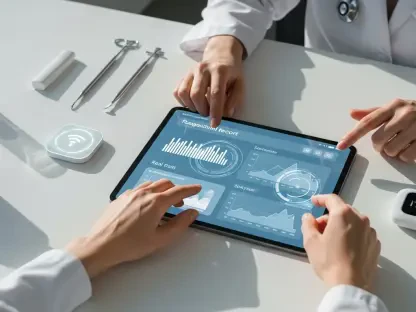
In a busy clinical setting, I view data analytics as the rearview mirror that tells us where we have been, focusing on specific questions like how many patients were treated or the average duration of a surgery. Data mining, however, is more like a high-powered sensor suite that automatically scans massive datasets to find relationships we didn’t even know to look for. To ensure these “non-obvious” discoveries actually help patients, we follow a structured three-stage process: integration, discovery, and action. For instance, if an algorithm identifies a hidden link between a specific lab value and readmission risk, that insight is first reviewed by a panel of healthcare professionals to weigh it against medical judgment and ethical guidelines. Finally, we turn these patterns into real-time clinical alerts or dashboards so providers can intervene before a patient’s condition worsens.
Healthcare systems often manage a mix of structured lab values and unstructured clinical notes across disconnected platforms. What are the primary technical hurdles during the extract, transform, load (ETL) process, and how do standards like FHIR facilitate more reliable data integration?
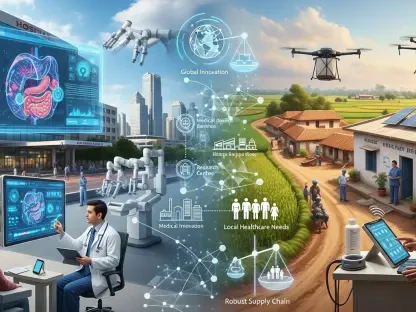
The primary hurdle is the sheer fragmentation of data; hospitals, labs, and insurers often operate on completely separate platforms with zero native communication. During the ETL process, we have to pull structured diagnosis codes and messy, unstructured imaging reports into a single, unified format, which is incredibly labor-intensive. Standards like FHIR (Fast Healthcare Interoperability Resources) and HL7 act as a universal language, providing a common framework that allows these disparate systems to share data reliably. By using these standards, we can clean the data more efficiently—removing duplicates, correcting errors, and filling in missing values—which creates a solid foundation for any subsequent large-scale analysis.
Classification models can categorize patients by diabetes risk, while clustering identifies unique disease subtypes without predefined categories. When implementing these techniques, how do you decide which approach fits a specific population health goal, and what metrics determine the model’s success?
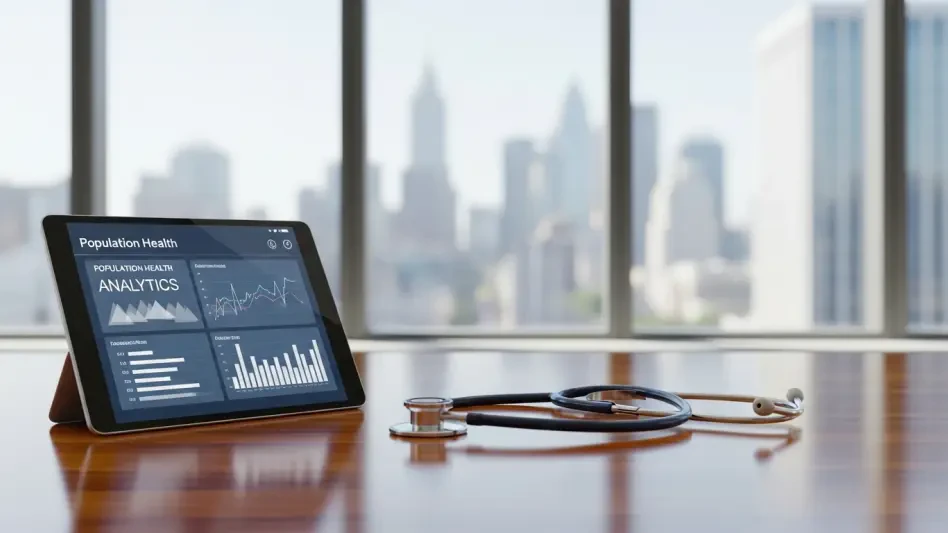
The choice depends entirely on whether we are looking for an answer to a known problem or trying to discover something entirely new. If our goal is to prevent a specific condition, we use classification to sort patients into high, moderate, or low-risk buckets based on historical data. Conversely, if we want to understand why some patients don’t respond to standard treatments, we use clustering to group similar medical histories and find “natural” subtypes that haven’t been defined in textbooks yet. We measure success by testing the model against new, unseen data to ensure its predictions hold up in the real world. A relevant example would be using clustering for population health to design targeted prevention programs for a specific group of residents who share unique environmental and biological risk factors.
Outlier detection is frequently used to flag billing irregularities or unexpected spikes in lab results. In your experience, how do you differentiate between a genuine administrative error and a rare clinical condition, and what is the protocol for reviewing these anomalies before taking action?
Distinguishing between a typo and a rare disease requires a high degree of clinical nuance because healthcare data varies so widely between individuals. When our system flags an outlier, such as an unexpected spike in a lab value or a duplicate insurance claim, we never automate the final decision. The protocol involves an immediate flag for manual review by a compliance team or a clinician who investigates the patient’s documented condition against the anomaly. We look for patterns—if an unusually high claim volume is inconsistent with the patient’s history, it likely points to administrative fraud, whereas a singular, massive spike in a physiological marker might be the first sign of a rare, life-threatening condition.
Even when direct identifiers are removed, rare medical conditions or specific treatment dates can potentially lead to patient re-identification. What advanced safeguards do you recommend to prevent this linkage, and how do you balance data utility with the need for strict privacy?
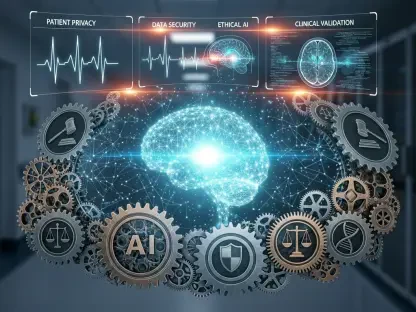
Re-identification is a major risk because a rare diagnosis or a specific surgery date can act as a “fingerprint” when combined with other public datasets. To prevent this, I recommend limiting the level of detail in shared datasets and utilizing highly secure environments for the actual analysis. We have to balance utility by applying a “zero-trust” data protection model, where we only provide the minimum amount of information necessary for the researcher to achieve their goal. It is a constant tug-of-war, but using techniques like data encryption and strict access controls ensures that we don’t sacrifice a patient’s privacy—which is irreplaceable—for the sake of a slightly more detailed chart.
Predictive models trained at one facility often struggle with accuracy when applied to different demographics or clinical environments. How do you identify and mitigate bias within these training datasets, and what strategies ensure that algorithmic insights remain equitable across diverse patient populations?
Bias usually creeps in when a dataset has an uneven representation, such as having significantly more data from one ethnic or age group than another. We identify this by performing regular performance evaluations across different subpopulations to see if the error rates are higher for specific groups. To mitigate this, we actively seek out diverse datasets, like those provided by the NIH All of Us Research Program, which is building one of the largest and most diverse biomedical sets in history. Equity is only achieved through ongoing monitoring; we must treat these models as living entities that require constant retraining as patient populations shift and new clinical practices emerge.
Machine learning and large language models are now being used to analyze unstructured physician notes and radiology reports. How is this shift toward AI changing the traditional data mining workflow, and what are the practical implications for real-time clinical decision support?
This shift is revolutionary because it allows us to finally tap into the 80% of medical data that was previously “dark” or unreadable by traditional machines. Traditional data mining relied on rigid, predefined rules, but LLMs can identify complex, nonlinear patterns in the narrative text of a discharge summary or a physician’s handwritten note. Operationally, this means we can provide real-time decision support that accounts for a patient’s full story, not just their numerical lab results. The FDA has already seen a sustained increase in AI-enabled medical devices, which tells us that these tools are moving out of the lab and directly onto the hospital floor to assist with early disease detection and prognosis.
What is your forecast for data mining in healthcare?
I believe we are moving toward an era of “truly personalized medicine” where data mining scales from the population level down to the individual’s genetic code. In the next decade, we will see the seamless integration of genomic data, wearable monitor feeds, and social determinants of health into a single predictive profile for every patient. This won’t just be about treating illness, but about a shift toward precision prevention, where we can intercept a disease years before the first symptom appears. My advice for readers is to stay informed about how your data is being used; while these technologies offer incredible benefits for longevity and treatment accuracy, your engagement and consent remain the most important safeguards in this digital evolution.