
Delivering consistent, high-quality healthcare across geographically challenging and sparsely populated regions presents a unique set of obstacles, where intermittent connectivity and reliance on cumbersome paper-based systems can create significant barriers to effective patient management. For clinicians operating in these remote environments, the inability to access a comprehensive patient history at the point of care can hinder on-the-spot decision-making and lead to inefficiencies that consume valuable time. This scenario has prompted forward-thinking health boards to seek out robust digital solutions that can bridge these information gaps. The transition toward a more integrated and mobile-first approach is no longer a luxury but a necessity for ensuring that every patient, regardless of their location, receives the best possible care. This digital transformation is exemplified by initiatives like the one undertaken by NHS Shetland, which aims to empower its community-based clinicians with the tools needed to navigate the complexities of remote healthcare delivery. The adoption of specialized mobile electronic patient record (EPR) systems marks a pivotal shift, promising to streamline workflows, enhance data accuracy, and ultimately, improve patient outcomes in the most demanding settings.
Enhancing Community Care Through Digital Innovation
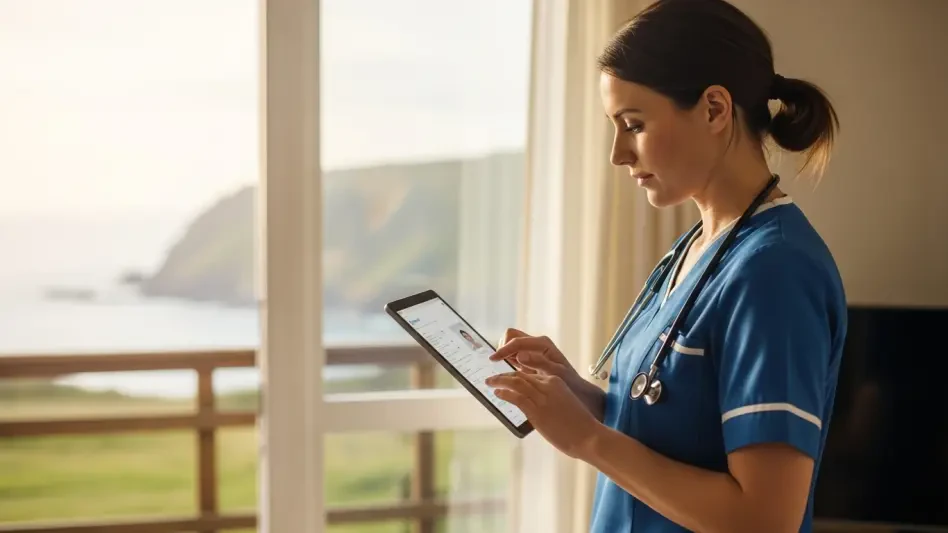
To overcome the persistent challenges of its unique archipelago environment, NHS Shetland has initiated the adoption of the Morse mobile EPR system, a specialized platform developed by Cambric Systems to support community patient services. This strategic move is a core component of the health board’s broader digital transformation strategy, designed to replace fragmented, paper-based processes with a unified and efficient electronic framework. The Morse mobile EPR is engineered specifically for healthcare professionals who provide care in patients’ homes and other community settings, where internet access is often unreliable. A critical feature of the system is its ability to function both online and offline, allowing clinicians to securely access, record, and update patient information directly at the point of care. Any new data or clinical notes are automatically synchronized with the central system as soon as a connection becomes available. This seamless data flow is further enhanced by its system-level integration with NHS Shetland’s existing general practitioner (GP) system, a crucial element that eliminates redundant data entry and fosters the creation of a truly comprehensive patient record accessible across different services.
The implementation of this mobile EPR system is projected to yield substantial improvements in both operational efficiency and the quality of patient care. Health officials anticipate that the technology will save community nurses approximately 30 minutes per shift, a significant time-saving that can be redirected toward direct patient interaction and care activities. This newfound efficiency stems from providing clinicians with immediate, on-the-spot access to a patient’s complete medical history, including past consultations, test results, and treatment plans. Such a comprehensive view is invaluable for enhancing clinical decision-making, particularly when managing patients with complex or chronic conditions that require close monitoring and coordinated care. The ability to make informed judgments in real-time not only improves the quality and continuity of care but also enhances patient safety. Furthermore, the system offers management a complete and transparent overview of patient care activities across the community, strengthening oversight, facilitating better resource allocation, and ensuring a higher standard of quality assurance throughout the service.
The Path Forward for Remote Healthcare Delivery
The initial rollout of the Morse system, planned over the next 6 to 12 months, strategically focused on community nursing teams, who represent the front line of remote healthcare delivery. Following this foundational phase, NHS Shetland envisioned a broader expansion, extending the system’s capabilities to other specialist community services and allied healthcare professionals. This phased approach allowed for a controlled and effective integration of the technology, ensuring that the system was finely tuned to the specific needs of its users before wider deployment. The selection of the Morse system was deemed an ideal fit, not only for its technical capabilities but also because it was co-developed in partnership with NHS clinicians, ensuring it was grounded in real-world clinical workflows. Its proven success in similar rural and remote settings across other NHS boards provided a strong precedent, suggesting a high likelihood of a successful implementation within Shetland’s unique operational landscape. This initiative ultimately stood as a powerful example of how targeted technological adoption could fundamentally reshape healthcare delivery in isolated communities.