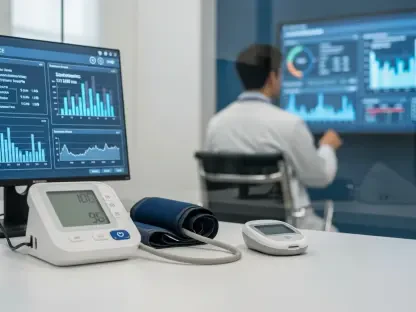

With corporate healthcare expenditures experiencing a stark median increase of nine percent this year, employers are urgently seeking advanced strategies to gain control over their largest and most unpredictable expense. Healthcare Price Transparency Tools represent a significant advancement in the employee benefits and healthcare management sector. This review will explore the evolution of this technology, its key features, performance metrics, and the impact it has had on how employers manage escalating healthcare costs. The purpose of this review is to provide a thorough understanding of the technology, its current capabilities, and its potential future development.
The Evolution of Healthcare Cost Management
The emergence of sophisticated healthcare price transparency tools is a direct response to both market pressures and landmark regulations, such as the Transparency in Coverage rule. These platforms move beyond historical claims analysis by leveraging mandated data disclosures to reveal the negotiated rates between insurers and providers. This newfound clarity provides the foundational data needed to scrutinize and compare healthcare costs with unprecedented detail.
Consequently, these tools have shifted from a niche benefit offering to a central pillar of corporate financial strategy. By illuminating the actual costs of services, they empower employers to make data-driven decisions that directly impact their bottom line. This elevates the conversation from simply managing benefits to strategically purchasing healthcare, aligning employee well-being with fiscal responsibility.
A Deeper Look at Core Functionality
Integrated Price and Quality Data Analytics
A primary feature of modern transparency platforms is the sophisticated integration of negotiated price information with essential quality and utilization metrics. This function allows for a comprehensive assessment of healthcare value, moving beyond a simple comparison of price tags. By layering cost data with performance outcomes, employers can identify providers that deliver high-quality care efficiently.
This holistic view is transformative. It enables employers and their consultants to pinpoint inefficiencies within a network and guide employees toward providers who offer the best possible outcomes for a given cost. This moves the focus from pure cost-cutting to value optimization, ensuring that savings are not achieved at the expense of employee health.
Predictive Cost Modeling and Network Evaluation
Advanced platforms offer powerful predictive modeling capabilities, providing employers with budgetary estimates and forecasts for major payer networks. This allows organizations to anticipate future spending with greater accuracy and model the financial impact of different plan designs or carrier choices before making a commitment.
Furthermore, these tools provide clear visibility into specialized and high-value care options, such as designated centers of excellence or alternative provider networks. This data helps employers evaluate and build strategic partnerships, ensuring their benefit plans include partners recognized for both cost-efficiency and superior clinical results in key service areas.
Population Specific Health Analysis
A key differentiator for leading-edge tools is the ability to analyze a unique blend of social, economic, clinical, and environmental data. This analysis produces a detailed profile of an employer’s specific employee population, identifying the distinct factors that influence their health needs and care utilization patterns.
This feature is critical for designing benefit plans and intervention programs that are genuinely responsive to workforce needs. By understanding the specific health challenges and barriers to care their employees face, employers can implement targeted solutions that improve health outcomes, boost productivity, and generate a greater return on their healthcare investment.
Current Trends and Industry Shifts
The industry is witnessing a significant shift from basic, static price-lookup tools to dynamic, comprehensive “optimizer” platforms. Early iterations of transparency tools were often passive repositories of information, placing the burden of analysis on the user. Today’s platforms are far more proactive, using advanced analytics to distill complex data into clear, strategic recommendations.
This evolution is driving a broader trend toward actively guiding employees to the most efficient points of care. Instead of merely presenting options, these systems are designed to simplify decision-making for employees and support more strategic plan design for employers. The goal is no longer just transparency, but intelligent navigation of the healthcare system.
Practical Applications and Strategic Use Cases
The real-world applications of this technology are fundamentally changing how organizations purchase healthcare. Employers are now using these data-driven insights to conduct more effective carrier negotiations, selecting partners based on a detailed analysis of their network’s value rather than relying on high-level premium comparisons alone.
Beyond carrier selection, some organizations are leveraging these tools for more innovative strategies. Unique use cases include designing customized provider networks tailored specifically to employee locations and health needs. In some cases, employers are even pursuing direct contracting with high-performing healthcare systems, using the platform’s data to bypass traditional insurance models and manage costs more directly.
Challenges and Market Limitations
Despite their advancements, these tools face challenges related to the underlying data. Hurdles concerning data accuracy, completeness, and standardization persist across the healthcare industry. Inconsistent or missing data can limit the reliability of analytics and create blind spots in an otherwise clear picture of the market.
Moreover, market obstacles remain. Some healthcare providers exhibit resistance to full price transparency, which can complicate data acquisition. There is also the significant challenge of translating immense volumes of raw data into actionable strategies. The complexity requires skilled interpretation by consultants to ensure employers can effectively harness the power of the information provided.
The Future of Transparent Healthcare Purchasing
The trajectory of this technology points toward even greater sophistication. Potential breakthroughs include the integration of real-time claims data and the application of more advanced AI, which will enable deeper predictive analytics and more personalized recommendations for both employers and employees.
In the long term, the widespread adoption of these tools is poised to have a profound impact on the U.S. healthcare market. By empowering purchasers with clear information on price and quality, this technology fosters a more competitive environment. This could fundamentally alter care delivery models, driving the entire system toward greater efficiency and value.
Conclusion: An Assessment of Impact
This review found that the emergence of advanced price transparency tools marked a pivotal shift from reactive cost management to proactive value purchasing for employers. The technology’s ability to synthesize price, quality, and population data provided a previously unattainable level of strategic control over healthcare spending.
Ultimately, the assessment revealed that these platforms were not merely informational but transformational. They equipped organizations with the analytical power to negotiate more effectively, design smarter benefit plans, and fundamentally alter the dynamics between employers, employees, and providers, driving the market toward a new standard of efficiency.