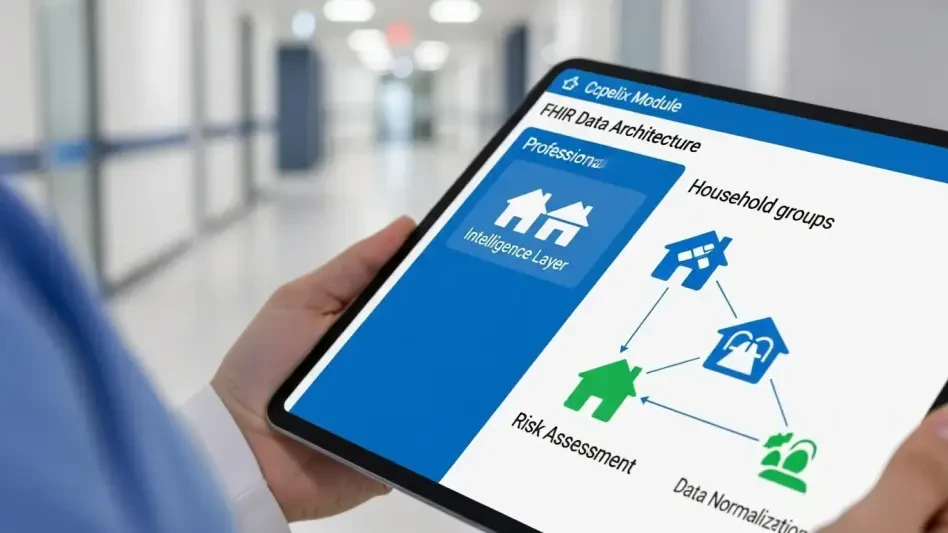

A patient’s health profile is often viewed through a microscopic lens that captures individual symptoms while completely ignoring the macro-environment of the domestic setting where those symptoms manifest. This systemic oversight represents a significant missing middle in modern medical informatics, as electronic health records excel at documenting the individual, and population health systems monitor broad communities, but the household remains a digital blind spot. Research demonstrates that health risks, dietary habits, and environmental exposures are almost always shared among residents of a single dwelling, yet the data systems used by clinicians today rarely reflect these interconnected realities. To address this, the Family Health Record framework has been introduced to utilize Fast Healthcare Interoperability Resources to bridge the divide between personal medical records and broader public health data. By recognizing the home as a fundamental unit of care, this initiative ensures that a person’s physical and mental well-being is understood within its actual daily context rather than in isolation.
Current clinical systems suffer from specific gap domains where standard records fail, including tracking infection transmission within a home and coordinating care among family members. By ignoring these shared risks, health information technology systems miss vital opportunities for early intervention and preventive care, a weakness that was particularly evident during previous global health crises. The proposed framework fills these gaps by providing a structured way to link individual records within a household context. This allows healthcare providers to see not just a single patient, but the environment that shapes their health. The integration of household data into clinical care marks a shift toward a more holistic understanding of medicine, where the domestic unit is treated with the same level of analytical rigor as the individual patient. This approach recognizes that health is not just a personal matter, but a shared experience shaped by the people and conditions within a home.
The Technical Infrastructure of Family Health
Leveraging FHIR R5 for Household Connectivity
The foundation of the Family Health Record framework rests upon the HL7 FHIR R5 standard, which represents the most advanced iteration of healthcare data exchange protocols currently in operation. This system is specifically architected to avoid the displacement of existing electronic health records, serving instead as a sophisticated interoperability layer that facilitates communication across disparate platforms. The central component of this technological stack is the Household Group profile, a digital construct that serves as an anchor for linking various individual patient resources. By utilizing validated co-residence data and documented familial relationships, the profile creates a unified view of the domestic unit without compromising the integrity of individual medical histories. This approach allows clinicians to see a broader picture of the environmental context that influences a patient’s health, moving beyond the traditional person-centric model to a more inclusive household-centric paradigm.
Integrating these complex datasets requires a robust mechanism for ensuring that information remains current and accurate across various healthcare providers and institutions. The Household Group profile addresses this by acting as a dynamic reference point that updates in real-time as individual records are modified within their respective source systems. This technical agility is critical because domestic arrangements frequently change, necessitating a system that can adapt to new co-residence patterns without manual intervention from administrative staff. Furthermore, the use of FHIR R5 allows for the inclusion of non-clinical data, such as housing quality indicators or local environmental risks, which can be linked directly to the household profile. This capability transforms the household from a mere address field into a multi-dimensional data object that provides essential insights into the shared factors affecting health. By establishing this connectivity, the framework provides a standardized language for family health that can be understood by any system compliant with modern interoperability requirements.
Architecture: Data Acquisition and Intelligence Layers
To manage the flow of information effectively, the framework employs a three-tiered structure that organizes data from its initial collection to its final clinical application. The first tier handles data acquisition, gathering information from clinical records, insurance claims, and even consumer wearables that monitor daily activity. This raw data is then passed to the second tier, where it is normalized using standardized FHIR resources to ensure that information from different sources can be compared and analyzed accurately. Normalization is a critical step, as it resolves discrepancies in data formats and terminology, allowing the system to create a coherent picture of the household’s collective health status. Without this layer, the insights generated by the system would be fragmented and difficult for clinicians to interpret in a meaningful way.
The third and final tier is the intelligence layer, which transforms the normalized data into actionable clinical insights that can be used at the point of care. This layer uses advanced algorithms to identify patterns and risks that are only visible when looking at the household as a whole, such as shared symptoms among family members or environmental triggers for chronic conditions. These insights are then delivered to physicians through their existing workflows, ensuring that the information is available when it is most needed without adding to their administrative burden. By separating data acquisition, normalization, and intelligence, the architecture ensures that the system is both scalable and flexible, capable of adapting to new data sources and analytical techniques as they become available. This structured approach allows the framework to provide a high level of detail while maintaining the efficiency required for use in busy clinical environments.
Advanced Analytics and Risk Assessment
Intelligence Engines for Shared Medical Insights
Within the intelligence layer, specialized engines analyze the aggregated household data to reveal hidden risks that would otherwise go unnoticed in isolated patient records. The cross-member risk engine is particularly significant, as it is designed to automatically scan the health statuses of all individuals within a household whenever a new diagnosis is recorded for one member. For example, if a resident is diagnosed with a highly contagious pathogen or a chronic condition with strong environmental triggers, the system immediately flags other household members for potential screening or preventative counseling. This proactive approach allows for early intervention strategies that can mitigate the spread of disease or address shared lifestyle risks before they escalate into acute medical issues. By automating this cross-referencing process, the framework provides clinicians with a powerful tool for family-based preventive medicine.
Another critical component of this intelligence layer is the family history enrichment engine, which drastically improves the accuracy of genetic and hereditary risk assessments. Traditional clinical workflows rely heavily on a patient’s memory and their often-incomplete knowledge of their relatives’ medical histories, which can lead to significant gaps in risk stratification. The framework solves this problem by using actual clinical data from linked relatives to populate and update family history records automatically, provided that the necessary consents are in place. This ensures that a physician’s assessment of a patient’s risk for conditions like cardiovascular disease or certain cancers is based on verified medical facts rather than anecdotal reports. The engine can also identify patterns of disease emergence across generations within the household, offering a more nuanced understanding of how genetic predispositions interact with shared environmental factors and lifestyle choices.
Monitoring Environmental and Behavioral Factors
Beyond clinical diagnoses, the framework incorporates advanced modules dedicated to analyzing social determinants of health and environmental pressures at the household level. These modules can identify issues such as food insecurity, energy poverty, or inadequate housing conditions by correlating data from multiple sources, including social service records and patient-reported outcomes. By viewing these challenges through a household lens, the system provides a clearer picture of the systemic pressures that affect every member of the family, rather than treating them as individual inconveniences. For instance, if data indicates that a household is struggling with nutritional access, the intelligence engine can trigger alerts for all members, prompting clinicians to offer resources for community support. This holistic view is essential for addressing the root causes of poor health outcomes, as it acknowledges that many medical conditions are inextricably linked to the environment.
The integration of wearable technology data adds another layer of depth to the household health profile, allowing the system to detect shared behavioral patterns that might indicate emerging health issues. A dedicated wearable correlation engine analyzes biometric data, such as sleep cycles, activity levels, and heart rate variability, across multiple family members to identify synchronized anomalies. Shared sleep disturbances, for example, might suggest an environmental stressor like noise pollution or temperature fluctuations within the home, while simultaneous spikes in resting heart rates could indicate a shared infection or high levels of domestic stress. These patterns are often invisible when looking at a single person’s data but become glaringly obvious when viewed in the context of the entire household. By providing these insights directly within the physician’s workflow, the framework allows for more informed discussions during consultations, enabling doctors to ask targeted questions about the domestic environment.
Data Governance and Ethical Safeguards
Federated Learning and Dynamic Consent Models
Protecting the privacy of sensitive household data is a paramount concern that the framework addresses through the implementation of federated learning architectures. This innovative approach to artificial intelligence allows risk models to be trained locally on de-identified data within the secure environment of a healthcare provider’s own infrastructure. Instead of transmitting raw, identifiable personal information to a centralized server for analysis, only the mathematical weights and updates generated by the local models are shared with a global aggregator. This method ensures that protected health information never leaves its original clinical context, significantly reducing the risk of data breaches or unauthorized access while still enabling the development of sophisticated predictive algorithms. By keeping data localized, the framework maintains the highest standards of patient confidentiality and security, fostering trust between families and the healthcare systems that manage their information.
Central to the ethical implementation of the framework is a robust governance model that prioritizes individual autonomy through dynamic consent mechanisms. Each member of a household must provide explicit permission for their data to be linked and analyzed within the family context, ensuring that no individual’s information is shared without their direct approval. The system is designed to handle dynamic revocation, which means that any person can withdraw their consent at any time through a simple user interface. When a member opts out, the framework immediately triggers a cascading update that removes their data from the household profile and halts all cross-member analytics involving their information. This process is supported by a comprehensive audit trail that logs every consent action and data access event, providing full transparency and ensuring that the system remains in constant compliance with evolving privacy regulations.
Privacy Compliance and Individual Control
Managing data governance within a multi-person household requires a sophisticated understanding of the different legal and ethical requirements for various age groups and relationship types. The framework includes specialized logic to handle the complexities of parental consent for minors, as well as the transition to independent consent once a child reaches the age of medical majority. These transitions are managed automatically by the system, which alerts parents and young adults as the legal status of their data changes, ensuring that there is no lapse in privacy protection. Furthermore, the framework provides tools for designated family representatives to manage care for elderly or incapacitated members, while still maintaining as much individual privacy as possible. This nuanced approach to data control acknowledges that household dynamics are not static and that the rules governing information sharing must be flexible to accommodate different structures.
To maintain the integrity of the system and the trust of its users, the framework utilizes advanced encryption and identity verification protocols to ensure that only authorized clinicians and family members can access household-level insights. Every interaction with the data is verified through multi-factor authentication and role-based access controls, which limit the visibility of sensitive information to those who truly need it for care coordination. This security layer is critical for preventing the unauthorized disclosure of information between family members, particularly in sensitive situations where one individual may wish to keep certain health details private. The system’s architecture is designed to allow for the sharing of shared risks and environmental factors without necessarily revealing the underlying individual clinical details that led to those insights. By carefully balancing the need for collective data with individual privacy, the framework creates a secure environment for family-centered healthcare.
Implementation Strategy and Future Outlook
Roadmap: National Adoption and Industry Scalability
The transition from the current individual-centric record system to a fully integrated household model is guided by a comprehensive five-year roadmap that began in 2026. This plan focuses on establishing formal industry standards for household data exchange, followed by the launch of large-scale pilot programs at leading academic medical centers. These initial implementations are designed to test the clinical utility and technical feasibility of the framework in diverse settings, from urban primary care clinics to rural health systems. By gathering data on how the framework affects patient outcomes and clinician workflows, the project aims to refine the underlying algorithms and user interfaces before a broader national rollout. This phased approach ensures that any technical hurdles or operational challenges are addressed early, providing a solid foundation for the subsequent scaling of the system to work with major electronic health record vendors.
Scaling the framework to a national level requires a significant investment in enterprise-grade infrastructure that can handle the continuous normalization of data from millions of households. This involves the maintenance of complex data pipelines that can process information from a wide variety of sources, including hospitals, outpatient clinics, and wearable device manufacturers, and transform it into a standardized FHIR format. To facilitate this, the roadmap includes partnerships with key industry stakeholders to develop pre-configured modules that can be easily integrated into existing healthcare IT ecosystems. These modules are designed to minimize the administrative burden on clinical staff by automating much of the data collection and risk assessment process. As the system gains wider adoption, it is expected to drive significant improvements in population health management by providing a more granular and accurate view of the factors that influence health.
Scaling Contextual Interoperability Beyond the Home
Looking beyond the immediate domestic setting, the principles established by the framework provide a blueprint for a broader Contextual Interoperability Model that could track health risks in other shared environments. This expansion would allow for the monitoring of environmental and behavioral factors in settings such as nursing homes, assisted living facilities, and even specialized workplaces where individuals share a common physical space. By applying the same logic of linked resources and shared risk analysis to these contexts, healthcare systems could identify and mitigate health threats that affect specific cohorts of people who live or work together. For instance, a respiratory illness outbreak in a nursing home could be detected and managed much more effectively if the health records of all residents were linked through a contextual profile that accounted for their shared living conditions and daily interactions.
The successful integration of household data into clinical care established a clear precedent for how modern medical technology could evolve to meet the needs of a more interconnected society. Clinicians and researchers utilized the Family Health Record framework to overcome the limitations of traditional individual-centered records, moving toward a model that recognized the household as the primary site of health management. Through the deployment of FHIR-based interoperability and sophisticated intelligence engines, the healthcare industry successfully closed the gap between personal records and public health data. The implementation of federated learning and dynamic consent models ensured that these advancements were achieved without compromising the privacy or autonomy of the individuals involved. As the system continued to scale, it provided a robust foundation for future innovations in contextual health, ultimately transforming the way that doctors and patients interacted with medical information.