
With a deep background in the manufacturing and innovation of medical technology, Faisal Zain has a unique perspective on the intersection of health care and digital tools. He specializes in implementation science, using health informatics and patient-facing technologies to bridge the gap between powerful digital resources and their real-world application. His work consistently emphasizes that for technology to be truly effective, it must be designed with and for the people it aims to serve, ensuring that human connection remains at the heart of care.
This interview explores how to transform underused tools like patient portals into vital assets for patient care, strategies for closing the digital “use” divide, and the power of patient collaboration in designing effective health interventions. We also delve into the challenges and potential of emerging technologies like wearables and AI, discussing how they can translate vast amounts of data into actionable insights that support, rather than overwhelm, both patients and providers.
Many health systems roll out digital tools with the goal of efficiency, but you emphasize keeping human care at the core. How can technology be designed to strengthen the patient-provider relationship, and what are the biggest risks when that human connection is overlooked? Please share a specific example.
That’s the central challenge, isn’t it? Technology should be a bridge, not a barrier. The most powerful designs are those that facilitate a deeper, more personalized connection. A great example comes from a study we ran to increase participation in diabetes education. We encouraged patients to share personal goals through the portal—simple things, like wanting to walk their dog more often or practice yoga. We then communicated those goals to the educators before the first visit. Imagine the impact when a patient walks in, and the educator says, “I understand you want to get back to walking your dog. Let’s talk about how we can make that happen.” The care is instantly personalized before a word is spoken face-to-face. The biggest risk of overlooking this is that technology becomes just another administrative task. Patients feel like a data point, and providers feel like they’re managing an inbox instead of caring for people. The human element gets lost, and both trust and engagement plummet.
Patient portals are widely available but often misunderstood. Beyond simply encouraging sign-ups, what specific, step-by-step strategies can clinics use to teach patients when and how to use these tools effectively, especially for non-urgent communication? Could you describe an ideal onboarding process?
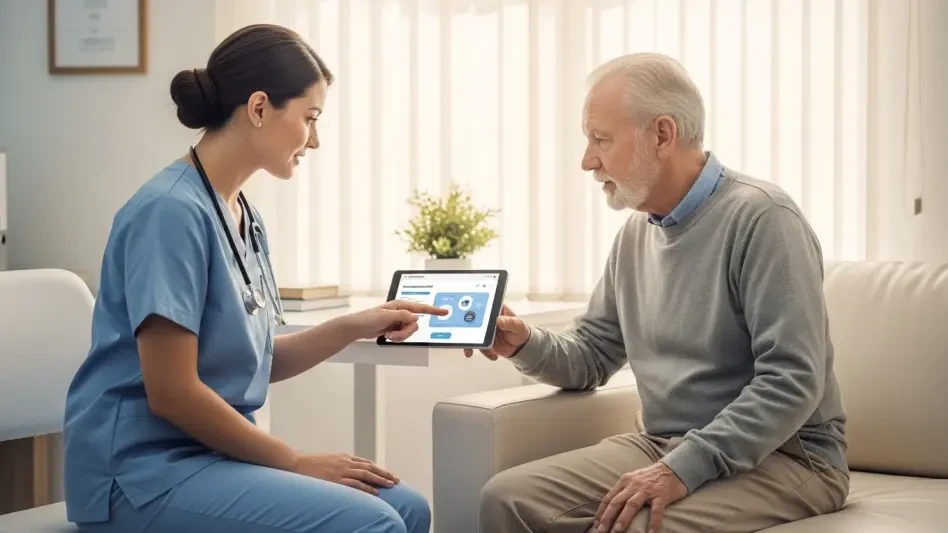
You’ve hit on a critical point. Handing someone a login is not the same as empowering them. An ideal onboarding process is an active, guided experience. First, it can’t happen in a vacuum; it should be integrated into a clinical visit. A medical assistant or nurse could spend just a few minutes walking the patient through the initial setup on a tablet right there in the clinic. The second step is showing, not just telling. They should demonstrate one or two key features, like how to view a recent lab result or send a non-urgent question about a prescription. The most crucial part is the third step: setting expectations. This involves explaining that the portal is for follow-up questions, not emergencies, and clarifying that a single, clear message is far more effective for everyone than a dozen back-and-forth exchanges. This kind of hands-on, contextual training transforms the portal from a confusing website into a reliable tool for managing their health.
While smartphones have narrowed the digital access divide, a use divide remains for many patients. What are the most critical design and support elements needed to make digital health tools truly equitable for people with limited health literacy or English proficiency? Please detail one or two features.
This is a huge focus of my work. Having a smartphone—that computer in your pocket—is the first step, but it doesn’t guarantee comprehension or effective use. The “use” divide is where the real work lies. One of the most critical elements is language access that goes beyond simple translation. For instance, in our work to improve portal use among Spanish-speaking patients, we found that just having the interface in Spanish wasn’t enough. Many were asked to sign up without any training. So, a key feature is guided, in-language onboarding. This means having staff or digital guides that can walk a person through the first few tasks in their native language, showing them how the tool can directly help manage their care. Another vital element is co-design. We must involve patients from these communities in the development process itself, ensuring that the language is not just translated, but culturally resonant and easy to understand for someone who isn’t a medical expert.
You’ve found that involving patients in crafting text messages for chronic disease management improves engagement. Can you walk us through that collaborative process? How does a peer-written behavioral tip differ from a generic automated one, and how do you measure its impact on patient behavior?
The process is fundamentally about partnership. We bring together a group of patients who are living with a condition like diabetes and treat them as the experts they are. We don’t just ask for feedback on messages we’ve written; we ask them to help us write the messages from scratch. We’ll pose a challenge, like “How would you encourage a friend to check their blood sugar when they’re feeling discouraged?” The difference is night and day. A generic message might say, “Reminder: Check your glucose levels.” A peer-written message sounds like it’s coming from someone who gets it: “Feeling tired today? It might be a good time to check in with your numbers. You’ve got this.” It has empathy and acknowledges the real-world struggle. We measure impact by tracking engagement—do they respond? But more importantly, we see it in clinical outcomes. In our diabetes study, the goal was simple: get patients to show up for their first education appointment. The peer-written texts helped address motivation loss during the waiting period, contributing to higher attendance and a better care experience.
Getting patients to attend proven programs like diabetes self-management education is a major hurdle. You used technology to help get people to their first appointment. What were the key logistical and motivational barriers you identified, and how did your digital intervention directly address them?
It’s heartbreaking because we know these programs work wonders for improving diabetes control, yet so few people actually complete them. We identified a few core barriers. Logistically, patients faced scheduling challenges and frustratingly long wait times between their referral and their first appointment. Motivationally, that long wait period was a killer; whatever initial enthusiasm they had would just fizzle out over the weeks. Our intervention tackled these head-on. First, we helped patients get set up on the patient portal to streamline scheduling and communication. Then, to bridge that motivational gap, we sent them those peer-written text messages during the weeks leading up to their appointment. The messages provided encouragement and practical tips, keeping them connected and engaged. The goal was straightforward: just get them to show up for that first session, because we know once they’re there and they feel supported, the program itself takes over.
Wearable devices and remote monitors produce a constant stream of data, which can overwhelm both patients and clinicians. How can artificial intelligence help translate this raw data into actionable insights without creating more work for providers? Can you give an example of this in practice?
The data deluge is a real challenge. A continuous glucose monitor or a smartwatch generates an immense amount of information, and no one has the time to sift through it all. This is where AI and machine learning become incredibly powerful. Instead of presenting a provider with a thousand raw data points, AI can analyze that stream and flag what’s important. For example, it could identify a trend where a patient’s heart rate consistently spikes after they take a certain medication, or their glucose levels dip dangerously low every night around 3 a.m. The AI could then generate a concise, actionable insight for the provider, like, “Ms. Smith has experienced nocturnal hypoglycemia three times this week. Consider reviewing her evening insulin dosage.” It turns overwhelming noise into a clear signal, allowing providers to make informed decisions quickly and efficiently, ultimately supporting them in caring for patients without adding to their burden.
What is your forecast for digital health?
My forecast is that the future of digital health lies in seamless integration, not in isolated tools. We’re moving away from the novelty of apps and portals and toward a reality where these technologies are woven into the very fabric of the patient-provider relationship. The most successful systems won’t be the ones with the flashiest features, but the ones that use data and AI to make care more predictive, personalized, and human. The core challenge will remain the same: ensuring these tools are developed safely, ethically, and equitably. Providers and patients will always be the two most important customers, and the goal will be to use technology to strengthen their partnership, improve outcomes, and preserve the essential human side of medicine.