
The fundamental disconnect in modern healthcare remains the staggering reality that chronic disease management is dictated by daily choices made at home, yet clinical oversight is restricted to infrequent office visits. This temporal and spatial gap creates a persistent barrier to effective treatment, as clinicians are forced to rely on subjective patient self-reporting and isolated, “snapshot” physiological readings taken during 15-minute consultations. When patients leave the exam room, they are essentially on their own to navigate complex behavioral changes, ranging from nutritional adjustments to increased physical activity. Without a continuous stream of objective data to bridge the distance between the clinic and the living room, the healthcare system struggles to accurately measure the impact of these lifestyle interventions. This lack of visibility not only frustrates providers but also undermines the clinical validity of lifestyle medicine, leaving it underutilized despite its profound potential to alter the trajectory of chronic conditions for millions of individuals.
Moving Beyond “Niche Wellness”
Standardizing Lifestyle Interventions
The historical perception of lifestyle medicine as a “niche wellness” offering rather than a primary clinical pillar stems largely from the difficulty of measuring its specific outcomes with the same rigor applied to pharmaceutical or surgical interventions. While clinical trials for new drugs produce vast quantities of standardized, objective data to prove efficacy, lifestyle interventions like exercise and dietary changes have traditionally been harder to quantify in a real-world setting. To elevate lifestyle medicine to a recognized standard of care, the industry must adopt a framework for detailed validation that matches the intensity of traditional medical protocols. This involves moving beyond vague recommendations and toward a data-driven model where every lifestyle adjustment is tracked and analyzed for its direct impact on physiological markers. By establishing these rigorous benchmarks, providers can demonstrate that lifestyle changes are not merely supportive therapies but are, in fact, potent medical tools capable of achieving significant clinical results.
The transition toward a standardized model of lifestyle medicine requires a shift in how the medical community views “proof” within the context of chronic disease reversal and management. Currently, many providers remain skeptical of lifestyle-first approaches because they lack the granular, day-to-day data necessary to justify these strategies to risk-averse payers and hospital administrators. If a patient manages to lower their blood pressure through weight loss and sodium reduction, the success is often documented as an anecdotal victory rather than a repeatable, evidence-based clinical outcome. To rectify this, lifestyle medicine must integrate advanced analytical tools that can correlate specific habits with immediate health improvements, effectively creating a “dosage” equivalent for behavioral changes. When lifestyle interventions are backed by consistent, high-quality data sets, they become far more defensible in a clinical setting, allowing them to be prescribed with the same confidence as a statin or a glucose-lowering medication.
Navigating Regulatory Shifts and Clinical Oversight
The regulatory landscape in 2026 reflects a growing institutional acknowledgment that “whole-person” health is essential for the long-term sustainability of the American healthcare system. Recent initiatives from the Center for Medicare and Medicaid Innovation, specifically the MAHA ELEVATE model, signal a pivotal shift toward reimbursing functional and lifestyle-based medical practices that were previously marginalized. These policy updates suggest that federal agencies are finally recognizing that addressing the root causes of chronic disease is more cost-effective than managing symptoms through perpetual medication. However, this regulatory progress is contingent upon the ability of providers to offer clinical oversight that extends beyond the walls of the hospital. For these models to succeed, there must be a robust mechanism for validating home-based behavior change through objective evidence, ensuring that government-funded programs are producing measurable improvements in patient health rather than relying on unverified claims.
Bridging the gap between a patient’s daily environment and formal clinical validation requires a sophisticated approach to data collection that prioritizes accuracy over convenience. Even as the Centers for Medicare and Medicaid Services broaden their acceptance of non-traditional interventions, the burden of proof remains high for providers who wish to utilize these new reimbursement pathways. The reliance on patient diaries or self-reported exercise logs is no longer sufficient in an era where clinical decisions are increasingly driven by algorithmic precision and real-time analytics. Therefore, establishing a system of continuous clinical oversight is necessary to transform home-based actions into actionable medical data. By creating a transparent and verifiable link between what a patient does in their daily life and the physiological results observed by their care team, the healthcare industry can provide the necessary accountability to satisfy regulatory requirements and secure the future of whole-person health initiatives.
The Role of Technology in Behavioral Change
Bridging the Gap with Remote Patient Monitoring
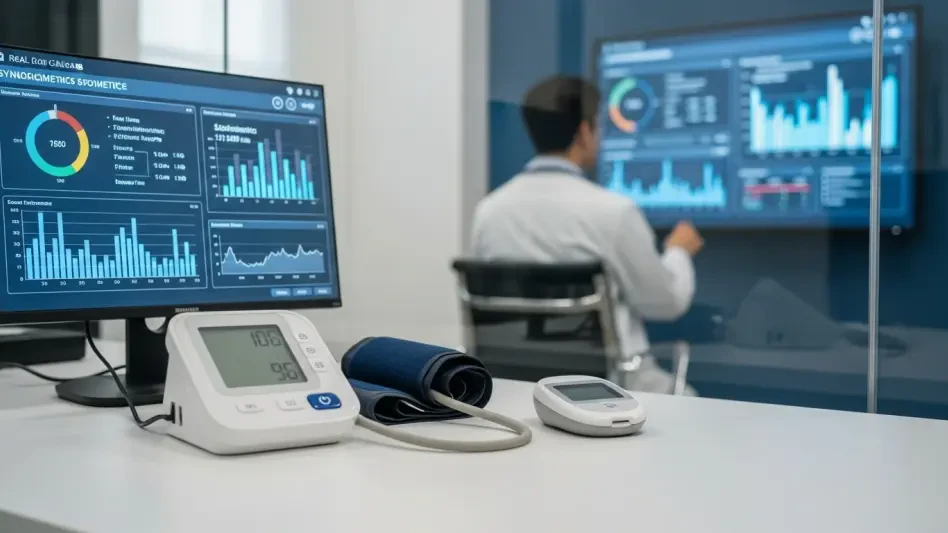
Remote Patient Monitoring functions as the critical technological bridge that connects the nuances of a patient’s daily life with the high-stakes world of clinical decision-making. By utilizing a suite of connected devices—including continuous glucose monitors, digital blood pressure cuffs, and wearable activity trackers—RPM enables the real-time transmission of physiological data directly to the clinician’s dashboard. This technology effectively closes the feedback loop, allowing patients to witness the immediate physiological consequences of their lifestyle choices, such as the spike in glucose following a high-carb meal or the drop in resting heart rate after a week of consistent aerobic exercise. For the clinician, this constant stream of data provides the “raw proof” needed to validate the efficacy of a lifestyle-based treatment plan. This transparency removes the guesswork from chronic disease management and replaces it with a clear, data-driven narrative that demonstrates exactly how behavioral changes are impacting the patient’s health.
The integration of RPM into lifestyle medicine also fosters a deeper sense of patient agency and engagement, which are essential for long-term behavioral sustainability. When individuals have access to their own real-time health data, the abstract concepts of “healthy living” become tangible and personalized, making it easier for them to stay committed to their prescribed care plans. Instead of waiting months for a follow-up appointment to see if their efforts have paid off, patients receive instant gratification or correction based on the numbers they see on their connected devices. This immediate reinforcement is a powerful psychological tool that can drive permanent habit formation in a way that traditional medical advice often fails to do. Furthermore, this wealth of objective information allows clinicians to make proactive adjustments to treatment plans, identifying potential setbacks before they escalate into acute health crises. Consequently, the synergy between RPM and lifestyle medicine creates a more responsive and effective healthcare experience.
Overcoming the Reimbursement and Workforce Bottleneck
One of the primary obstacles to scaling lifestyle-based care is the misalignment between the multidisciplinary professionals who deliver these services and the current reimbursement structures. Effective lifestyle medicine requires the expertise of registered dietitians, certified health coaches, and exercise physiologists, yet these critical team members often face significant barriers when attempting to bill for their time. In many instances, the management of Remote Patient Monitoring data is tied to specific physician-led billing codes, which can restrict the financial viability of programs that rely on non-physician specialists. To fully realize the benefits of a whole-person health model, the healthcare industry must modernize its reimbursement rules to acknowledge the contributions of the entire care team. This means creating pathways for dietitians and coaches to directly bill for the time they spend monitoring patient data and facilitating the behavioral changes that lead to improved clinical outcomes.
Expanding the workforce capable of managing RPM data is not just a matter of fairness; it is a necessity for managing the sheer volume of information generated by modern connected devices. Physicians are already overburdened with administrative tasks, and requiring them to personally oversee every data point from a fleet of patient devices is neither practical nor efficient. By delegating the day-to-day monitoring and patient interaction to qualified health coaches and specialized clinicians, the healthcare system can scale lifestyle interventions to reach a much larger population. This multidisciplinary approach ensures that patients receive the frequent touchpoints and personalized guidance they need to succeed, while also protecting physicians from burnout. As the industry moves toward more integrated care models, aligning financial incentives with the professionals who are actually doing the work of behavioral change will be the key to unlocking the full potential of remote monitoring technology.
Economic Value and Long-Term Health Outcomes
Strengthening Patient Compliance and Accessibility
Evidence from leading medical institutions, such as the Mayo Clinic, has demonstrated that connected care models significantly enhance patient compliance with complex treatment plans. In recent studies, patients using Remote Patient Monitoring reported compliance rates as high as 72.5%, a figure that far exceeds the averages seen in traditional outpatient care. This high level of engagement is often attributed to the continuous sense of accountability that RPM provides; knowing that their care team is seeing their data encourages patients to stick to their exercise and dietary goals. Moreover, these studies highlighted a substantial reduction in 30-day readmission rates, dropping to 9.4% for those enrolled in connected care programs. These statistics indicate that when patients feel supported and monitored in their home environment, they are much less likely to experience the acute complications that lead to expensive hospital stays and emergency room visits.
Beyond improving clinical outcomes, Remote Patient Monitoring plays a vital role in increasing the accessibility of high-quality lifestyle medicine for underserved and rural populations. For many patients, the traditional model of frequent in-person visits is hindered by significant barriers, such as a lack of reliable transportation, the inability to take time off work, or a shortage of local specialists. RPM effectively removes these obstacles by bringing the expertise of a clinical team directly into the patient’s home, regardless of their geographic location. This democratization of care ensures that a patient’s zip code does not dictate their ability to manage a chronic condition through lifestyle interventions. By providing frequent feedback and educational resources via digital platforms, providers can maintain a high standard of care for patients who might otherwise fall through the cracks of the healthcare system. This improved reach is essential for addressing health disparities and ensuring more equitable medical outcomes.
Shifting Toward Value-Based Economic Models
As the broader healthcare industry accelerates its transition toward value-based care, the emphasis is shifting from the volume of services provided to the quality of health outcomes achieved. Lifestyle medicine, when validated by the objective data provided by Remote Patient Monitoring, offers one of the most promising pathways for reducing the astronomical costs associated with chronic disease. By successfully reversing or managing conditions like type 2 diabetes through behavioral change, providers can significantly decrease the need for long-term, high-cost medications and prevent the development of severe complications that require intensive medical intervention. For payers, the return on investment for lifestyle-based programs becomes much clearer when backed by measurable physiological improvements. This evidence base encourages insurance companies and government programs to cover lifestyle interventions as a primary form of treatment, rather than a secondary or elective wellness option.
The long-term economic sustainability of the healthcare system depends on the ability to move away from reactive, symptom-based treatments and toward proactive, prevention-oriented models. Remote Patient Monitoring provides the infrastructure necessary to make this shift possible by quantifying the impact of prevention in real-time. When a healthcare system can prove that a specific lifestyle program reduced the A1C levels of a thousand patients without the use of additional pharmaceuticals, the financial argument for that program becomes undeniable. This data-driven approach allows for the creation of innovative payment models that reward providers for keeping their patients healthy and out of the hospital. Ultimately, the integration of connected health technology and lifestyle medicine is not just about improving individual lives; it is about building a more efficient and financially stable healthcare ecosystem that prioritizes the long-term well-being of the entire population.
Creating a New Standard for Chronic Care
The transition of lifestyle medicine from a secondary wellness option to a primary clinical pillar was successfully initiated through the strategic integration of connected health technology. By closing the data gap between the home environment and the clinical setting, Remote Patient Monitoring provided the objective evidence required to satisfy skeptical payers and empower patients through immediate feedback. This evolution allowed the medical community to move beyond unverified self-reports and embrace a rigorous, data-driven approach to behavioral change that matched the standards of traditional interventions. The implementation of multidisciplinary care teams, supported by modernized reimbursement structures, proved essential for scaling these programs to meet the needs of millions. These advancements effectively dismantled the old barriers to lifestyle-based treatment, ensuring that nutritional and physical interventions were finally recognized for their true clinical value within the broader healthcare landscape.
The lessons learned from this technological integration established a clear path forward for the management of chronic diseases. It was determined that the most effective way to lower acute care utilization and reduce medication reliance was to foster a system of constant accountability and real-time physiological visibility. Providers who adopted these tools saw significant improvements in patient compliance and long-term health outcomes, particularly among underserved populations who previously lacked access to consistent care. This proactive model demonstrated that while behavioral change begins in the home, its clinical validation must be conducted with scientific precision. Moving forward, the industry was encouraged to continue aligning financial incentives with holistic, multidisciplinary care to maintain this momentum. The synthesis of human expertise and digital monitoring became the new gold standard, offering a sustainable solution to the global chronic disease crisis.