
The relentless accumulation of digital health information over the last decade has created a massive ocean of data that frequently remains impossible to navigate when urgent life-saving decisions are required. While the digital transformation promised a seamless flow of medical information, the reality suggests that many public health systems still operate in isolation. Millions of data points are generated every hour through electronic health records and laboratory reports, yet these assets often reside in silos, unable to inform real-time interventions. This situation presents a significant challenge where the primary hurdle is no longer the absence of information, but the inability to coordinate and utilize the vast quantities of data that already exist. Leadership in the sector must move away from a mindset focused solely on collection and toward one centered on utility and integration.
The necessity of this shift became undeniable when previous global health events exposed how fragmented digital infrastructures could be. To bridge this gap, agencies must prioritize the creation of systems that are not just digital but functional. This requires a move toward treating data as a dynamic asset that can be accessed and interpreted across different jurisdictions and departments. When information is trapped in a specific format or on a single server, its value decreases significantly. By transforming raw information into a clear and actionable map for community safety, public health organizations can finally fulfill the promise of the digital age. The objective is to build a smarter future where every piece of data serves as a building block for collective health security.
The Paradox of Plenty: Why Public Health Is Drowning in Data but Starving for Insight
Public health organizations currently face a digital irony where they possess more information than ever before, yet they struggle to extract meaningful insights from it. The digital transformation of the past few years successfully moved paper records into databases, but it did not necessarily make those records accessible or understandable across different platforms. Consequently, a wealth of knowledge regarding disease trends, immunization rates, and hospital capacities often sits dormant in disconnected systems. This “paradox of plenty” forces decision-makers to rely on incomplete snapshots of reality, delaying responses to emerging health threats and creating gaps in community care.
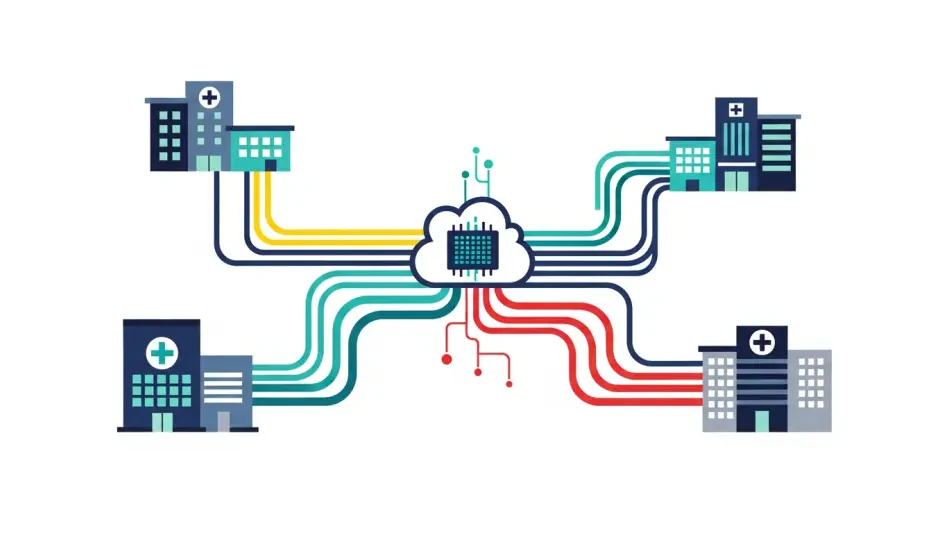
Moving forward, the focus must transition from the volume of data stored to the utility of that information. Utility is defined by how quickly a data point can be turned into a decision. If a laboratory report cannot be instantly reconciled with a patient’s medical history or a regional outbreak tracker, its potential to save lives is diminished. Establishing a searchable and trustworthy network of intelligence requires a unified approach to data management. Instead of isolated spreadsheets, the public health ecosystem needs a centralized intelligence framework where every entry contributes to a larger, more accurate picture of population health.
Beyond Digital Silos: Understanding the Interoperability Barrier
One of the most persistent misconceptions in the healthcare industry is the idea that digitizing a record automatically makes it interoperable. In reality, data is only as valuable as the ability of different platforms to share and interpret it correctly. Currently, the landscape is cluttered with disparate “languages” found in insurance claims, case files, and lab results, which prevents seamless communication. This lack of standardization acts as a significant friction point, forcing experts to spend thousands of labor hours on manual data cleaning and terminology alignment. This technical debt slows down emergency responses and makes it difficult to apply advanced analytics to urgent public health problems.
True interoperability demands more than just the ability to send an email or an electronic attachment; it requires rigorous governance and uniform protocols. When different health departments use different codes for the same illness or different formats for date entries, the system breaks down. A commitment to making data reusable across the entire ecosystem is essential for modernizing the public health response. This involves adopting international standards that ensure a laboratory in one state can transmit clear, actionable data to a federal agency or a local clinic without the need for manual translation. Only then can the friction of digital silos be removed, allowing for a more agile and responsive public health network.
From “Flashy” Features to Foundational Tools: AI as Public Health Infrastructure
Rather than viewing Artificial Intelligence as a collection of experimental gadgets, forward-thinking organizations are deploying it as the essential “plumbing” of their data systems. AI has the unique capacity to manage the inherent messiness of public health information by automating the extraction of metadata and the creation of searchable ontologies. Platforms like MetaMation demonstrate this by using AI to turn unstructured files into well-governed assets that are easy to find and analyze. By using AI to connect disparate sources and summarize complex documentation, agencies can transform raw, fragmented data into a clear and actionable map for community safety.
The reliability of these systems is further enhanced by tools like GENEVIC, which provide a model for ensuring that generative outputs are grounded in verified, peer-reviewed research. This approach prevents the common problem of AI “hallucinations” by strictly anchoring the technology to a foundation of trusted, well-governed information. When AI is treated as foundational infrastructure, it serves to organize and validate the data that experts rely on every day. This shift allows the technology to act as a silent partner that ensures data quality and accessibility, rather than just a tool for generating novelty reports. By focusing on these foundational applications, public health leaders can build a system that is both intelligent and dependable.
The CDC Efficiency Model: Reclaiming Human Potential Through Generative AI
The most compelling evidence for integrating advanced technology lies in its ability to drastically reduce administrative friction and redirect human talent toward high-priority tasks. The CDC’s enterprise-wide generative AI initiative serves as a landmark case study in this regard. By automating repetitive tasks such as brainstorming, coding, and complex data analysis, the organization successfully redirected over 41,000 staff hours toward higher-value public health work. This massive gain in productivity demonstrates that AI is not a replacement for human expertise but a powerful multiplier of human potential.
In one specific application, the rapid analysis of over 4,500 quarterly grant reports saved approximately 5,500 labor hours that would have otherwise been spent on manual data entry and review. This efficiency allows epidemiologists and public health researchers to focus on the nuance and strategy that machines cannot replicate. When these technologies are securely integrated, they alleviate the burnout associated with administrative burdens, allowing staff to engage more deeply with community health challenges. The success of this model provides a blueprint for other agencies looking to modernize their operations and maximize the impact of their existing workforce.
A Strategic Blueprint for Building Reliable and Ethical Public Health Networks
Transitioning to an AI-ready future requires a structured framework that balances rapid adoption with ethical safeguards, as outlined in the CDC’s AI Strategy for the period from 2026 to 2030. This strategic approach relies on four essential pillars: accelerating the use of AI to reduce burdens, strengthening governance to ensure trust, developing the technical architecture for large-scale operations, and training an AI-literate workforce. To maintain safety, these systems must incorporate “human-in-the-loop” monitoring and strict technical guardrails such as data provenance and versioning. This ensures that every piece of information used by the system can be traced back to a verified source, maintaining the integrity of public health data.
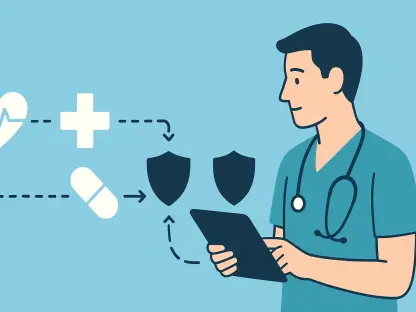
The implementation of these AI-ready systems established a new paradigm where data served as a proactive shield rather than a reactive archive. Public health agencies prioritized ethical transparency and technical rigor, which ultimately allowed for more equitable and rapid responses to emerging threats. The move toward unified data networks successfully replaced outdated silos with a culture of collaborative intelligence, ensuring that information was always available to protect lives. These advancements necessitated a commitment to auditability and international standards, proving that technology was most effective when it functioned as a reliable partner in protecting global populations. This transformation redefined the relationship between human expertise and automated efficiency, creating a resilient infrastructure that was prepared for any challenge.