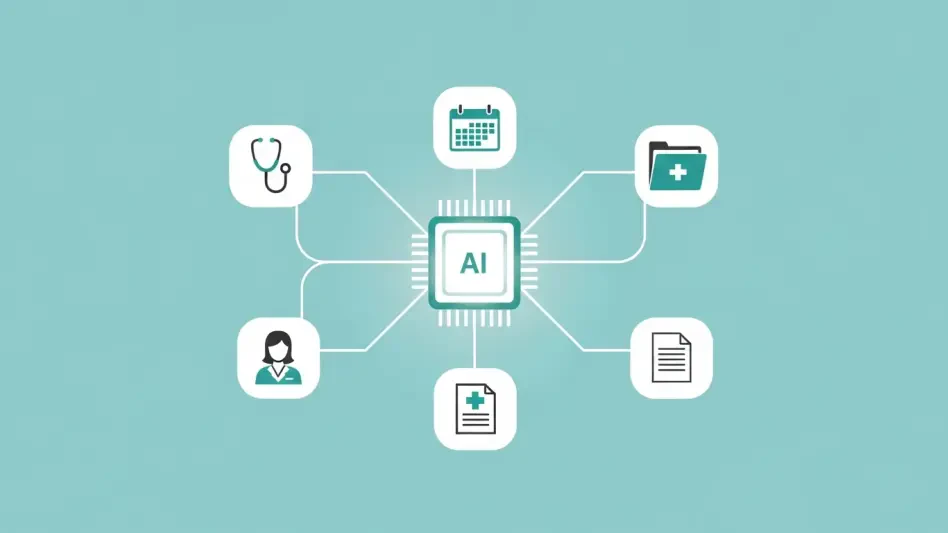

The Dawn of Intelligent Healthcare: A Multi-Billion Dollar Transformation in Patient Management
The global healthcare industry is on the cusp of a profound operational transformation, with the AI in medical scheduling software market at its epicenter. A comprehensive new analysis projects this burgeoning market will skyrocket from a valuation of $204.1 million in 2025 to an astounding $1.9 billion by 2034, fueled by a remarkable Compound Annual Growth Rate (CAGR) of 28.16%. This surge signifies a fundamental shift away from manual, inefficient appointment systems toward intelligent, automated platforms that promise to enhance patient access, optimize clinical resources, and streamline administrative workflows. This article explores the key drivers, complex challenges, and future-forward opportunities shaping this dynamic market, providing a detailed look into the forces propelling AI scheduling from a niche technology into an indispensable pillar of modern healthcare delivery.
From Clipboards to Cloud AI: The Evolution of Medical Appointment Systems
The journey to intelligent scheduling began with the limitations of traditional, rule-based systems. For decades, medical appointments were managed through phone calls, manual logbooks, and later, basic software that operated on rigid, predefined logic. These legacy methods were prone to human error, created administrative bottlenecks, and offered little flexibility to adapt to the unpredictable nature of healthcare demand. The current landscape, however, is defined by a paradigm shift toward dynamic, predictive AI. This evolution is driven by the industry-wide move to value-based care, where efficiency and patient outcomes are paramount. Modern AI platforms leverage machine learning to analyze historical data, predict patient no-shows, anticipate appointment durations, and optimize schedules in real-time, marking a transition from a reactive, manual process to a proactive, intelligent, and context-aware system.
Dissecting the Market’s Core Dynamics
Driving Forces: The Quest for Interoperability and Measurable ROI
Two powerful catalysts are accelerating the adoption of AI scheduling software: enhanced interoperability and an unrelenting demand for quantifiable return on investment (ROI). The increasing ability of AI platforms to seamlessly integrate with Electronic Health Records (EHRs) and other clinical databases is a game-changer. This connectivity provides the AI with a holistic view of patient history and resource availability, enabling more precise, data-driven scheduling decisions. Simultaneously, healthcare organizations, especially large hospitals which represent the dominant end-use segment with over 55% of the market, are under immense pressure to justify technology expenditures. They are actively seeking solutions that deliver measurable improvements, such as reduced patient wait times, lower no-show rates, and optimized utilization of high-cost assets like operating rooms and diagnostic equipment.
Navigating the Hurdles: The Challenge of Workflow Integration and Change Management
Despite the clear benefits, the path to implementation is not without significant obstacles. The primary restraint is the immense complexity of integrating AI scheduling tools into the fragmented and deeply entrenched workflows of healthcare organizations. Large health systems often operate with disparate scheduling practices across various departments, making standardization a monumental task. The challenge is less about technological capability and more about organizational readiness. Overcoming resistance to change from administrative staff and clinicians, ensuring consistent data entry practices, and investing in comprehensive training are critical hurdles. Successful deployment, therefore, depends as much on a strategic approach to change management and cross-departmental alignment as it does on the sophistication of the AI itself.
A Global Phenomenon: Regional Adoption and Market-Specific Nuances
The adoption of AI medical scheduling is a global trend, but its implementation varies significantly by region. North America stands as the dominant market leader, capturing nearly 48% of the global share, driven by its mature digital health ecosystem and high healthcare spending. The U.S. market, in particular, is a forerunner in leveraging AI for end-to-end efficiency. In stark contrast, the Asia-Pacific region is the fastest-growing market, projected to expand at a CAGR of over 30%. This explosive growth is fueled by rapid hospital digitization and government-led initiatives, such as China’s integration of AI scheduling in its public hospital networks and India’s Ayushman Bharat Digital Mission. Meanwhile, Europe is showing steady growth, with countries like Germany pioneering AI adoption through government-backed digital health investments.
Beyond Booking: The Future of Proactive and Preventive Care Coordination
The future trajectory of AI scheduling software extends far beyond simple appointment booking. The most significant emerging opportunity lies in its evolution into a proactive tool for population health and preventive care. The next generation of these platforms will analyze longitudinal patient data and clinical risk factors to automatically identify patients who need follow-up appointments, essential screenings, or specialty referrals. By initiating and coordinating these interactions without manual intervention, AI scheduling will become a strategic instrument for improving care continuity, boosting adherence to preventive health measures, and managing chronic conditions more effectively. This shift repositions the technology from a back-office efficiency tool to a frontline enabler of better, more proactive health outcomes.
Strategic Imperatives: Capitalizing on the AI Scheduling Revolution
To successfully navigate this rapidly evolving market, healthcare organizations and technology vendors must adopt forward-thinking strategies. For providers, the focus should be on a phased implementation approach that prioritizes strong change management and comprehensive staff training to ensure smooth workflow integration. Selecting scalable, cloud-based solutions that offer robust interoperability with existing EHR systems is crucial for future-proofing the investment. For technology vendors, the key to market leadership will be the ability to clearly demonstrate quantifiable ROI, address the complex integration challenges faced by large hospitals, and innovate toward proactive care coordination. Success will hinge on creating solutions that are not only technologically advanced but also intuitive, adaptable, and aligned with the core mission of improving patient care.
Redefining the Front Door of Healthcare
The projected surge of the AI medical scheduling market to $1.9 billion by 2034 is more than a financial forecast; it represents a fundamental rethinking of how patients interact with the healthcare system. By automating routine tasks, predicting needs, and optimizing resources, AI is set to eliminate long-standing administrative friction, making healthcare more accessible, efficient, and patient-centric. As this technology matures, it will move beyond the confines of administrative support to become an integral component of strategic health management. For healthcare leaders, embracing this transformation is no longer an option but a strategic imperative to build a more resilient and responsive healthcare system for the future.