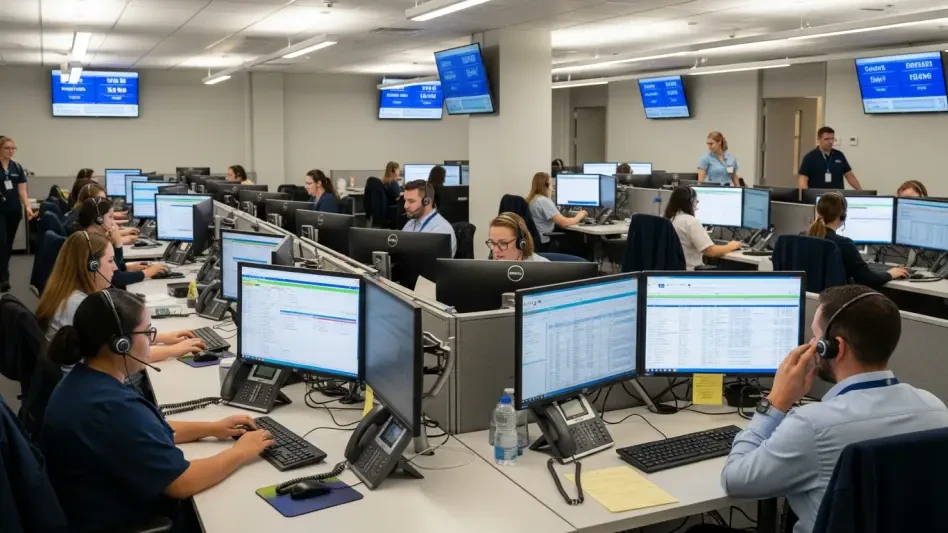

What happens when a single phone call can determine whether a patient trusts their healthcare provider or walks away frustrated? Medical call centers, often operating behind the scenes, hold immense power in shaping patient experiences, especially during critical moments like scheduling urgent care or navigating daunting medical bills. These initial interactions aren’t just transactions; they’re the foundation of trust in a complex healthcare system. This feature dives into why call centers are a linchpin for patient satisfaction and how transforming them can redefine care delivery, with a special focus on the emotionally charged realm of collections.
Why Medical Call Centers Matter More Than Ever
Picture a patient, already stressed about a medical diagnosis, waiting endlessly on hold to resolve a billing issue. That moment of frustration can erode confidence in an entire healthcare organization. Call centers are the first touchpoint for many, handling everything from appointment bookings to financial concerns. With healthcare costs soaring and nearly half of U.S. adults struggling to afford care, these interactions carry heightened emotional weight. The stakes couldn’t be higher—60% of patients list long wait times as their top grievance, often prompting them to seek other providers. Transforming these hubs into efficient, empathetic spaces isn’t just a nicety; it’s essential for patient loyalty and trust.
Beyond individual experiences, call centers reflect broader industry challenges like accessibility and affordability. A poorly managed call can exacerbate feelings of helplessness, while a compassionate, swift resolution can rebuild faith in the system. This dual role—as both operational necessity and emotional anchor—positions call centers as a hidden key to patient satisfaction. Addressing their shortcomings offers healthcare providers a chance to stand out in an increasingly competitive landscape.
Unpacking the Challenges in Medical Call Centers
Delving into the inner workings of medical call centers reveals a web of obstacles that impact both patients and staff. Operational inefficiencies often top the list, with understaffing during peak hours leading to agonizing wait times. Data shows that aligning schedules with call volume trends can slash these delays by up to 30%, as seen in a hospital that adopted key performance indicator (KPI) tracking. Yet, many centers still rely on guesswork, missing opportunities to streamline processes and improve satisfaction scores.
Financial discussions add another layer of complexity, especially in collections. With one in four Americans unable to pay medical bills, these conversations are rarely straightforward. Patients often feel alienated by impersonal approaches, but there’s potential to reframe these interactions as supportive rather than confrontational. Shifting the mindset of collections staff to act as allies—offering payment plans or aid—can transform a tense exchange into a moment of relief, directly influencing 90% of patient loyalty tied to financial experiences.
Staff morale, often overlooked, plays a pivotal role in performance. Handling sensitive calls, particularly in collections, is grueling, and the pressure to meet industry benchmarks like answering 80% of calls within 20 seconds only adds to the strain. High turnover rates plague the sector, but research indicates that meaningful recognition can cut attrition by 45%. When staff feel undervalued, it ripples through to patient interactions, underscoring the need to prioritize engagement alongside operational fixes.
Voices From the Frontlines
Insights from industry veterans shed light on how to turn challenges into strengths. A seasoned expert with over two decades in healthcare emphasizes that collections isn’t about conflict but connection. “It’s about helping patients meet their responsibilities while safeguarding healthcare systems,” the expert notes, drawing from a background that includes direct patient care. This perspective flips the script, highlighting empathy as a tool for resolution even in tough financial talks. Real-world examples back this up—a medical center that introduced monthly team celebrations saw not only reduced staff turnover but also a noticeable uptick in positive patient feedback.
These stories reveal a powerful truth: blending human connection with strategic approaches yields results. Empathy doesn’t just soften difficult conversations; it builds bridges that keep patients engaged with their providers. Hearing from those who’ve walked the path—both in call centers and on the frontlines of care—reinforces that transformation isn’t a lofty goal but a practical necessity grounded in everyday actions.
Strategies to Revolutionize Call Center Operations
Turning vision into reality demands actionable steps tailored to the unique pressures of medical call centers. Start with data-driven staffing—analyzing call patterns to ensure coverage during high-demand windows cuts wait times significantly. Pair this with quality assurance systems to track recurring complaints, enabling targeted fixes. For instance, reducing unnecessary transfers between departments can eliminate a common patient pain point, smoothing the journey from inquiry to resolution.
Training for empathy is equally critical, especially in financial discussions. Equipping staff with scripts and de-escalation techniques ensures that even high-stress calls end on a constructive note. Role-playing real scenarios during training builds confidence, preparing agents to handle emotional conversations with care. This focus on tone and active listening can turn a potential conflict into a moment of understanding, fostering trust rather than frustration.
Collaboration across departments further enhances the patient experience. Regular cross-team meetings between scheduling, billing, and collections staff help identify and close communication gaps. Shared digital tools, like real-time dashboards, prevent patients from being shuffled unnecessarily, ensuring a cohesive interaction. Meanwhile, celebrating staff wins—whether meeting response time goals or resolving complex cases—boosts morale. Personalized recognition, such as public shout-outs, reminds teams of their impact, linking daily efforts to the broader mission of patient care.
Building a Future of Better Care Through Call Centers
Reflecting on past efforts, it became clear that medical call centers had long been underestimated as mere operational cogs. Their transformation journey showed they could be so much more—vital connectors between patients and the care they deserved. Looking ahead, healthcare organizations must commit to ongoing improvements, investing in data tools to refine staffing and issue tracking. Training programs centered on empathy and collaboration should remain a priority, ensuring every call leaves a positive impression.
Moreover, fostering a culture of recognition proved to be a game-changer, sustaining staff motivation in a demanding field. The next steps involve scaling these strategies, perhaps by integrating advanced technologies to predict call surges or personalize patient interactions. Ultimately, the goal remains steadfast: to position call centers as pillars of trust, proving that even the smallest conversation can make a monumental difference in someone’s healthcare journey.