
Setting the Stage for a Healthcare Revolution
In an era where U.S. healthcare systems grapple with persistent workforce shortages and stark disparities in access to specialized care, a staggering statistic emerges: millions of patients face delayed diagnoses due to a lack of specialists in rural and underserved regions, painting a vivid picture of a strained system struggling to keep pace with growing demand. Amid this backdrop, Philips, a renowned medtech leader, steps forward with its advanced healthcare monitoring technology, promising to bridge these gaps by transforming how care is delivered across diverse settings.
The significance of this innovation lies in its potential to redefine patient care beyond the walls of hospitals. Philips has evolved from a traditional device manufacturer into a direct care enabler, integrating sophisticated monitoring solutions that span from emergency rooms to home environments. This review delves into the core features, real-world impact, and future implications of this technology, assessing its capacity to alleviate systemic pressures while enhancing patient outcomes.
Core Features of the Monitoring Technology
Seamless Connectivity Across Care Environments
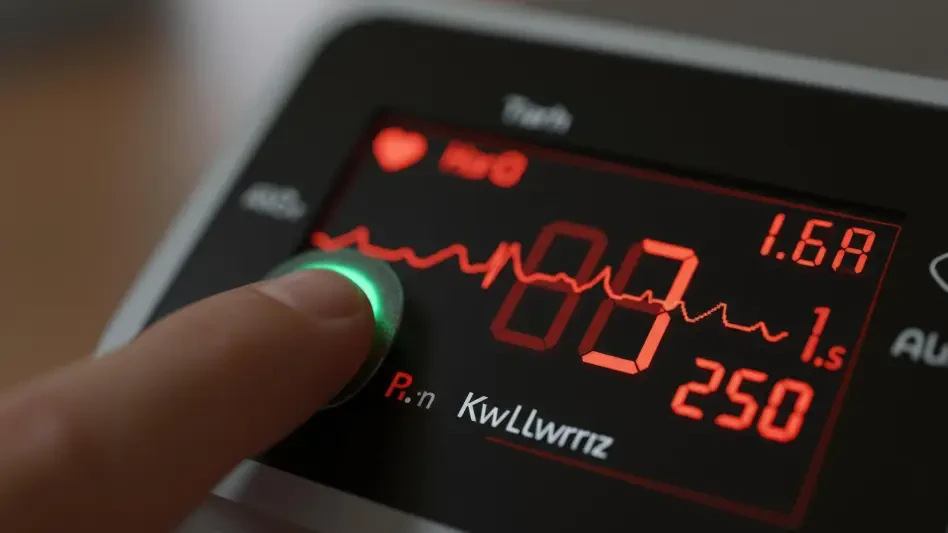
Philips’ monitoring solutions stand out for their ability to maintain continuous patient oversight, regardless of location. From bustling emergency departments to quiet home settings post-discharge, the technology ensures that vital health data flows uninterrupted. This capability proves crucial in scenarios where patients with symptoms like dizziness—often tied to cardiac issues—can be sent home with connected devices, avoiding prolonged hospital stays while still under close watch.
Beyond facilitating early discharges, the system integrates smoothly into hospital workflows. In specialized units such as catheterization labs, there is no need to swap equipment, as the technology adapts to various clinical needs. This seamless connectivity not only bolsters patient safety by minimizing data gaps but also reduces strain on hospital resources, allowing staff to focus on critical care rather than logistical hurdles.
Intuitive Design for Enhanced User Experience
A hallmark of Philips’ approach is its emphasis on user-friendly design, catering to both patients and healthcare providers. Approximately 30% of diagnostic patients receive monitoring devices via mail, complete with straightforward instructions for self-application. Proactive engagement from Philips ensures that devices are activated correctly and data quality remains high, empowering patients to participate actively in their care.
In hospital settings, innovations like waterproof telemetry units address practical challenges. These devices maintain data continuity during everyday activities such as showering, eliminating the risk of missing critical health events. By prioritizing ease of use, Philips ensures that technology serves as an enabler rather than a barrier, fostering better compliance and more reliable monitoring outcomes.
Performance and Real-World Impact
Addressing Access Gaps Through Strategic Partnerships
One of the standout achievements of Philips’ monitoring technology is its role in mitigating access disparities through collaborations with healthcare providers like Optum. In regions lacking specialists such as cardiologists, the system supports primary care physicians by handling technical diagnostics. This reduces the dependency on specialist intervention until clinical interpretation becomes necessary, significantly cutting down diagnostic delays.
The versatility of these solutions shines through in varied applications. Whether monitoring patients in high-stakes emergency settings or enabling at-home care for individuals with cardiac conditions, Philips demonstrates adaptability. Such flexibility not only optimizes the roles of existing healthcare professionals but also ensures that patients receive timely interventions, regardless of geographic barriers.
Operational Efficiency and Cost Mitigation
Philips tackles the financial and operational challenges of adopting advanced technology through its “monitoring as a service” model. This innovative framework provides health systems with a unified platform across departments, slashing equipment costs and lightening staff workloads. A notable example includes a customer saving thousands of staff hours annually, showcasing the model’s efficiency in streamlining operations.
Interoperability, often a stumbling block for health systems, is addressed head-on with this cohesive approach. By aligning workflows and prioritizing data utilization, Philips unlocks the potential of healthcare information to drive better clinical decisions. This focus on integration highlights a commitment to reducing systemic friction while enhancing care delivery.
Challenges in Adoption and Implementation
Navigating Financial and Technical Barriers
Despite its promise, the adoption of Philips’ monitoring technology is not without hurdles. Health systems often face significant upfront costs when integrating such advanced solutions, posing a barrier especially for smaller or resource-constrained facilities. Additionally, ensuring compatibility with existing infrastructure remains a persistent concern, as disparate systems can disrupt the seamless data flow that Philips aims to achieve.
To counter these issues, Philips has tailored its service model to alleviate financial pressures by minimizing equipment expenses. The emphasis on unified platforms also aids in overcoming interoperability challenges, though widespread adoption still requires tailored support for diverse healthcare environments. These efforts reflect an understanding of the complex landscape in which the technology operates.
Balancing Innovation with Practicality
Another layer of complexity arises from the need to balance cutting-edge innovation with practical implementation. Staff training and adaptation to new workflows can slow the integration process, particularly in overburdened facilities. Ensuring that the technology remains accessible without overwhelming existing resources is a delicate task that demands ongoing refinement.
Philips addresses this by focusing on intuitive designs that reduce the learning curve for both patients and providers. Nevertheless, continuous dialogue with healthcare stakeholders remains essential to align the technology with real-world needs. This adaptive approach underscores a commitment to making innovation actionable within constrained settings.
Reflecting on the Journey and Looking Ahead
Looking back, Philips’ foray into healthcare monitoring marked a pivotal shift in addressing systemic challenges within the U.S. healthcare landscape. Its dual role as a manufacturer and care provider carved a path toward more accessible, efficient, and patient-centric care delivery. The technology’s ability to integrate across care settings, coupled with its focus on user engagement, sets a high standard for what connected care could achieve in alleviating workforce shortages and access disparities.
Moving forward, health systems and stakeholders should consider deeper investments in scalable monitoring solutions to close remaining care gaps. Exploring further integration of data analytics could unlock predictive insights, enhancing proactive care. Additionally, fostering partnerships with a broader range of providers can expand the technology’s reach into underserved areas. Philips’ journey offers a blueprint for innovation, urging the industry to prioritize adaptability and collaboration in building a more resilient healthcare future.