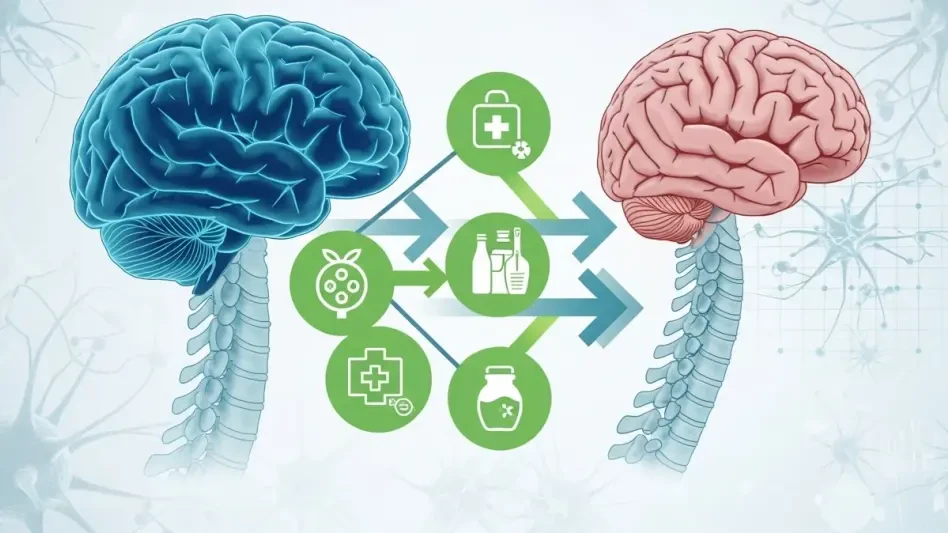

Navigating the complexities of brain health requires more than just a clinical eye; it demands an understanding of how a single impact can ripple through every system in the human body. Dr. Al Cobb, a specialist in chiropractic neurology and concussion rehabilitation, brings a unique perspective to this field, shaped by his history as a former college football athlete and his clinical work in Lubbock, Texas. His approach shifts the focus from outdated recovery models to a dynamic, integrated strategy that treats the brain and neck as an inseparable unit.
The following discussion explores the systemic “domino effect” of concussions, the critical role of cervical spine rehabilitation, and why the traditional “dark room” recovery method is being replaced by proactive, technology-driven protocols.
Many concussions occur away from the playing field and go unreported. Why is this reporting gap so prevalent in non-athletes, and what specific physical signs should family members look for beyond a direct blow to the head? Please describe a scenario where a non-impact injury might be missed.
The reporting gap exists because society still largely associates concussions with dramatic collisions on a football field, leaving millions of others to suffer in silence. Many people believe that if they didn’t lose consciousness or hit their head directly against a hard surface, they haven’t sustained a brain injury. However, a concussion is a functional injury to the brain that can be caused by any force strong enough to create a whip-like motion of the head. Family members should look for subtle shifts such as altered digestive patterns, sudden changes in mental state, or difficulty regulating blood flow, which might manifest as dizziness when standing. Consider a car accident where a driver suffers a severe whiplash but their head never actually strikes the steering wheel or window; this person may dismiss their headaches and brain fog as “just stress” from the accident, unknowingly leaving a functional brain injury untreated.
A concussion triggers a cascade of inflammation affecting the digestive and hormonal systems. How do you identify these secondary systemic issues during an initial evaluation, and what does a multifaceted treatment plan look like when addressing blood flow regulation and mental health?
Identifying these systemic issues requires moving beyond a simple reflex test and listening to the patient’s narrative with an informed, empathetic perspective. During an evaluation, I look for signs of the “domino effect,” where the initial trauma has disrupted the autonomic nervous system, leading to hormonal imbalances or gut issues. A multifaceted treatment plan is essential because your patients aren’t making these symptoms up; they are experiencing a legitimate physiological crisis. We incorporate a combination of manual rehabilitation for physical injuries, specific dietary changes to lower the inflammatory load, and graded exercises to help the nervous system recalibrate. When mental health is impacted, we provide psychological support alongside these physical interventions to ensure the patient feels heard and supported throughout their entire recovery journey.
Whiplash often accompanies a concussion, yet the cervical spine is frequently overlooked during rehabilitation. What specific role does neck treatment play in the recovery process, and how can providers use objective technology to measure improvements in joint position sense or oculomotor control?
I would argue that treating the neck is likely the most overlooked component of concussion rehab, yet any force sufficient to cause a concussion is virtually guaranteed to cause a cervical spine injury. The neck serves as the pedestal for the head, and if the joint position sense in the cervical spine is compromised, the brain receives scrambled signals about where it is in space. To bridge the gap in traditional care, we use innovative objective measurement systems like NeckCare to move beyond guesswork and “feel.” These technologies allow us to precisely track improvements in oculomotor control and cervical stability, providing concrete data that confirms the efficacy of our treatment. By focusing on the neck, we address the root of many lingering symptoms like dizziness and chronic headaches that head-focused treatments often miss.
Traditional advice often suggests resting in a dark room, but prolonged inactivity may actually hinder recovery. After the initial 48-hour window, how should a patient safely reintroduce graded exercise, and what metrics indicate they are pushing too hard versus making healthy progress?
The old guideline of “resting in the dark with no screen time” is increasingly viewed as harmful if continued past the initial 24 to 48 hours. Research now shows that there is no benefit to total inactivity after that window, and in fact, light exercise is one of our best tools for restoring proper nervous system regulation. Patients should begin with very low-intensity movement and monitor their symptoms closely, aiming to do just a little more each day as their body permits. The key metric is symptom aggravation: a slight increase in symptoms is often acceptable, but if a patient experiences a sharp spike in pain or neurological distress, it is a sign to scale back. By slowly increasing the heart rate without overwhelming the brain, we can guide the patient back to health much faster than if they stayed isolated in a dark room.
Diet significantly impacts the brain’s ability to heal and manage inflammation post-injury. Which specific high-quality proteins and fats should be prioritized to fuel the brain, and how does proper hydration help mitigate the risk of lingering symptoms during the critical first few weeks?
A whole food diet is extremely important in the days and weeks following an injury because the brain is in a metabolic crisis and requires high-quality fuel to repair itself. We prioritize clean, high-quality proteins and healthy fats—such as those found in avocados, walnuts, and wild-caught fish—to provide the building blocks for cellular repair while cutting down the inflammatory load. Proper hydration is equally critical; it helps maintain blood volume and supports the regulation of blood flow, which is often disrupted after a concussion. By focusing on these nutritional pillars, we exponentially improve the recovery experience and significantly decrease the chances of a patient suffering from lingering post-concussion symptoms. These actions provide the brain with the optimal environment to quiet the inflammatory “storm” and return to normal function.
The delay between an injury and seeing a specialist is the strongest predictor of long-term complications. How does early intervention specifically prevent the development of post-concussion syndrome, and what steps should a provider take during the first visit to ensure a faster recovery?
Time to treatment is the number one indicator of whether a patient will join the 20-30% of people who suffer from post-concussion syndrome, where symptoms last past the 30-day mark. Early intervention prevents the “domino effect” of inflammation from becoming a permanent state of dysfunction within the nervous system. During the first visit, a provider should implement updated protocols that include comprehensive neurological testing and an immediate plan for manual rehab and dietary adjustments. By establishing an informed perspective right away, we can prevent the patient from falling into the trap of outdated “rest-only” methods that lead to prolonged disability. The goal of that first visit is to provide a roadmap that addresses the brain, neck, and systemic inflammation simultaneously to shorten the recovery window.
What is your forecast for concussion treatment?
My forecast for the future of concussion treatment is a shift toward objective, data-driven personalized care that moves away from the “wait and see” approach. We are entering an era where innovative systems will allow every provider to measure cervical spine function and oculomotor control with the same precision we use for blood pressure or heart rate. As wider society and the medical community continue to embrace the latest research, I believe we will see a dramatic reduction in chronic post-concussion syndrome cases. By integrating nutrition, advanced technology, and a deep understanding of the neck-brain connection, we will be able to provide patients with significantly higher quality of life and much more predictable, successful recoveries.