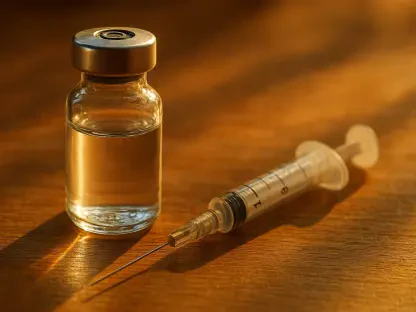

The transition from reactive treatment to proactive prevention has reached a critical milestone following the formal approval of Xocova for post-exposure use by the Food and Drug Administration. For years, the standard response to a known viral encounter involved an agonizing period of isolation and waiting to see if symptoms would develop, often while knowing that the window for early intervention was rapidly closing. With this latest regulatory green light in late May 2026, the medical community now possesses its first oral antiviral specifically indicated for post-exposure prophylaxis, or PEP. This decision marks a significant evolution in the global strategy against the SARS-CoV-2 virus, shifting the focus from mitigating damage in active infections to stopping the pathogen in its tracks before it can gain a firm foothold in the body. Developed by the pharmaceutical innovator Shionogi, the medication known generically as ensitrelvir is designed to act as a defensive shield for individuals who are not yet sick but have endured high-risk contact with an infected person. By introducing a pharmacological barrier during the incubation phase, public health officials hope to not only protect individuals from the physical burden of the disease but also to systematically break the chains of transmission that lead to large-scale community outbreaks. The arrival of Xocova represents a more sophisticated phase of pandemic management, where the primary goal is to turn potential infections into non-events, thereby reducing the strain on hospitals and protecting the most vulnerable members of the population.
Clinical Evaluation: Evidence from the SCORPIO-PEP Trial
The foundation for this regulatory approval rests upon the rigorous data gathered during the SCORPIO-PEP trial, a large-scale Phase III study that meticulously tracked more than 2,000 participants. These individuals were specifically selected because they shared a household with someone who had recently received a positive SARS-CoV-2 diagnosis, a scenario that historically represents one of the highest risks for viral transmission. By focusing on household clusters, researchers were able to create a controlled yet real-world environment to test whether ensitrelvir could successfully interrupt the natural progression of the virus. The results were remarkably compelling, demonstrating that individuals who began the five-day regimen of Xocova within 72 hours of exposure were 67% less likely to develop symptomatic illness compared to those in the placebo group. This statistic is particularly vital because it addresses the acute phase of the disease, where the risk of inflammation and severe respiratory distress is highest. Medical experts have emphasized that achieving such a high level of protection through a simple oral pill could fundamentally change how we manage the aftermath of workplace or school exposures, offering a level of certainty that was previously unavailable through traditional quarantine measures alone.
Beyond the prevention of physical symptoms, the trial also provided essential insights into how the drug affects the actual presence of the virus within the respiratory tract. Researchers found that those taking the medication experienced a 34% reduction in the likelihood of testing positive via PCR, suggesting that the drug effectively limits the ability of the virus to replicate even at a subclinical level. While this does not constitute a “sterile” immunity—meaning some individuals might still carry low levels of the virus—it indicates a significant reduction in the total viral load. From a public health perspective, this is a monumental finding because a lower viral load is directly correlated with a decreased risk of passing the virus on to others. This secondary benefit means that Xocova does not just benefit the individual patient; it acts as a tool for community containment by muting the infectiousness of those who have been exposed. However, infectious disease specialists remain cautious, reminding the public that while a 34% reduction is significant, it is not a substitute for active hygiene and masking. Instead, the drug should be viewed as one layer in a multi-faceted defense strategy that includes vaccination and environmental controls, working in tandem to squeeze the virus out of circulation.
Cellular Intervention: Mechanism of Protease Inhibition
To understand how Xocova achieves its preventative effects, one must look at the specific biological machinery of the SARS-CoV-2 virus, which relies on an enzyme known as the main protease, or Mpro. This enzyme acts like a pair of molecular scissors, cutting long chains of viral proteins into smaller, functional pieces that the virus then uses to build new copies of itself. Xocova belongs to a class of drugs called protease inhibitors, which are designed to bind tightly to this Mpro enzyme and essentially jam the scissors. When the enzyme is blocked, the virus becomes trapped in an immature state, unable to complete its life cycle or spread to neighboring cells in the lungs and throat. This mechanism is highly specific to the coronavirus family, which minimizes the risk of the drug interfering with normal human cellular processes. By targeting a core component of the viral replication process, the medication provides a robust defense that remains effective even as the virus attempts to mutate other parts of its structure, such as the spike protein. This stability makes it a reliable long-term asset in the ongoing effort to manage emerging variants that might evade the immunity provided by older vaccines.
The practical application of this science is delivered through a streamlined five-day oral course that is designed to reach therapeutic levels in the bloodstream as quickly as possible. The regimen begins with a “loading dose” on the first day, requiring the patient to take three 125-milligram tablets at once to saturate the body’s tissues and begin the inhibition process immediately. For the subsequent four days, the patient takes only a single tablet daily, completing a total of seven pills over the course of the treatment. Currently, the FDA has authorized this protocol for individuals aged 12 and older, recognizing the need for a preventative option that spans across both adolescent and adult populations. However, the current guidelines exclude pregnant or breastfeeding individuals due to a lack of comprehensive safety data for those specific groups, a common precaution during the early stages of a new drug rollout. This clear dosing schedule is intended to maximize patient compliance, which is critical in a preventative context where the absence of symptoms might otherwise lead a person to forget their medication. By providing a short, simple, and effective course of action, the healthcare system can more easily integrate PEP into standard care.
Socioeconomic Access: Navigating Cost and Distribution
While the clinical and biological potential of Xocova is undeniable, the logistical reality of its rollout in the United States is met with significant economic headwinds, primarily driven by its $1,400 list price. This figure has sparked a vigorous debate among health economists and patient advocates, as it stands in stark contrast to the significantly lower costs observed in other international markets like Japan. For many American families, especially those without comprehensive health insurance, a four-figure price tag for a preventative medication is an insurmountable barrier that could lead to a two-tiered system of protection. Public health experts have argued that if the drug is only accessible to the wealthy, its ability to curb community transmission will be severely diminished, as the virus will continue to circulate through lower-income neighborhoods where the cost of PEP is prohibitive. The challenge now lies in ensuring that pharmaceutical pricing does not undermine the very public health goals the drug was designed to achieve, requiring a delicate balance between rewarding innovation and ensuring broad societal benefit.
Adding to the complexity of the financial landscape is the fragmented nature of the American insurance system, which often struggles to adapt quickly to new preventative therapies. While many private insurers are expected to eventually cover Xocova, the initial rollout phase often involves a “wait-and-see” period that leaves patients in a state of uncertainty. For those relying on federal programs like Medicare and Medicaid, the path to coverage is even more opaque, as these agencies must conduct their own cost-benefit analyses before committing to universal reimbursement. Beyond the financial hurdles, the 72-hour window for effectiveness creates a massive logistical challenge that requires a near-perfect coordination of testing, prescribing, and dispensing. In many parts of the country, particularly rural areas, the time it takes to see a doctor and find a pharmacy with the drug in stock could easily exceed the three-day limit. Critics have pointed out that without a streamlined, pharmacist-led “test-to-treat” or “exposure-to-treat” model, the narrow window of opportunity will be missed by a significant portion of the population. Addressing these disparities will require not only financial subsidies but also a structural overhaul of how we distribute time-sensitive medications in a crisis.
Preventative Research: Long COVID and Future Applications
One of the most promising and potentially transformative aspects of the Xocova approval is its possible role in the ongoing battle against Long COVID, a condition that continues to disable millions of people globally. Although the current FDA indication is strictly for preventing the acute phase of the illness, there is a growing scientific consensus that preventing the initial infection—or at least minimizing the initial viral load—is the most effective way to avoid long-term sequelae. For individuals who are already suffering from the debilitating symptoms of post-viral syndromes, the prospect of a reinfection is a source of immense anxiety, as secondary bouts of the virus are frequently reported to exacerbate existing neurological and cardiovascular issues. By providing a reliable way to block reinfection after a known exposure, Xocova offers these patients a vital safety net. It allows them to navigate a world where the virus is endemic without the constant fear that a single high-risk encounter will reset their recovery progress by months or even years.
Looking ahead, the medical community is eagerly awaiting the results of ongoing clinical trials such as RESILIENCE and PREVAIL-LC, which are investigating whether protease inhibitors can be used as a direct treatment for established Long COVID. The hypothesis underlying these studies is that some persistent symptoms may be caused by “viral reservoirs,” or small pockets of the virus that remain hidden in the body’s tissues long after the initial illness has passed. If Xocova can penetrate these tissues and clear out remaining viral fragments, it might provide a definitive cure for the chronic inflammation and immune dysregulation that define the condition. Researchers are currently tracking biomarkers of inflammation and viral presence in thousands of volunteers to see if a longer course of the drug can restore baseline health. These future considerations highlight that the approval of Xocova is not the end of the story, but rather the beginning of a new chapter in which we possess the tools to not only prevent the spread of the virus but also to heal the long-term damage it has left in its wake.
Strategic Evolution: Future Directions for Viral Prevention
In the months following the initial rollout, healthcare providers and policy experts established a framework for integrating post-exposure prophylaxis into the standard of care for respiratory viruses. Medical professionals recommended that individuals maintain a high degree of situational awareness, encouraging those with known high-risk exposures to seek consultations immediately rather than waiting for the onset of symptoms. This shift required a fundamental change in patient behavior, moving away from the “wait and see” approach that defined the earlier years of the pandemic. Pharmacies and clinics prepared by streamlining their prescription processes, ensuring that the 72-hour window remained a viable target for the majority of the population. By treating exposure as a medical emergency similar to a needle-stick injury or a potential HIV exposure, the system began to prioritize speed and accessibility over traditional administrative hurdles.
As the distribution network matured, health systems focused on expanding coverage to ensure that the $1,400 price tag did not become a permanent barrier to equity. Patient assistance programs were eventually scaled up, and many states sought federal grants to stockpile the medication for use in underserved communities. Researchers also stayed diligent, monitoring for any signs of viral resistance to protease inhibitors to ensure the long-term viability of the drug class. They suggested that the most effective path forward involved a combination of genomic surveillance and updated clinical guidelines that could pivot if the virus developed significant mutations in the Mpro enzyme. By fostering a culture of proactive defense and continuous scientific inquiry, the public health infrastructure sought to transform COVID-19 from a disruptive global threat into a manageable endemic condition. The success of this transition depended on the collective ability to treat every exposure as an opportunity for prevention rather than an inevitable march toward illness.