
The Dawn of a New Era in Vision Correction
For millions of adults, the simple act of reading a menu, a text message, or a book eventually becomes a challenge. This creeping blurriness, known as presbyopia, has long been an accepted, if inconvenient, part of aging, sending a steady stream of people to the drugstore for their first pair of reading glasses. However, the landscape of vision care is on the cusp of a dramatic shift. The recent FDA approval of Yuvezzi, a once-daily eye drop, signals a move away from physical lenses and toward a pharmacological solution. This article explores the science behind this innovative treatment, its place in an increasingly competitive market, and whether it truly has the potential to make reading glasses a relic of the past. We will delve into the clinical data, the corporate strategy driving its launch, and what this development means for the future of clear near vision.
From Bifocals to Breakthroughs: The Enduring Challenge of Presbyopia
Presbyopia is not a disease but a natural, age-related condition that affects nearly everyone, typically starting in their early to mid-40s. It occurs as the eye’s natural lens loses its flexibility, making it difficult to focus on close objects. For centuries, the solution has been straightforward and mechanical: corrective lenses. From the first bifocals invented by Benjamin Franklin to modern progressive lenses and contact lenses, the goal has been to bend light before it reaches the eye to compensate for the lens’s diminished focusing power. While effective, these solutions come with their own set of compromises—the inconvenience of carrying glasses, the limitations of contact lenses, or the risks and costs of surgical procedures. The sheer scale of the affected population has made a non-invasive, temporary, and effective pharmaceutical treatment the holy grail of ophthalmic research, setting the stage for the current wave of innovation.
A Closer Look at the Pharmacological Revolution
The Pinhole Effect: How Yuvezzi Brings the World into Focus
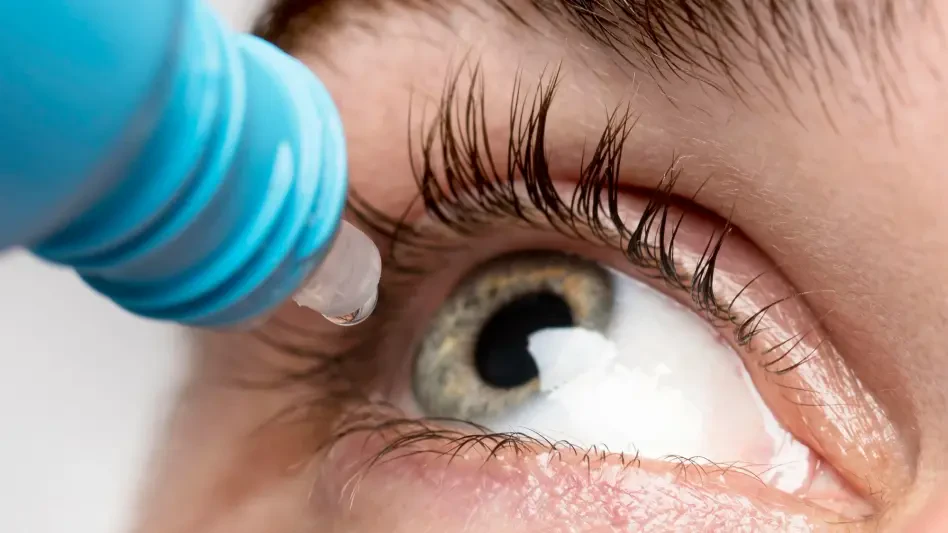
At the heart of Yuvezzi’s innovation is a well-understood optical principle known as the “pinhole effect.” The drop is a fixed-dose combination of two established ophthalmic drugs, brimonidine and carbachol, which work together to gently constrict the pupil. This narrowing of the pupil increases the eye’s depth of focus, much like a camera’s aperture being stopped down, allowing the user to see near objects more clearly without significantly impacting their distance vision. The FDA’s approval was based on two robust Phase 3 trials involving over 500 patients, which demonstrated a significant improvement in near visual acuity. A key finding was the treatment’s impressive duration of eight to ten hours from a single daily drop. While mild side effects like headache and temporary eye irritation were reported, the studies noted that eye redness was not a common issue, a potential advantage for patient comfort and cosmetic appearance.
A Crowded Field: Sizing Up the Competition
Yuvezzi enters a market that, while new, is not without rivals. The first-to-market drop, AbbVie’s Vuity, was approved several years ago but struggled to gain widespread adoption, partly due to its shorter duration of up to six hours. More formidable competition comes from Lenz Therapeutics’ Vizz, which launched in late 2023. Vizz uses a different active ingredient, aceclidine, and has demonstrated a near-vision improvement lasting up to ten hours. It has already shown strong early commercial traction, with some industry analysts describing it as having a “best-in-class profile” due to its rapid onset and durability. Another player, Orasis Pharmaceuticals’ Qlosi, offers up to eight hours of effect and flexible dosing. The presence of these competitors means Tenpoint Therapeutics, the company behind Yuvezzi, will need a sharp commercial strategy to carve out its market share.
Beyond the Bottle: The Financial Firepower Fueling the Launch
The journey of Yuvezzi to market is a story of strategic corporate evolution. Tenpoint Therapeutics began as a London-based cell therapy startup before merging with Visus Therapeutics, the company that had already guided the eye drop through initial clinical trials. This pivot highlights the immense commercial potential of presbyopia treatments. Following FDA approval, Tenpoint announced it had secured a staggering $235 million in financing—a clear vote of confidence from investors. This massive capital infusion, comprised of debt financing and a Series B equity round, is earmarked for a powerful commercial launch. This financial backing is critical, not only to compete with established players but also to fund the extensive marketing and education needed to shift consumer behavior from buying reading glasses to asking a doctor for a prescription eye drop.
The Future Is Blurring: What This Means for Vision Care
The emergence of multiple presbyopia eye drops is poised to fundamentally reshape the vision care market. While industry analysts currently favor Lenz’s Vizz due to its strong clinical profile and a product label with fewer warnings than Yuvezzi’s, the competition itself may be a net positive for the category. Having two well-funded companies actively promoting a pharmaceutical solution can create a “second voice” that accelerates awareness among both consumers and physicians, expanding the entire market rather than just splitting it. This rivalry will likely spur further innovation, leading to next-generation drops with even longer durations, fewer side effects, or improved performance across a wider range of patients. The future may see these drops become a routine part of aging, just as reading glasses are today.
A New Option on the Table: What Consumers Should Know
For the millions of individuals frustrated with the limitations of reading glasses, these developments are profoundly significant. The primary takeaway is that there is now a new class of treatment available that offers convenience and freedom from corrective eyewear for a significant portion of the day. However, it’s crucial to understand that these drops are not a cure; they are a temporary solution that requires a daily application and a doctor’s prescription. Potential users should discuss their lifestyle, vision needs, and the potential side effects with their ophthalmologist to determine if they are a suitable candidate. While Yuvezzi and its competitors represent a major leap forward, they are another tool in the toolbox, and traditional glasses will likely remain a practical and affordable option for many.
Redefining Vision: A Concluding Thought
While it may have been premature to declare reading glasses obsolete, the arrival of effective, long-lasting pharmacological treatments like Yuvezzi marked an undeniable turning point. This innovation reflected a broader trend in medicine where complex age-related conditions are increasingly managed through targeted, non-invasive therapies. The battle for clear near vision is no longer being fought solely with glass and plastic but with advanced biochemistry in a bottle. As this new market has matured, it has promised not only to provide a convenient alternative to glasses but also to redefine our very approach to managing the predictable, yet profound, changes that come with age.