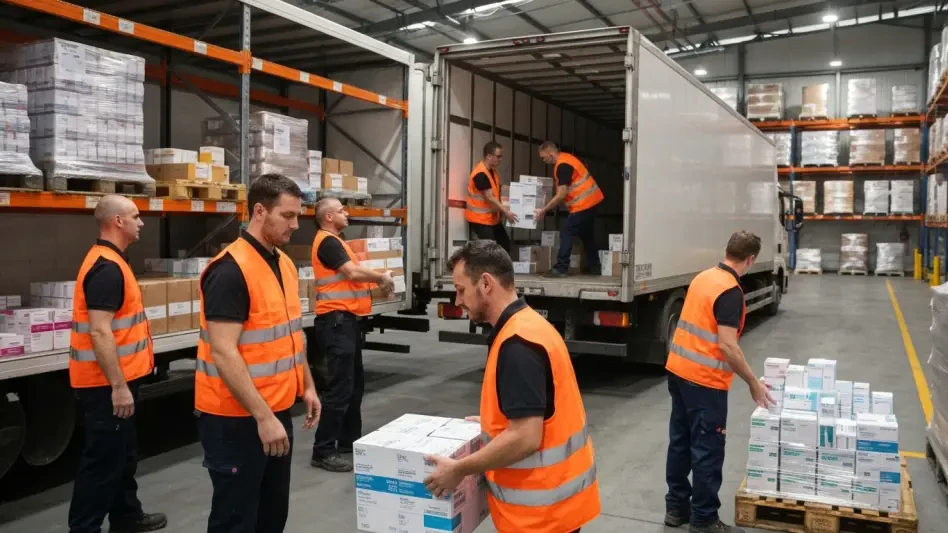

A Vital Cog in the Global Healthcare Machine
Imagine a world where life-saving vaccines spoil before reaching hospitals, or critical biopharmaceuticals lose efficacy due to improper storage during transit. This is the nightmare that healthcare third-party logistics (3PL) providers prevent every day. In an era of unprecedented demand for efficient, compliant, and specialized supply chains, the healthcare 3PL market stands as a linchpin of global health delivery. Valued at USD 278.79 billion in the current year, this sector is on a remarkable trajectory to reach USD 542.53 billion by 2034, growing at a compound annual growth rate (CAGR) of 7.72%. Such staggering figures underscore not just market potential but the critical role these logistics experts play in ensuring that healthcare products reach patients safely and on time.
The purpose of this analysis is to dissect the forces propelling this market forward, unpack the challenges that could hinder progress, and forecast the trends likely to shape its future. With globalization stretching supply chains across continents and innovations like gene therapies demanding ultra-precise handling, understanding the dynamics of healthcare 3PL is more important than ever. This market isn’t just about moving goods; it’s about safeguarding public health on a planetary scale. The following sections will dive into detailed data, explore regional variations, and offer strategic insights for stakeholders looking to navigate this complex yet rewarding landscape.
Market Dynamics: Unpacking Growth Drivers and Challenges
Surging Demand for Temperature-Sensitive Solutions
One of the most powerful engines driving the healthcare 3PL market is the escalating need for cold chain logistics, particularly for biopharmaceuticals and vaccines. These products, which account for over half of the market share at 51.27% this year, often require storage and transport at ultra-low temperatures to maintain their potency. The complexity of managing such shipments—think insulated containers, real-time monitoring, and rapid response protocols—has made specialized 3PL providers indispensable. Large-scale health initiatives, such as global immunization drives, further amplify this demand, as even a single temperature excursion can render millions of doses useless.
However, the benefits of cold chain expertise come with substantial hurdles. The high costs of maintaining specialized equipment and infrastructure can strain profit margins, especially for smaller logistics firms. Moreover, the risk of product spoilage due to equipment failure or human error remains a constant concern, with financial losses potentially running into millions annually. Balancing these operational expenses with the imperative of flawless delivery is a tightrope that providers must walk daily, pushing the industry to innovate relentlessly.
Technology as a Game-Changer in Logistics Efficiency
Building on the need for precision, technology integration is reshaping how healthcare 3PL operates, offering both efficiency gains and new competitive edges. Innovations like IoT-enabled sensors for real-time tracking, automated storage systems, and AI-powered route optimization are slashing delivery times and minimizing errors. The transportation segment, in particular, is witnessing rapid growth at a projected CAGR of 9.07% through the next decade, driven by digital tools that ensure shipments arrive not just on time but in perfect condition.
Yet, adopting these cutting-edge solutions isn’t without its pitfalls. Large players with deep pockets can roll out advanced systems swiftly, while smaller providers often struggle with the upfront investment. This disparity risks widening the gap between market leaders and emerging firms. On the flip side, cloud-based platforms are emerging as a democratizing force, offering affordable access to high-end logistics tools. The challenge lies in mitigating risks like cybersecurity threats, which could compromise sensitive shipment data if not addressed through robust safeguards.
Regional Nuances: Where Growth Meets Opportunity
Diving deeper into market dynamics, regional variations paint a fascinating picture of opportunity and complexity. North America leads the pack with a commanding 41.37% revenue share this year, thanks to its top-tier infrastructure and stringent regulatory environment enforced by agencies like the FDA. Meanwhile, Asia Pacific is the rising star, projected to grow at an impressive CAGR of 9.26% through 2034, fueled by booming pharmaceutical production in countries like China and India, alongside supportive policies such as India’s National Logistics Policy.
Contrastingly, regions like Latin America and the Middle East and Africa, though less mature, are brimming with untapped potential. Investments in cold chain hubs and digital tracking systems are on the rise, yet inconsistent regulations and infrastructure gaps pose significant barriers. A common myth is that these markets are too risky for substantial investment; in reality, tailored partnerships and localized strategies can transform these areas into hotbeds of growth for agile 3PL providers. Navigating this patchwork of regional strengths and weaknesses is critical for any firm aiming for global reach.
Future Projections: Trends to Watch Through 2034
As the healthcare 3PL market marches toward USD 542.53 billion by 2034, several transformative trends are poised to redefine its contours. Cold chain automation is gaining steam, with robotics and IoT systems reducing human error in handling delicate products. Sustainability is another frontier, as providers adopt electric fleets and energy-efficient warehouses to meet environmental standards and client expectations for greener operations. These initiatives not only cut carbon footprints but also position firms as forward-thinking partners in a socially conscious market.
Looking further ahead, potential disruptions like blockchain for unbreakable supply chain transparency and AI for predictive demand modeling could overhaul traditional logistics frameworks. Economically, expansion into emerging markets will likely accelerate, though tighter regulatory oversight in established regions like Europe may introduce new compliance costs. Industry insights suggest that by 2034, the most successful providers will be those who seamlessly blend technological prowess with sustainable practices, carving out a niche in an increasingly crowded field. Speculatively, the rise of personalized medicine could spur demand for bespoke logistics solutions, tailored to small-batch, patient-specific treatments—an exciting frontier for innovation.
Reflecting on the Path Forward
Looking back, this analysis peeled back the layers of the healthcare 3PL market, revealing a sector that ballooned from its current valuation of USD 278.79 billion with a clear path to USD 542.53 billion by 2034. The journey highlighted key growth engines like the demand for cold chain logistics, the transformative power of technology, and the diverse opportunities across global regions. Challenges, from high compliance costs to infrastructure disparities, stood out as hurdles that tested the industry’s resilience, yet also spurred innovation.
The implications of these findings were profound for stakeholders at every level. For healthcare companies, partnering with adaptable 3PL providers offered a way to streamline operations and focus on core innovations. Logistics firms, meanwhile, found a roadmap in investing in scalable tech and sustainable practices to stay competitive. The most actionable step forward was clear: build strategic alliances in high-growth regions and prioritize compliance training to navigate evolving standards. As the market continued to evolve, those who anticipated niche demands, like logistics for personalized therapies, positioned themselves not just to adapt, but to lead in a sector where every delivery carried the weight of human lives.