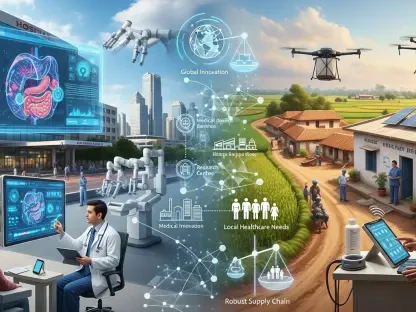

The seamless delivery of a single vial of insulin now depends more on the stability of maritime choke points than on the chemical proficiency of the manufacturing laboratory itself. This reality underscores a fundamental shift in the global health landscape, where medical care has transitioned from a localized service into a deeply globalized commodity chain. The interdependence of international trade routes and medical availability means that a disruption in one corner of the globe can lead to a life-threatening shortage thousands of miles away. As medical infrastructure becomes increasingly reliant on complex logistics, the vulnerability of this “shipping bridge” has become a central concern for policymakers and healthcare providers alike.
The scope of this interconnectedness is perhaps most visible in the specialized transit of pharmaceuticals. The Gulf pharmaceutical market, currently valued at approximately $23.7 billion, serves as a primary example of how regional stability dictates global health outcomes. This region is not merely a consumer base but a vital corridor for the transit of Active Pharmaceutical Ingredients (APIs) that feed manufacturing plants across Europe and the Americas. Without the steady flow of these precursors, the production of everything from basic antibiotics to complex oncology treatments would grind to a halt, illustrating that the global health system is only as strong as its most volatile transit links.
Furthermore, the influence of digital health education and advanced clinical trial networks has created a regulatory framework that transcends national borders. International bodies like the World Health Organization (WHO) traditionally provided the standards that ensured a patient in a developing nation received the same quality of care as one in a primary research hub. However, this standardization is increasingly under pressure from geopolitical friction. The maintenance of global health standards now requires navigating a thicket of technological dependencies and shifting international alliances that threaten to fragment the once-unified approach to medical safety and innovation.
The Vital Intersection of Global Logistics and Life-Saving Medicine
Modern healthcare delivery is no longer a domestic affair but a high-stakes performance of international logistics. The transition from localized drug synthesis to a globalized supply chain has made medical systems incredibly efficient yet remarkably fragile. Today, the components of a single diagnostic kit might be sourced from three different continents before being assembled in a fourth. This globalization has allowed for the rapid scaling of medical breakthroughs, but it has also introduced a level of systemic risk that was previously unimagined in the public health sector.
Central to this dynamic is the transit of specialized medical goods that require high-security and climate-controlled environments. The $23.7 billion pharmaceutical market in the Persian Gulf acts as a barometer for this global reliance, as it sits at the crossroads of East-West trade. The essential role of APIs cannot be overstated; they are the bedrock of pharmaceutical manufacturing. When the movement of these ingredients is hampered by regional instability, the ripple effects are felt in rising costs and thinning inventories at the clinical level, where providers must suddenly prioritize patients based on dwindling supply.
Technological and regulatory frameworks have attempted to mitigate these risks by fostering digital integration and clinical trial transparency. Advanced networks now allow researchers to share data in real-time, accelerating the pace of therapeutic discovery. However, the role of international bodies in maintaining these global standards is being challenged by the very technology that was supposed to unite them. Digital health education, while expanding access, also introduces new vulnerabilities in data security and intellectual property protection, forcing a reevaluation of how global medical standards are governed in an era of increasing geopolitical competition.
Shifting Dynamics in Medical Supply Chains and International Cooperation
Disruptions in Pharmaceutical Transit and Research
The impact of regional conflicts on pharmaceutical transit has reached a critical threshold, particularly in the Persian Gulf. This area has historically functioned as a vital bridge for medical cargo, but recent escalations have led to a 90% decline in sea shipping and a 79% reduction in air cargo capacity. These figures represent more than just economic loss; they signal a looming exhaustion of global medical inventories. When a primary transit corridor is effectively closed, the backlog of life-saving medications grows exponentially, creating a bottleneck that can take months to clear even after peace is restored.
Instability in emerging research hubs also poses a significant threat to the future of pharmaceutical innovation. Many regions currently experiencing geopolitical volatility were once viewed as the next frontier for clinical trials due to their diverse patient populations and growing healthcare infrastructure. The current instability risks delaying the development of new therapies for chronic diseases and interrupts long-term research projects that require years of consistent observation. This volatility creates a chilling effect on investment, as pharmaceutical companies seek more stable, albeit more expensive, environments for their research and development efforts.
The evolution of health diplomacy is moving away from the collective spirit of the past toward a more fractured model of “health nationalism.” This shift is exemplified by Argentina’s recent withdrawal from the World Health Organization, a move that signals a growing preference for bilateral agreements over multilateral cooperation. This trend suggests that nations are increasingly prioritizing domestic political concerns and national sovereignty over the shared goals of global disease surveillance and pandemic preparedness. Such fragmentation makes it difficult to coordinate a unified response to health crises, as the tools of international cooperation are slowly dismantled in favor of localized control.
Market Data and Projections for Global Health Stability
Economic performance indicators within the medical sector are currently flashing warning signs as operational costs continue to climb. Spiked insurance premiums for cargo traveling through high-risk zones and the expenses associated with rerouting shipments around geopolitical flashpoints are creating a massive financial burden. Industry analysts project that these increased costs typically impact the consumer within a four-to-six-week window, manifesting as higher prices for prescriptions and medical services. This price squeeze is particularly acute in markets that rely heavily on imported finished dosage forms.
A forward-looking perspective on global health stability reveals an urgent demand for diversified supply routes that can bypass traditional chokepoints. There is a projected need for a G20-led standing coordination system specifically designed to manage medical shortages during times of international crisis. Such a system would aim to synchronize regulatory requirements and facilitate the movement of essential goods across borders, even when conventional trade routes are compromised. Without this level of international coordination, the resilience of global health systems will remain tied to the whims of regional political stability.
The growth of resilient systems also depends on the ability of manufacturers to relocate production closer to end markets, a strategy known as regionalization. While this shift requires significant capital investment, the long-term benefits of reduced transit risk and increased national security are becoming more attractive to both governments and private corporations. Projections indicate that the next decade will see a significant redistribution of pharmaceutical manufacturing capacity, as the risks of relying on a few centralized hubs become too great to ignore in an increasingly polarized world.
Structural Obstacles to Medical Continuity in Conflict Zones
The vulnerability of medical infrastructure is most apparent in the scarcity of high-tech resources and cold-chain integrity during times of conflict. Thermal-sensitive medications, such as insulin and various vaccines, require a constant power supply and specialized refrigeration that are often the first things to fail when local grids are compromised. Furthermore, the global shortage of helium, a critical byproduct of gas production in volatile regions like Qatar, threatens the operation of MRI diagnostic imaging. Without this gas, sophisticated diagnostic tools become useless, setting back the quality of care in conflict zones by decades.
Infrastructure collapse in these areas has forced the development of grassroots solutions to maintain medical education and services. In Myanmar, the emergence of “jungle nursing schools” provides a striking model for digital resilience. By utilizing smuggled digital curricula and international volunteerism through remote platforms, these programs ensure that a new generation of healthcare workers is trained even as physical hospitals are destroyed. This model demonstrates that while physical infrastructure may be fragile, medical knowledge can be preserved and transmitted through digital integration and grassroots determination.
Mitigation strategies for these structural obstacles include the implementation of larger inventory buffers and the development of alternative transit corridors. Increasing the domestic stockpile of essential medicines provides a temporary shield against supply chain shocks, giving nations time to arrange alternative procurement. Moreover, the digitization of medical curricula allows for the continued training of staff even when educational institutions are forced to close. These solutions, while not a replacement for stable infrastructure, offer a pathway to maintaining some level of medical continuity in the face of persistent geopolitical flashpoints.
The Evolving Regulatory Landscape and National Sovereignty
The rise of health nationalism is fundamentally altering how domestic political shifts affect global disease surveillance. Concerns over national sovereignty are increasingly leading governments to dismantle the very multilateral health protocols that were designed to protect them from cross-border threats. This trend toward isolationism makes it harder to track the spread of infectious diseases and share vital genetic sequencing data. When a nation chooses to operate outside the international regulatory framework, it creates a blind spot in global health security that can be exploited by rapidly evolving pathogens.
Compliance and security measures for medical cargo have reached a level of intensity usually reserved for high-value defense equipment. Heightened security is now a necessity to ensure that antibiotics and vaccines reach their intended destinations without being diverted or compromised. In regions experiencing localized outbreaks, such as the recent meningococcal disease clusters, the implementation of rigorous distribution and contact tracing is essential. However, these efforts are often hampered by the same geopolitical tensions that necessitated them, as security protocols become entangled with local political agendas.
The long-term effects of a fragmented regulatory environment are particularly concerning for medical training and the global validation of pharmaceutical products. When different regions adopt conflicting standards for clinical trials or medical education, the portability of healthcare talent and the international acceptance of new drugs are diminished. This fragmentation risks creating a two-tiered global health system, where access to the latest innovations is restricted to those living in nations that adhere to a specific regulatory bloc. Standardizing these environments is essential for ensuring that medical progress remains a global benefit rather than a regional privilege.
The Future of Global Health Resilience and Innovation
Digital integration is proving to be a powerful tool in preserving medical knowledge where physical infrastructure has failed. The use of “video masterclasses” and remote surgical consultations is becoming a standard practice in areas where conflict has driven away local experts. This technological disruption allows for a high level of care to be maintained even in the most challenging environments. By leveraging global expertise through digital platforms, remote care is bridging the gap between stable medical hubs and conflict-stricken zones, ensuring that specialized knowledge remains accessible to those who need it most.
Emerging opportunities in the medical sector are also being found in the spillover benefits of existing public health strategies. For example, large-scale vaccination programs designed for one disease often provide unexpected protection against secondary infections or long-term health complications. This realization is driving new strategies in public health that focus on the broader systemic benefits of immunization. By understanding these secondary protections, health organizations can design more efficient programs that maximize the impact of every dose, which is particularly vital when supply chains are under constant threat.
The future of medical infrastructure will ultimately depend on achieving geographical diversity in manufacturing and stabilizing transit routes for air and sea cargo. Global economic conditions are inextricably linked to health security; a stable economy allows for the investment needed to build redundant systems. Stabilizing maritime and air transit routes is not just a matter of trade, but a requirement for the survival of the global medical system. As manufacturing moves toward a more distributed model, the reliance on any single region will decrease, creating a more resilient and equitable landscape for global health.
Summary of Global Health Prospects and Strategic Recommendations
The findings of this report demonstrated that the global medical infrastructure was far more fragile than the pharmaceutical industry previously estimated. The investigation into the “shipping bridge” revealed that a significant portion of life-saving medicine was at risk due to a lack of transit diversity. Research showed that the dependence on a few key corridors, particularly in the Persian Gulf, created a single point of failure that could destabilize healthcare systems across multiple continents. This vulnerability was exacerbated by the decline in air and sea cargo capacity, which left high-value medical inputs stranded or delayed during critical windows of need.
Strategic recommendations based on these findings emphasized the urgent necessity for a coordinated international response to safeguard supply chains. The evidence suggested that a shift toward regional manufacturing hubs could significantly mitigate the risks associated with long-distance logistics. Furthermore, the report highlighted that maintaining multilateral cooperation was the only viable path to preventing a total collapse of global medical stability. It was concluded that nations must prioritize the creation of inventory buffers and support digital resilience in medical education to withstand future geopolitical shocks.
The analysis of current trends indicated that the future of healthcare would be defined by the tension between technological innovation and national sovereignty. It was observed that while digital tools offered a way to preserve medical knowledge in conflict zones, the rise of health nationalism threatened to undo decades of progress in international health diplomacy. The recommendations put forward a vision where global health security is managed as a shared responsibility, requiring the stabilization of transit routes and a commitment to the geographical diversification of drug production. Ultimately, the report confirmed that medical continuity in the modern era is as much a matter of geopolitical strategy as it is of clinical excellence.