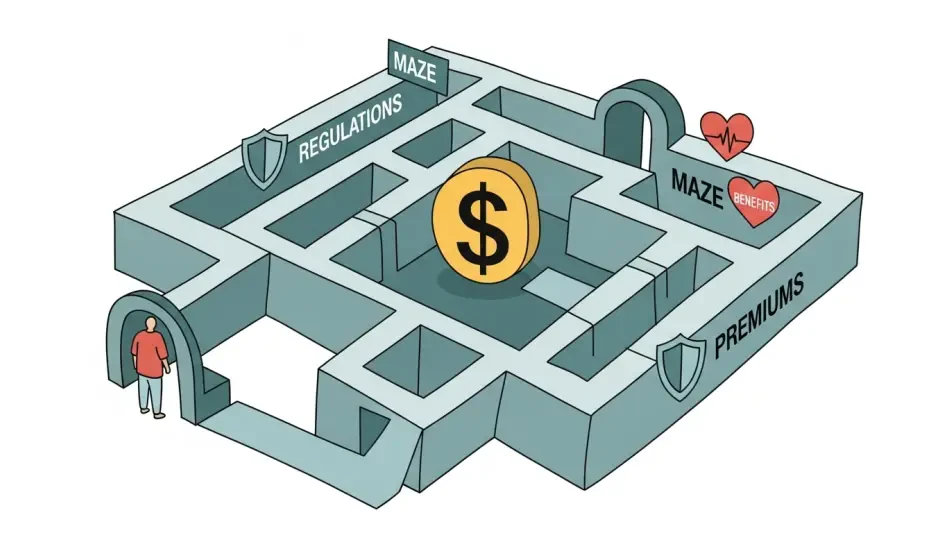

While the landscape of American healthcare often feels like a shifting maze of policy and paperwork, the financial reality for those buying insurance on their own remains a stark and undeniable burden. Since 2014, the average health insurance premium for a 50-year-old under the Affordable Care Act has surged by 129%, a figure that dwarfs the 68% increase seen in employer-based plans over the same period. This massive gap creates a significant hurdle for millions of individuals who do not have access to corporate benefits, forcing them to navigate a marketplace where costs seem to climb regardless of economic stability.
The disparity in pricing is not merely a statistical anomaly but a reflection of a fundamental shift in the American insurance model. By moving away from a system that allowed insurers to pick and choose their risks, the market transitioned toward a more inclusive but significantly more expensive framework. Understanding the specific drivers behind these price jumps is essential for anyone trying to make sense of their monthly invoices or the ongoing political debates surrounding healthcare reform.
The 129% Price Jump: Beyond the Sticker Shock of Modern Healthcare
The 129% increase in premiums since 2014 represents more than just inflation; it signals a total recalibration of how risk is priced in the individual market. In the past, the individual market was often a “bare-bones” experience where low prices were maintained by excluding high-risk individuals. Today, the sticker shock reflects the reality of a system that no longer allows for those exclusions, bringing the individual experience closer to the robust benefits traditionally reserved for large corporations.
This transition has been particularly difficult for middle-income families who do not qualify for substantial subsidies. While the law intended to provide parity between different types of coverage, the result has been a concentrated price hike in the sector that lacks the bargaining power of major employers. As the gap between workplace plans and ACA plans widens, the sustainability of the individual market depends increasingly on federal interventions rather than market competition alone.
From Selective to Standardized: The Evolution of the Individual Market
To grasp why premiums have moved toward their current levels, one must look at the pre-2014 individual market, which operated under a “wild west” set of rules. Before the current mandates, insurers could deny coverage to anyone with a pre-existing condition, ranging from heart disease to minor chronic ailments. This allowed for lower base prices because the pool of insured people was generally healthier and the policies themselves often excluded essential services like maternity care or mental health treatment.
The shift to a standardized market was a deliberate attempt to ensure that an individual policy offered the same level of protection as a gold-standard employer plan. However, this evolution from an exclusionary model to a comprehensive one created an unavoidable upward pressure on pricing. When a product goes from being restricted and limited to being comprehensive and open to all, the cost of providing that product naturally rises to meet the new level of risk and service.
The Triad of Costs: EHBs, Guaranteed Issue, and Pricing Limits
The architecture of these rising costs rests on three specific regulatory pillars. First, the Essential Health Benefits (EHBs) mandate requires every plan to cover ten specific categories, including prescription drugs and emergency services, regardless of the user’s personal needs. Second, the “guaranteed issue” rule ensures that insurers cannot turn away the most expensive patients. When the pool includes those with the highest medical needs, the costs are distributed across all participants, raising the baseline for everyone.
Finally, federal limits on age-based pricing prevent insurers from charging older participants the full actuarial cost of their healthcare. In a purely market-driven system, a 64-year-old might pay significantly more than they do now, but current regulations cap this ratio to protect older Americans. Consequently, a larger portion of the financial burden is shifted onto the broader premium structure, contributing to the overall rise in costs for the entire marketplace.
Expert Perspectives on the Value of Comprehensive Mandates
Health policy experts remain divided on whether these premium hikes represent a systemic failure or a necessary trade-off for improved public health outcomes. Gerard Anderson of Johns Hopkins University suggests that while comprehensive mandates like EHBs increase upfront costs, they provide long-term systemic savings. By removing financial barriers to preventive care, the system can potentially avoid the astronomical costs associated with late-stage emergency interventions and untreated chronic conditions.
In contrast, Joseph Antos of the American Enterprise Institute argues that the current structure makes it nearly impossible for insurers to offer truly low-cost options. He contends that the combination of federal mandates and strict pricing restrictions fuels a narrative of “unaffordability” that alienates healthy consumers. This intellectual divide highlights the tension between the Democratic strategy of using subsidies to mask high costs and the Republican advocacy for reducing mandates to lower the actual price of the insurance itself.
Evaluating Coverage Options in a High-Premium Environment
Navigating this high-premium environment required consumers to look past the monthly sticker price and evaluate the total cost of ownership for their health plan. Smart participation in the marketplace involved a three-step strategy: determining eligibility for Advanced Premium Tax Credits, assessing the total cost of care including deductibles, and utilizing silver-level plans for cost-sharing reductions. These tools were designed to mitigate the inherent price drivers within the regulatory framework, though they did not eliminate them entirely.
Moving forward, the focus should shift toward more transparent pricing and the expansion of health savings accounts to help manage out-of-pocket expenses. Policymakers and individuals alike must consider whether the current balance of comprehensive coverage and high premiums is sustainable or if further innovations in care delivery are needed to curb the underlying medical inflation. The evolution of the marketplace suggested that while universal access was achieved, the next frontier remained the stabilization of costs without sacrificing the quality of the benefits provided.