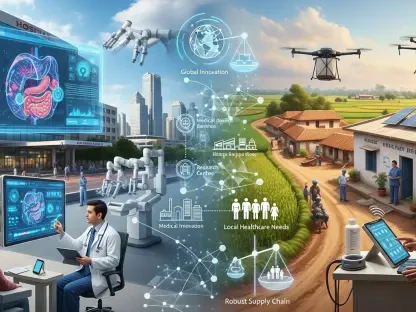
A landmark agreement between the Africa Centres for Disease Control and Prevention and the global leader in autonomous logistics promises to redefine how life-saving medical supplies reach millions across the continent, bridging the gap between modern medicine and remote communities. This ambitious initiative represents more than just a technological upgrade; it signals a fundamental shift in the strategy for building resilient and equitable health systems. By harnessing the power of automated, on-demand delivery, African nations are poised to overcome some of the most persistent logistical barriers that have historically hindered public health progress, setting a new global standard for health system innovation and responsiveness.
Forging a New Frontier in Public Health Logistics
A recently signed Memorandum of Understanding (MoU) between the Africa Centres for Disease Control and Prevention (Africa CDC) and Zipline establishes a formal partnership to integrate drone technology into public health supply chains across the continent. This collaboration is designed to create a network for the rapid and reliable distribution of medical commodities, including vaccines, diagnostics, and essential medicines. The agreement provides a framework for Member States to adopt and scale this technology, aiming to create a more robust and agile logistics infrastructure capable of serving every community.
The significance of this alliance extends beyond mere delivery speed. It is a strategic move to strengthen overall health system responsiveness, particularly in the face of epidemics and other public health emergencies. For too long, the “last mile” has been the weakest link in healthcare delivery, especially in remote and underserved areas. This partnership directly addresses that challenge by creating a system that can bypass infrastructural limitations, ensuring that essential health products are available where and when they are needed most. The collaboration is ultimately geared toward achieving equitable access and enhancing the continent’s capacity for epidemic preparedness.
Accelerating Health Access and Intelligence
Driving a Paradigm Shift in Medical Delivery
One of the central objectives of this partnership is to dramatically expand and accelerate access to critical medical products. During health crises, such as disease outbreaks or natural disasters, traditional ground-based supply chains often break down, leaving vulnerable populations without necessary support. The Zipline drone network offers a solution that is not dependent on road conditions or conventional transport, enabling the on-demand delivery of supplies within minutes. This capability is crucial for everything from routine immunization programs to rapid response efforts during an unfolding epidemic.
Beyond the physical delivery of goods, the initiative aims to fortify health data systems to generate real-time insights for public health officials. Each delivery flight captures valuable data on supply and demand, which can be used to improve forecasting, manage inventory, and identify potential health threats earlier. This trend toward data-driven logistics empowers health leaders with enhanced early warning capabilities, allowing for quicker and more informed decision-making. The result is a more proactive and intelligent public health system that can anticipate needs rather than simply react to crises.
A Proven Model for Continental Expansion
The vision for a continent-wide drone logistics network is built upon a foundation of proven success. Zipline’s operations, which began in Rwanda in 2016, have since expanded to Ghana, Nigeria, Kenya, and Côte d’Ivoire, demonstrating tangible benefits in each context. These operations have consistently shown improvements in supply chain efficiency, significantly reducing delivery times for blood products, vaccines, and other essential medicines. The model has proven to be not only effective but also adaptable to diverse geographical and healthcare landscapes.
The Rwandan model, in particular, serves as a powerful blueprint for the potential impact of this continental partnership. In Rwanda, Zipline’s logistics system is integrated directly with the Ministry of Health’s national health dashboard, providing real-time data that informs strategic decisions and resource allocation. This synergy between autonomous logistics and health intelligence showcases how technology can create a truly responsive and integrated health system. The MoU formalizes a commitment to replicate this success, leveraging lessons learned to accelerate adoption and impact across the African Union.
Tackling Enduring Obstacles in African Healthcare
For decades, African healthcare systems have grappled with enduring logistical challenges that undermine service delivery. Conventional supply chains are often complex and fragile, susceptible to disruption from poor road infrastructure, extreme weather events, and political instability. These vulnerabilities are magnified during public health emergencies, when the need for a swift and reliable supply of medical goods is most acute. The partnership between Africa CDC and Zipline is specifically designed to overcome these long-standing infrastructural hurdles.
By creating an alternative and complementary logistics network, the initiative offers a strategic solution to these market-driven failures. The drone network provides a level of agility and reliability that conventional systems often cannot match, particularly for reaching remote or isolated communities. This positions the technology not as a replacement for existing infrastructure but as a critical tool for enhancing resilience and ensuring continuity of care. It represents a pragmatic approach to building a more robust and efficient epidemic response mechanism that can function effectively even when traditional systems fail.
Building on a Foundation of Continental Health Agendas
This groundbreaking initiative is not operating in a vacuum; rather, it is strategically aligned with established continental health policies and frameworks. The MoU directly supports the goals outlined in the Africa CDC Strategic Plan 2023–2027 and the New Public Health Order, both of which call for stronger, more resilient, and African-led health systems. The partnership embodies the principles of these agendas by promoting local innovation, building capacity, and prioritizing the health security of the continent.
Furthermore, the collaboration advances the broader vision of the African Union’s Agenda 2063, which envisions a prosperous and self-reliant continent. A core component of this vision is the development of robust and equitable health systems driven by science and technology. The success and sustainability of this partnership hinge on Member State ownership and leadership, ensuring that the integration of drone technology aligns with national health priorities and regulatory frameworks. This alignment with foundational policies provides a strong strategic underpinning for the initiative’s long-term success.
Charting the Future of Health System Resilience
The collaboration between Africa CDC and Zipline provides a clear vision for the future of public health logistics in Africa. The partnership is poised to disrupt traditional supply chain models and usher in an era of integrated, autonomous, and data-driven health systems. Emerging areas of cooperation are already being explored, including extensive capacity-building programs to empower local health professionals and workforce development initiatives to support the new technological infrastructure.
Joint operational research and technology transfer are also key components of the long-term vision. By fostering a culture of continuous improvement and local innovation, the partnership aims to create sustainable solutions that are developed and managed within the continent. The focus is on building a future where every community, no matter how remote, has access to the life-saving products and care it needs. This forward-looking approach is set to create a new paradigm for health system resilience, not just in Africa, but globally.
A Strategic Blueprint for Health Sovereignty and Equity
This partnership represents a pragmatic and impactful strategy for transforming public health logistics across Africa. It embodies a shared vision between public health leaders and technology innovators for a continent that is more resilient, equitable, and self-sufficient. The collaboration leverages Zipline’s proven operational expertise and advanced technology to address systemic challenges, translating ambitious policy goals into tangible outcomes for communities.
Ultimately, this initiative serves as a powerful blueprint for achieving African health sovereignty. By strengthening supply chains, enhancing data intelligence, and building local capacity, it empowers nations to take greater control over their health futures. This model of a public-private partnership, grounded in mutual respect and a shared commitment to saving lives, stands as a compelling example for global health, demonstrating how innovation and political will can converge to create a healthier and more equitable world for all.